




Antique D Shaped Table
When you search for an antique d shaped table, you enter a world of clever engineering and graceful semi-circular timber forms designed to hug a wall.
Antique D Shaped Table
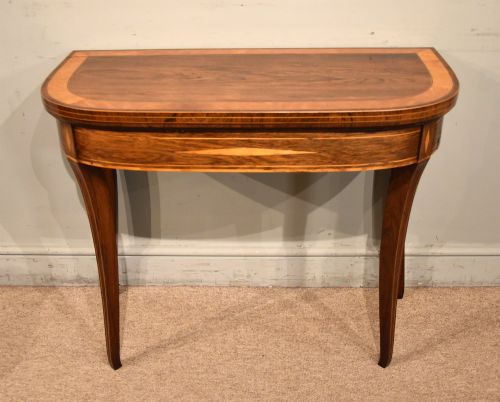
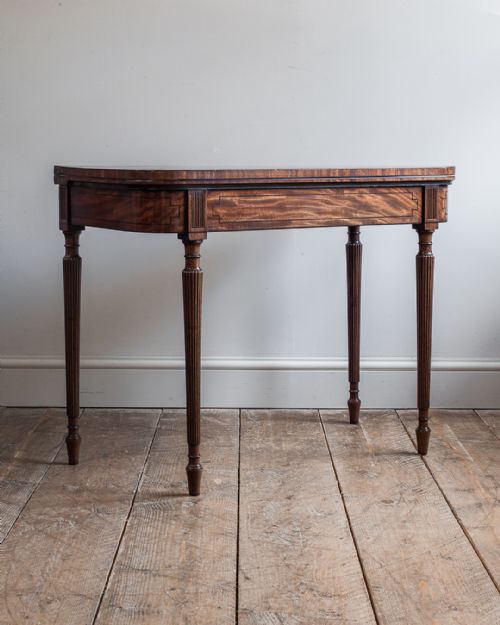
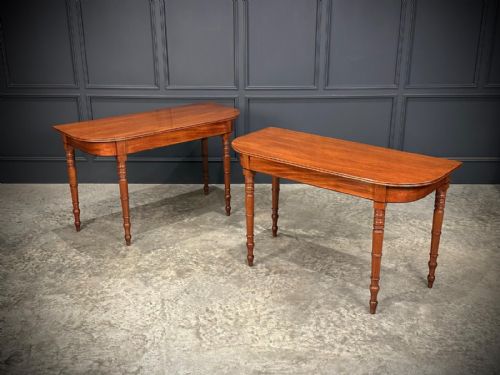
An antique d shaped table stands flat against a wall when closed, serving as a console or side table, but often reveals hinged leaves to form a card or tea table.
The evidence shows examples emerging from the George III period through the Victorian era and into the Edwardian years, constructed in figured mahogany, satinwood, and burr walnut.
Buyers meet these pieces in various guises, from simple side tables to grand console pairs designed to anchor a formal room.
Assessing the Workmanship
Quality rests in the choice of timber veneer, where dense figuring and symmetrical grain placement separate standard workshop output from exhibition pieces.
The precision of the hinge mechanisms and the stability of the folding leg assembly determine how smoothly the top converts from a wall console to a freestanding table.
Cabinetmakers occasionally built these versatile surfaces with secret compartments tucked neatly beneath the folding top.
Maison Millet·William Comyns
The Antique D Shaped Table Glossary
- Demi-lune
- Half-moon shape. This French term describes tables with a flat back edge designed to sit flush against a wall.
- Card table
- A folding table with a green baize or leather playing surface. These pieces often feature pivoting rear legs to support the opened leaf.
- Marquetry
- The art of applying decorative veneer pieces to form intricate patterns. Makers used contrasting woods like satinwood and mahogany.
- Console table
- A decorative table supported against a wall by console brackets or legs. The evidence shows many examples paired for formal rooms.
- Figured mahogany
- Timber showing distinctive grain patterns such as flame or curl. Cabinetmakers prized this wood for high-status furniture.
Antique D Shaped Table: Frequently Asked Questions
How were d shaped tables used?
These pieces functioned primarily as side tables or console tables against a living room wall. When required for dining or card games, the hinged top swung open to create a larger surface.
Owners also placed them in hallways and parlours to hold decorative objects or lamps.
Where should I place a d shaped table?
The flat edge allows the table to sit neatly against a hallway wall or beneath a mirror without blocking movement. They suit narrow spaces where a full round table would obstruct a room.
Paired examples work well flanking a fireplace or window.
How do I care for the polished wood?
Keep wooden surfaces away from direct sunlight and heat sources to prevent the timber and veneer from splitting. Regular dusting with a dry lint-free cloth maintains the finish.
Apply a traditional wax polish occasionally to nourish the antique mahogany or walnut.
How do I distinguish George III from Victorian examples?
George III pieces often display cleaner architectural lines and rich figured mahogany with subtle inlay work. Victorian versions frequently utilise burr walnut and heavier carved details.
Examine the secondary woods inside the frame to confirm the period of construction.