








Antique Cylindrical Cabinets
Antique cylindrical cabinets are versatile round pedestals and bedside cupboards shaped in mahogany, walnut and marble, bringing compact storage and distinct classical lines to a room.
Antique Cylindrical Cabinets
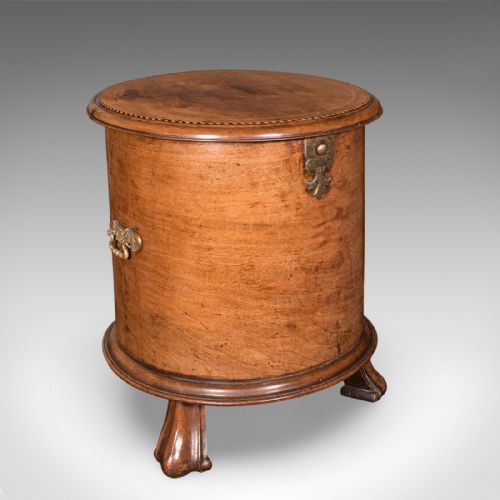
When you search for antique cylindrical cabinets, you encounter round pedestal cupboards, bedside tables and wine cooler stands developed across the nineteenth century. These forms serve primarily as bedside companions, lamp stands or display columns within private rooms.
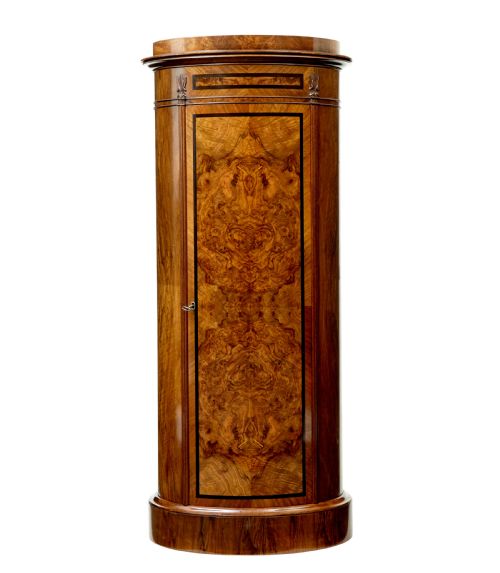
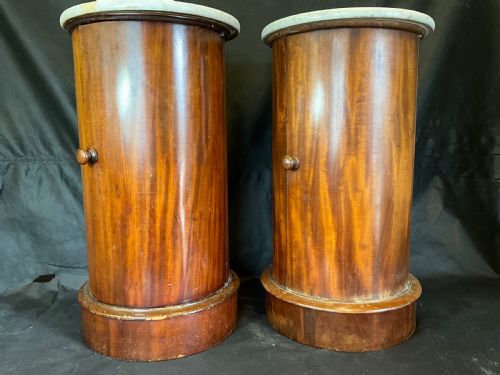
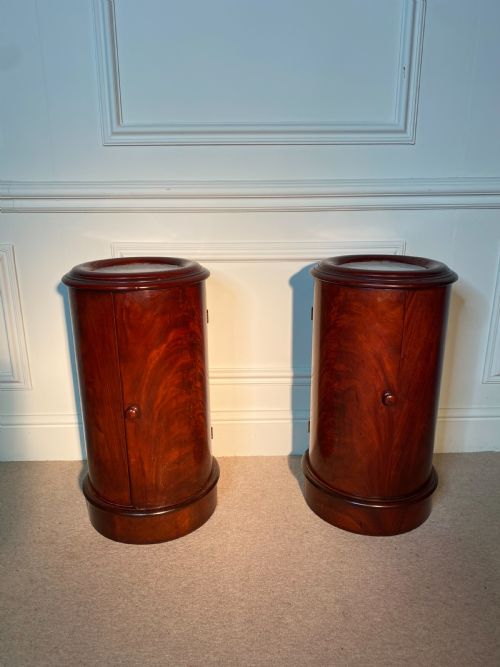
The pieces appearing here span the Regency, Early Victorian and Victorian periods alongside continental Biedermeier examples. Most commonly, you meet mahogany and walnut bedside cabinets featuring internal shelving and hinged doors that follow the curve of the body.
Makers designed these cylindrical forms to fit snugly into room corners or beside low beds. Variations in object types range from simple pot cupboards to elaborate giltwood display stands topped with marble.
How they were made
Cabinet makers built these circular carcasses using bent timber techniques or layered staves covered in flame mahogany, burr walnut or plain mahogany veneers. This method allowed craftsmen to achieve a smooth, uninterrupted curve around the body of the cabinet.
Surfaces frequently incorporate inset marble slabs on the top surface to provide a durable, water-resistant finish for bedside use. Brass mounts, handles and gallery rails appear regularly as decorative and functional additions to the timber structure.
Secondary treatments include faux marble painted finishes on cylinder stands and detailed French polishing to highlight the grain of the wood. Danish Biedermeier pieces utilise pale, figured mahogany veneers arranged symmetrically around the cylindrical form.
Antique Cylindrical Cabinets Retail Price Guide 2026
Typical asking prices for cylindrical cabinets among the pieces listed under this phrase on Sellingantiques today, from the lower quarter to the upper quarter. They describe what is for sale here now, not the wider market.
Listings feature mahogany, walnut and marble materials across nineteenth-century periods including Regency and Victorian eras.
What varies in quality
The primary distinction between standard pieces and finer examples lies in the selection of the timber veneers. Flame mahogany and burr walnut with intense, active grain patterns command greater attention than plain timber surfaces.
Construction details such as the seamless integration of curved doors and the precision of internal shelving define the caliber of the work. The inclusion of heavy, unblemished marble tops and original brass fittings further elevates the standing of a piece.
The Antique Cylindrical Cabinets Glossary
- Flame mahogany
- A veneer cut from the branch junction of the mahogany tree, displaying a rippled, flickering flame pattern. This decorative figuring was favoured by nineteenth-century cabinet makers for prominent curved surfaces.
- Burr walnut
- A wood harvested from walnut tree growths, producing intricate, swirling patterns packed with small knots. It provides a rich, highly textured finish on pedestal cupboards.
- Cellarette
- A fitted cabinet or stand originally designed for holding bottles of wine or spirits. In nineteenth-century interiors, these functioned as portable cellar units kept near dining tables.
- Biedermeier
- A Central European style spanning the mid-nineteenth century, characterised by utilitarian comfort, clean lines and native woods without excessive ornamentation. Danish examples in this group focus on architectural simplicity.
- Pedestal cupboard
- A freestanding, vertical cabinet built on a circular or oval footprint with a single door enclosing storage space. These items frequently served as bedside nightstands.
Antique Cylindrical Cabinets: Frequently Asked Questions
What is an antique cylindrical cabinet used for?
These round cabinets function primarily as bedside tables, nightstands or small pedestal cupboards for storing personal items out of sight.
They also serve as display stands for lamps, clocks or decorative figures in living spaces and hallways.
How do I date a cylindrical cabinet?
Dating relies on identifying the prevailing timber choices, hardware styles and construction techniques associated with periods like the Regency era or the reign of Queen Victoria.
Heavier marble tops and dark mahogany point toward mid-nineteenth-century British production, while paler wood grains often indicate continental Biedermeier origins.
Are these cabinets difficult to place in modern rooms?
The curved footprint of a cylindrical cabinet allows it to fit neatly into tight corners or beside low modern furniture without blocking walking routes.
Their compact vertical proportions provide useful surface space and internal storage without dominating a room.
What woods were used for these cabinets?
Cabinet makers utilised dense hardwoods such as mahogany and walnut, frequently selecting heavily figured veneers like flame mahogany or burr walnut for the outer surfaces.
Internal elements and secondary woods often consisted of pine or oak, while decorative highlights occasionally involved exotic timbers or painted finishes.