

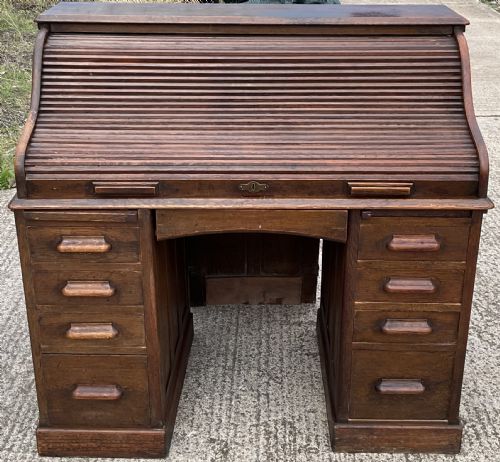
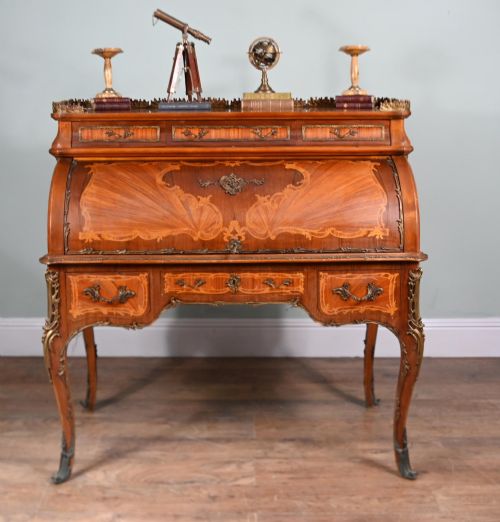
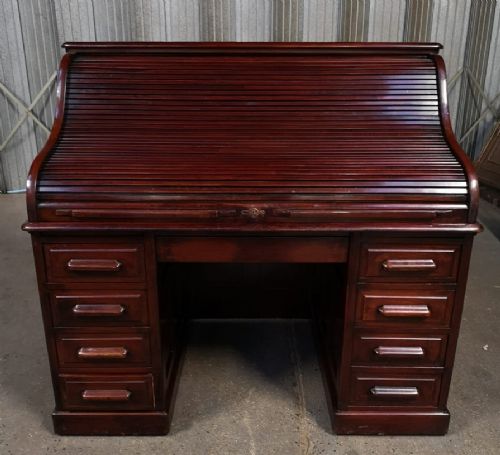
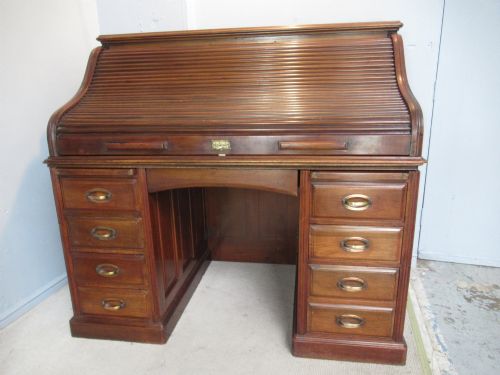
Antique Cylinder Table
An antique cylinder table brings mechanical precision to the study, housing your correspondence beneath a curved wooden roll that slides smoothly away.
Antique Cylinder Table
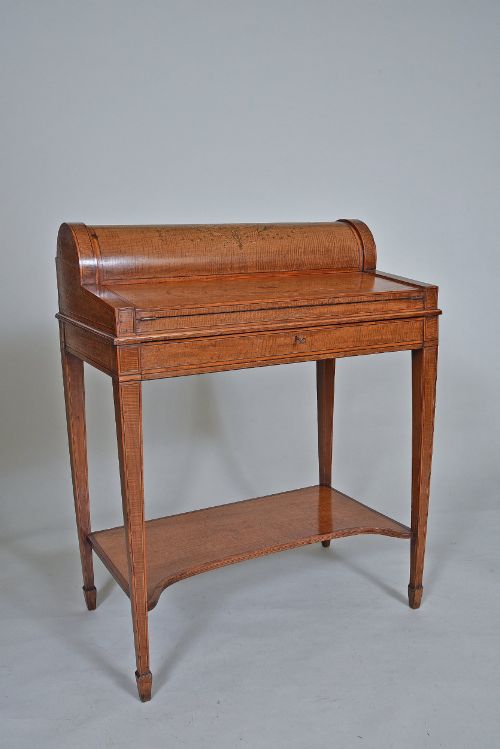
When you search for an antique cylinder table, you encounter compact writing desks, bedside cabinets, and bureaus defined by their curved, rolling closures. The form developed primarily in mahogany, satinwood, and walnut during the Georgian, Regency, and Edwardian periods.
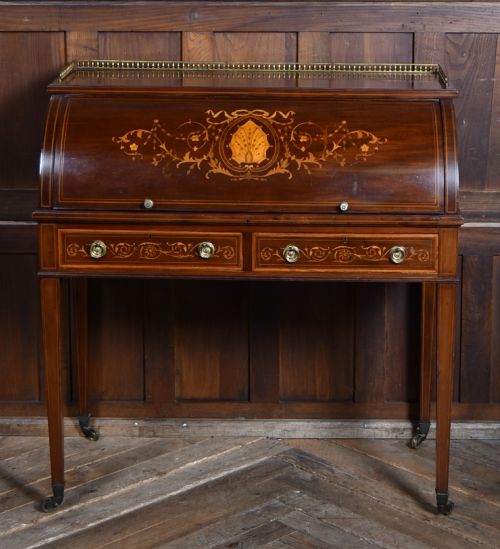
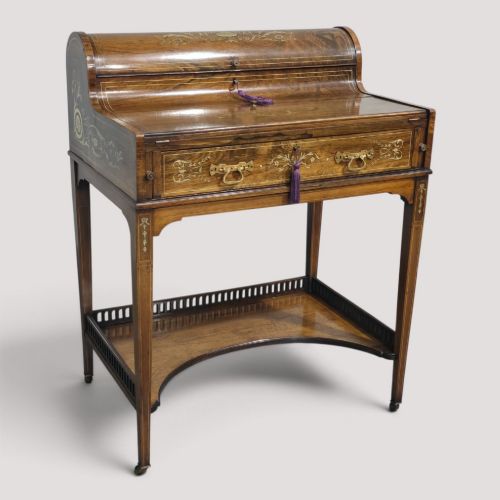
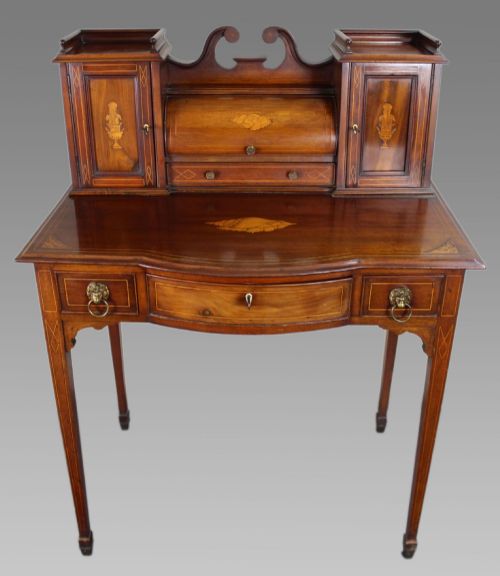
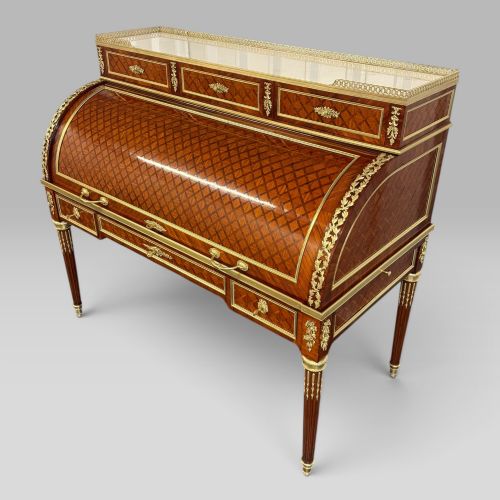
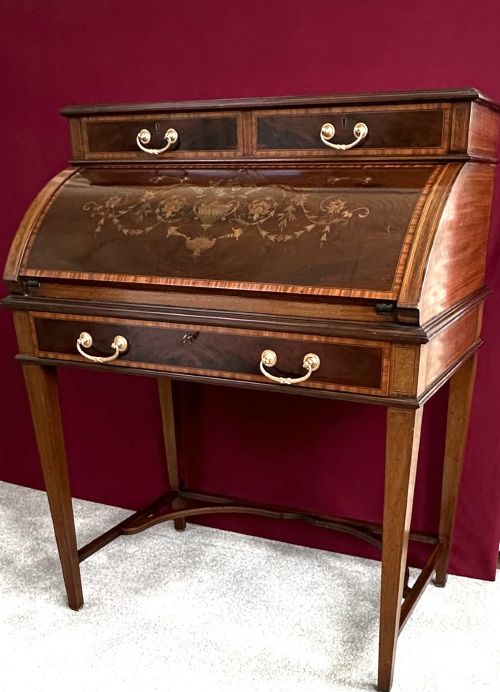
Most examples on this page are Edwardian inlaid mahogany ladies desks and Victorian roll top desks, alongside occasional French pieces featuring ormolu and parquetry. These smaller writing desks and cabinets combine enclosed storage with functional pull-out writing slides.
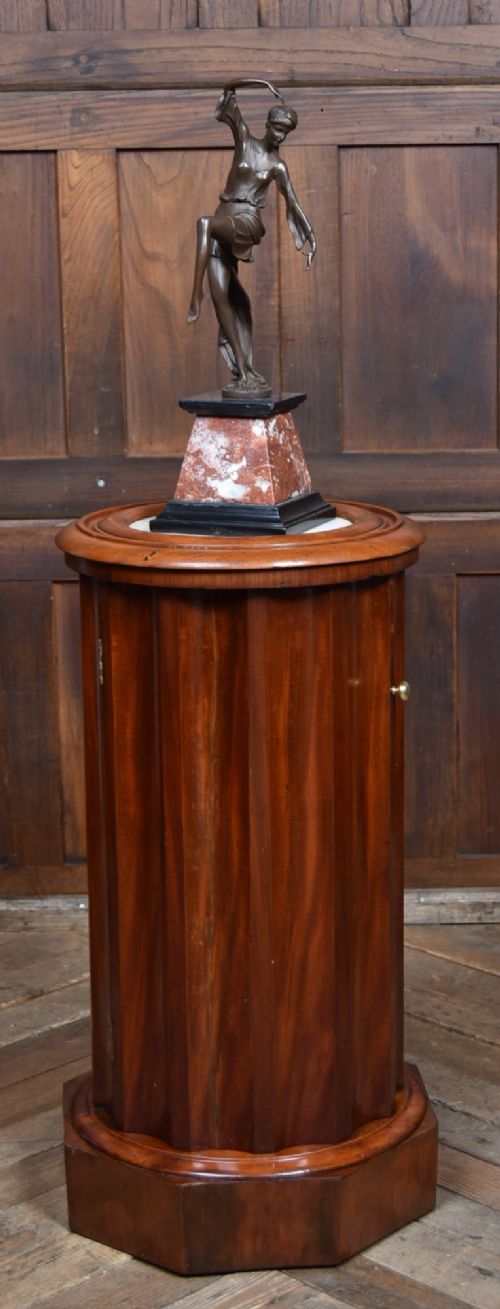
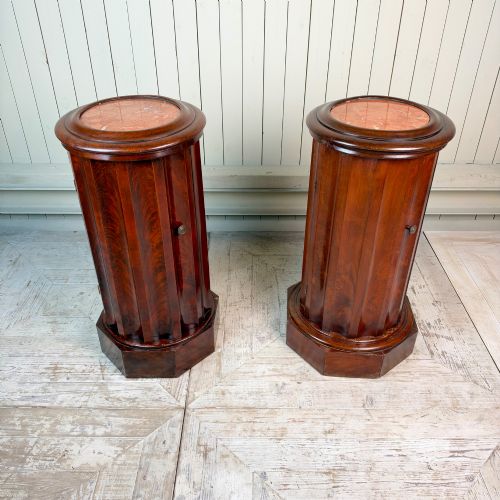
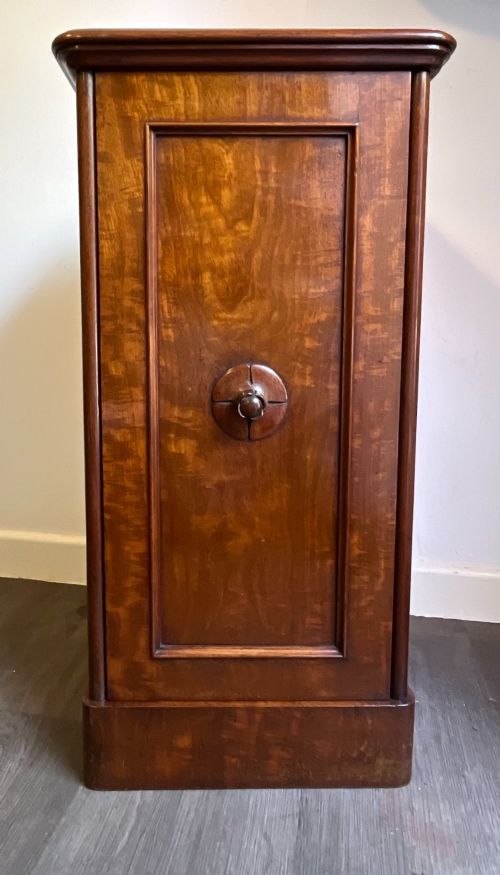
The category also encompasses cylindrical bedside cabinets with marble or wooden tops, demonstrating how cabinetmakers applied the curved door principle to domestic furniture beyond the traditional study.
How they were made
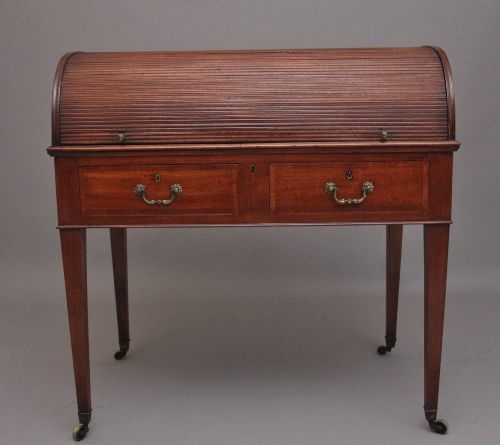
Makers constructed the rolling cylinder from narrow vertical slats of timber glued to a flexible canvas backing, allowing the shutter to track smoothly within channeled grooves. This technique required precise carpentry so the curved lid operated without binding against the carcase.
Primary show woods such as mahogany, satinwood, and walnut were frequently accented with delicate stringing, marquetry, and parquetry. Brass handles, ormolu mounts, and leather writing surfaces completed the construction of these refined pieces.
Antique Cylinder Table Retail Price Guide 2026
Typical asking prices for cylinder table among the pieces listed under this phrase on Sellingantiques today, from the lower quarter to the upper quarter. They describe what is for sale here now, not the wider market.
Listings feature eighteenth-century George III pieces alongside nineteenth-century French and Edwardian examples in mahogany, walnut, and satinwood.
What varies in quality
The distinction between ordinary and exceptional work lies in the handling of the timber and the smoothness of the mechanical action. Superior pieces utilise finely figured flame mahogany, partridgewood, or satinwood, with hand-cut marquetry and tightly fitted internal stationery compartments.
The integrity of the cylinder mechanism determines the daily usability of the desk. In better examples, the rolling shutter glides evenly along its tracks without dipping or sticking, remaining flush with the desk frame when fully closed.
B A Bremond·John Mclean·Linke
The Antique Cylinder Table Glossary
- Cylinder desk
- A writing desk featuring a curved, quarter-circle wooden shutter that rolls back to reveal the writing surface and interior drawers. This mechanism conceals correspondence and papers when not in use.
- Tambour
- A flexible shutter formed from narrow wooden strips glued to canvas or leather, operating on the same principle as a cylinder front. It allows closure over curved surfaces.
- Ormolu
- Gilt-bronze mounts applied as decorative ornaments to furniture, particularly prevalent in French nineteenth-century pieces. It provides a bright metallic contrast to dark woods.
- Parquetry
- Geometric patterns formed by small pieces of wood fitted together on a surface, often seen on French revival desks. It creates a subtle mosaic effect across the wood grain.
- Satinwood
- A lustrous, fine-grained hardwood native to India and Ceylon, prized for its pale golden colour. Cabinetmakers used it extensively for banding and inlay during the Sheraton revival.
Antique Cylinder Table: Frequently Asked Questions
How does a cylinder desk work?
The curved wooden shutter runs in internal tracks cut into the sides of the desk frame. Pulling the handle draws the cylinder upward and back, simultaneously extending the interior writing slide.
This synchronized movement conceals or reveals the stationery compartments in one fluid motion, protecting the contents from dust and prying eyes.
Were these desks used by women?
Many surviving examples from the Edwardian period are designated as ladies desks or bureau tables. These pieces were scaled down in size to suit smaller drawing rooms and lighter correspondence.
They offered discreet storage for personal letters while maintaining a decorative presence in domestic interiors.
Can I use a cylinder table as a bedside cabinet?
Several Victorian and Regency examples are constructed specifically as cylindrical bedside cupboards rather than writing desks. These pieces feature a curved door enclosing interior shelves for bedroom storage.
Topped with wood or marble, they provide a compact bedside surface with concealed storage space.
How do I date an antique cylinder desk?
Dating relies on timber selection, secondary woods, and decorative styles. Georgian and Regency pieces favour solid flame mahogany and restrained brass fittings, while Edwardian examples often display satinwood inlay and lighter construction.
French revival pieces from the nineteenth century typically incorporate ormolu mounts and elaborate parquetry.