


Antique Cut Glass Cruet
An antique cut glass cruet brings heavy sparkle and polished metal to the dining table, holding oils, vinegars and sauces in matching bottles.
Antique Cut Glass Cruet
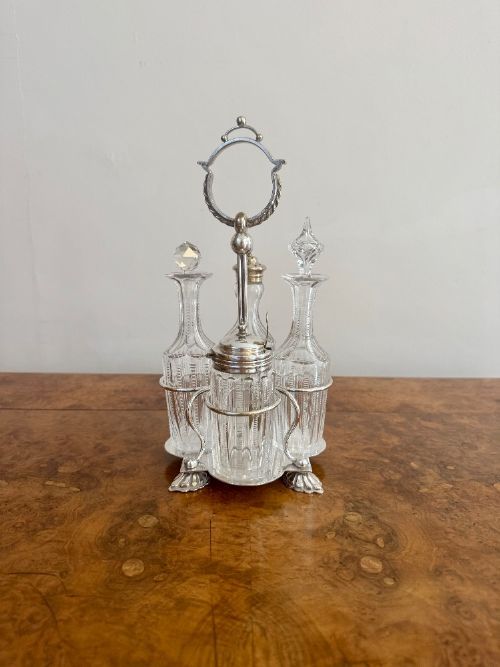
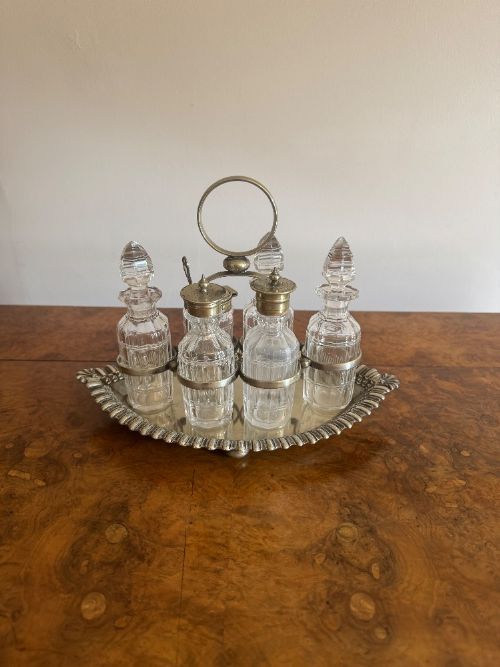
When you search for an antique cut glass cruet, you encounter table services designed to hold liquid condiments and seasonings within reach of diners. These assemblies comprise heavy glass bottles or cruets seated in secure frames, with styles spanning from Georgian George III frames to Edwardian silver plate and Art Deco lead crystal.
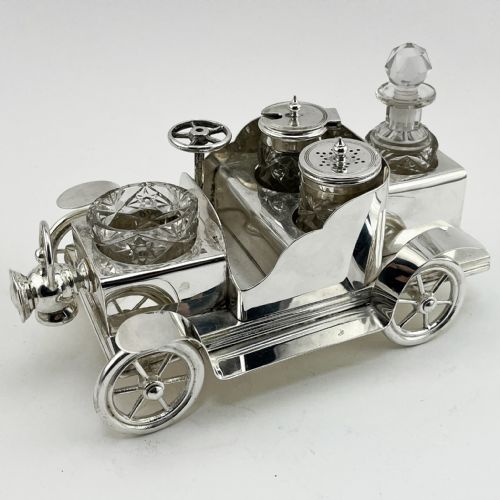
The most common examples on this page date from the Edwardian period and the late Victorian era, typically combining silver plated frames with cut glass bottles. You also find earlier Georgian sterling silver stands, bachelor sets for smaller households, and novelty car or carriage frames from the nineteenth century.
Materials and construction
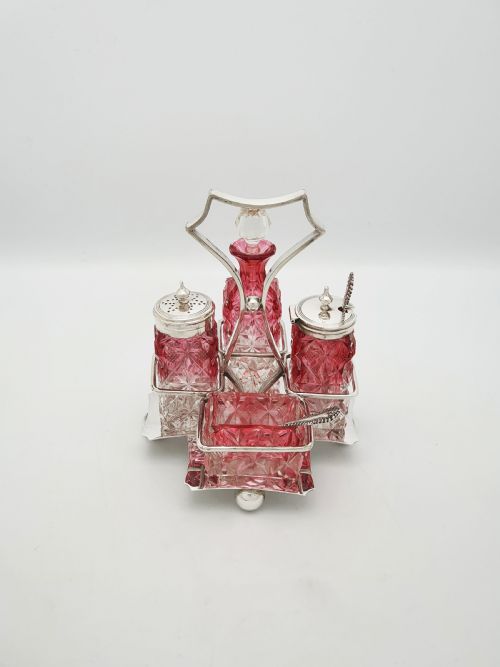
Makers formed the vessels from glass, lead crystal and cranberry glass, applying deep wheel-cut patterns to refract light through the sides. These bottles fit into frames forged from sterling silver, Old Sheffield plate, or standard silver plate over a base metal.
Metalwork involved casting, piercing, and silver plating, often incorporating central carry handles and dedicated rings to hold each bottle securely. Mounts and bottle collars were frequently fashioned in sterling silver, matched to stoppers ground by hand to fit individual bottle necks.
Object types include decanter sets, bachelor cruets, and novelty carriage frames alongside standard condiment stands.
Judging the standard of execution
Quality rests heavily on the clarity and depth of the glass cutting, alongside the weight and rigidity of the metal frame. Superior sets maintain matching glass bottles where every stopper and bottle share identical facet patterns and original manufacture.
The presence of recognised makers, substantial silver weight, and complex frame engineering separate standard utility pieces from high-end dining table accessories. Complete sets featuring all original bottles and casters command greater consideration than assembled groupings.
Mappin Brothers·Walker & Hall·Charles Thomas Fox·Elkington & Co·Hester Bateman·William Hutton & Sons
The Antique Cut Glass Cruet Glossary
- Cruet stand
- A frame or tray, typically fitted with a central handle, designed to hold multiple condiment bottles securely.
- Bachelor set
- A smaller cruet assembly made for individual use or intimate dining, usually containing fewer bottles than a family service.
- Caster
- A small jar with a perforated top used for shaking sugar or dry spices over food.
- Cranberry glass
- Transparent red glass produced by adding gold chloride to the molten batch, seen frequently in Edwardian pieces.
- Old Sheffield plate
- A composite material formed by fusing a thin sheet of silver to a thicker copper base before shaping.
Antique Cut Glass Cruet: Frequently Asked Questions
What are all the bottles for?
Traditional sets held oil and vinegar alongside mustard, pepper and other liquid seasonings required at the dining table.
The larger bottles generally contained oil and vinegar, while smaller jars accommodated ground spices, sauces or caster sugar.
How do I clean cut glass?
Wash the glass bottles in warm water using mild soap, avoiding harsh scrubbing brushes that might scratch the surface.
Dry them thoroughly with a lint-free cloth to restore the sparkle of the deep cuts without damaging any silver mounts.
Are replacement bottles common?
Many surviving frames lost individual bottles over decades of use, leading to matched replacements being placed in the stands later.
Examining the glass weight, tint and cutting style helps determine whether the bottles originated together with the frame.
How do I date silver plated frames?
Makers often stamped registry marks, trade symbols or specific manufacturer ciphers onto the underside of the metal bases.
Stylistic cues such as Edwardian garland engraving or heavy Victorian Gothic framing also help narrow down the decade of production.