

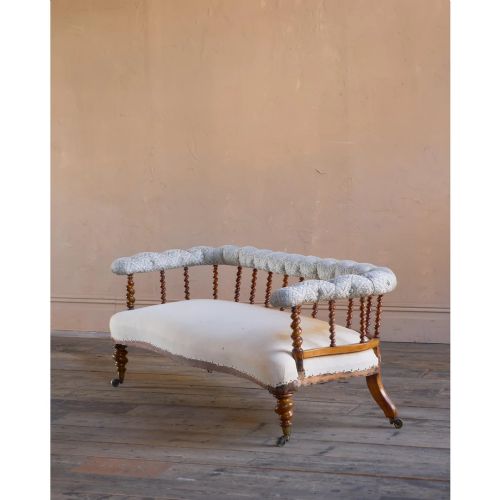

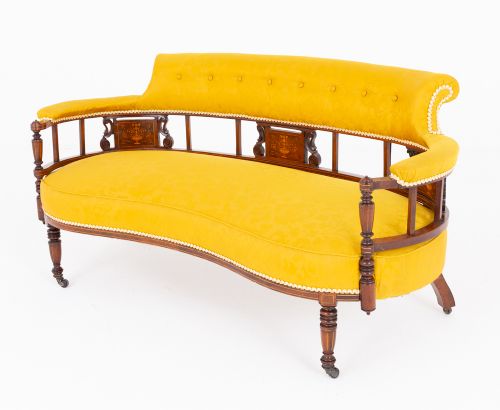

Antique Curved Sofa
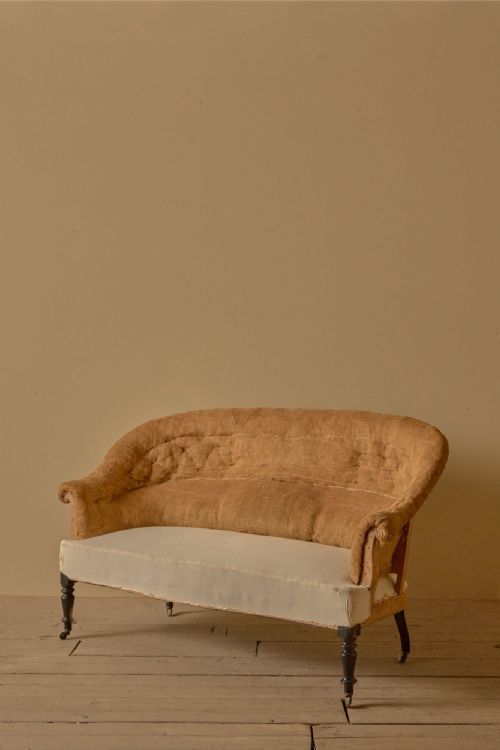
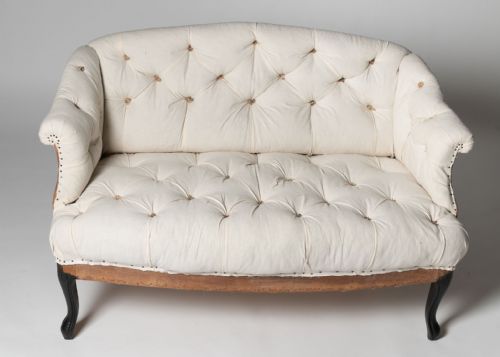
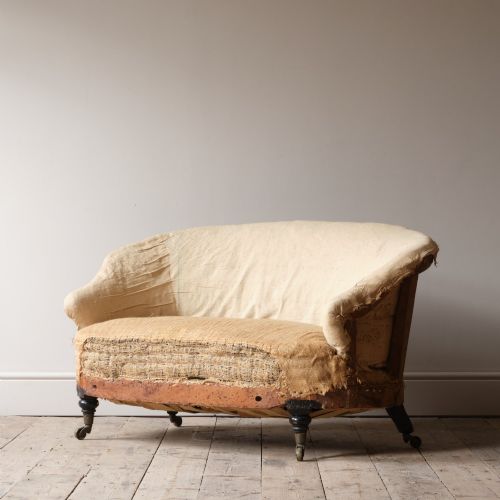
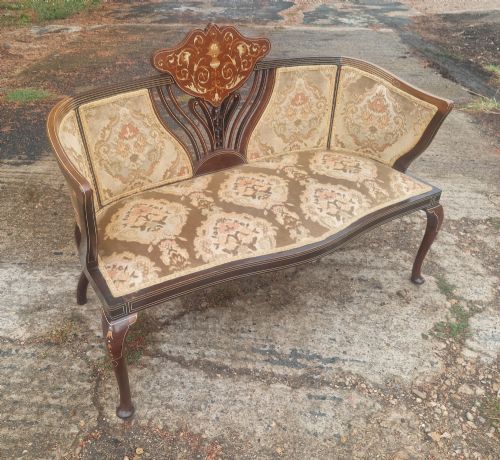
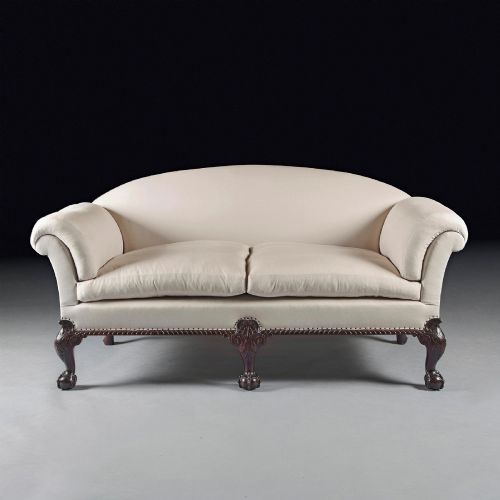
An antique curved sofa brings architectural line to a room through sweeping timber frames and generous upholstered seats.
Antique Curved Sofa
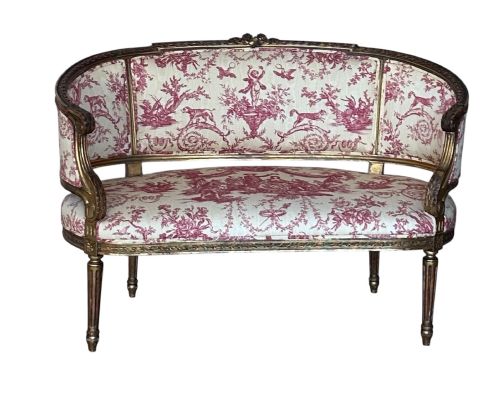
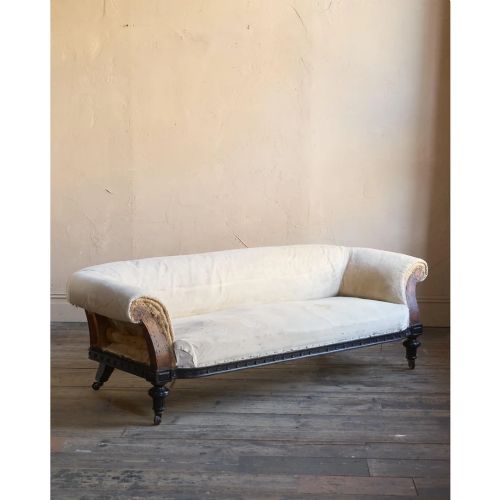
When you search for an antique curved sofa, you encounter distinct profiles ranging from Victorian scroll shapes to Edwardian camel backs and deep buttoned Chesterfields. These seating forms span the nineteenth century into the 1920s, incorporating French Louis XV and Louis XVI styles alongside English cabinet work.
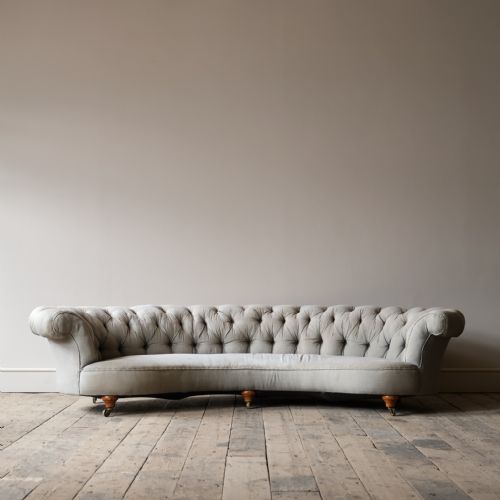
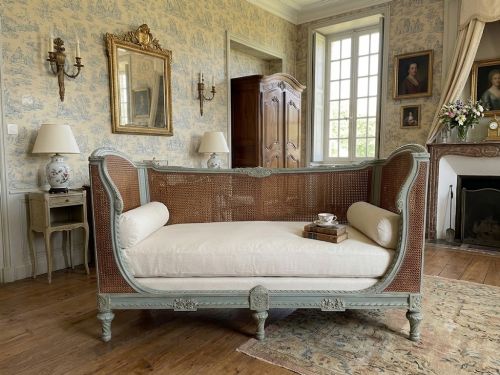
The pieces appearing here include crescent chesterfields, kidney-shaped daybeds, and bentwood settees with continuous curved structures. You also meet salon sofas with spindle backs, corner sofas, and French canapés that utilise painted or gilded wood.
Makers and workshops of note represented in the evidence include Thonet, Howard & Sons, C. Hindley & Sons, Hampton & Sons, and Hille. These makers shaped the market for curved seating across Victorian, Edwardian, and Art Deco periods.
Materials and construction
The frames rely on timbers such as mahogany, walnut, rosewood, beech, and birch, often shaped using steam bending as seen in bentwood examples. Inlaid details employ exotic veneers, ebony stringing, and marquetry on mahogany and walnut surfaces.
Upholstery materials recorded across the pieces include leather, velvet, fabric, cane, and button back padding. Brass hardware and painted or gilded finishes complete the decorative scheme of French and English pieces alike.
Antique Curved Sofa Retail Price Guide 2026
Typical asking prices for curved sofa among the pieces listed under this phrase on Sellingantiques today, from the lower quarter to the upper quarter. They describe what is for sale here now, not the wider market.
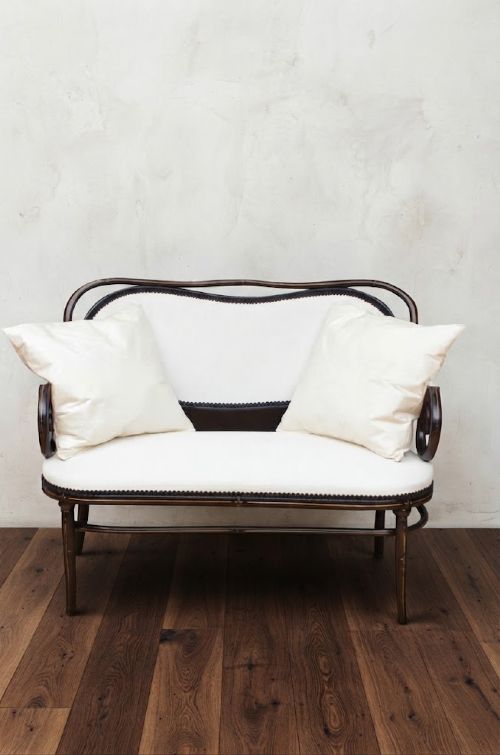
Thonet bentwood settees bring bistro charm straight into the drawing room, proving that steam and beechwood make unexpected bedfellows.
Distinguishing craftsmanship
Quality rests in the integrity of the curved timber frame and the precision of the joinery supporting complex rounded profiles. Pieces attributed to recorded makers demonstrate superior structural balance compared to unmarked workshop pieces.
The refinement of the upholstery work, from buttoning to hand-stitched edging, dictates the finish of the piece. Superior examples retain original timber patination and authentic period fabric or leather.
Thonet·Howard & Sons·C. Hindley & Sons·Hampton & Sons·Hille
The Antique Curved Sofa Glossary
- Bentwood
- Wood shaped by applying steam to soften the grain before bending it into curves. This technique defines lightweight nineteenth-century settees.
- Canapé
- A decorative French-style sofa with an upholstered seat and back, often featuring an exposed carved wooden frame. These follow Louis XV or Louis XVI designs.
- Chesterfield
- A deep-buttoned upholstered sofa featuring arms and back of the same height. Nineteenth-century examples often incorporate crescent curves or leather upholstery.
- Kidney sofa
- A curved seating form shaped like a kidney bean, frequently functioning as a chaise longue or boudoir seat. The plan view dictates the name.
- Aesthetic Movement
- A late nineteenth-century design style emphasising visual beauty over narrative content. Pieces from this movement often utilise ebonised wood.
Antique Curved Sofa: Frequently Asked Questions
How do I identify a Victorian curved sofa?
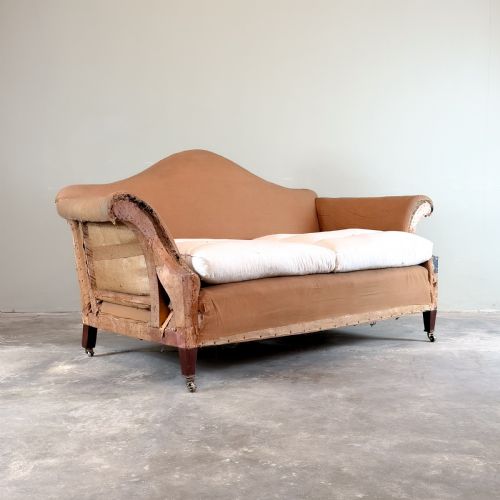
Victorian curved sofas typically display robust mahogany or walnut frames with deep button-backed upholstery and generous padding. Scroll arms and turned legs frequently accompany the curved silhouette.
Construction from this era relies on heavy timber framing designed for formal reception rooms.
Are Art Deco curved sofas different?
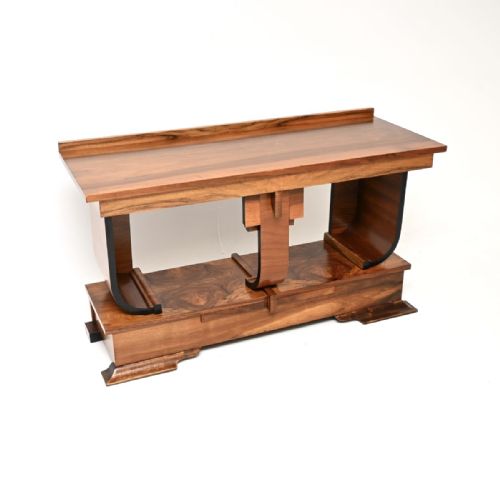
Art Deco curved sofas from the 1920s and 1930s favour streamlined forms in palisander, burr walnut, or zebrano veneers. The silhouettes embrace smooth scroll shapes and leather or sleek fabric upholstery.
These pieces reflect modern twentieth-century interior styles rather than revivalist nineteenth-century aesthetics.
Where should I place a curved sofa?
Curved sofas suit conversational groupings, large open spaces, or curved architectural bays. Freestanding placement highlights the sweep of the back frame.
Ensure adequate floor clearance around the perimeter to let the curved lines define the space.