

Antique Curb Link
These substantial pieces of antique curb link jewellery, spanning the Victorian and Edwardian eras, offer tactile weight and historical substance.
Antique Curb Link
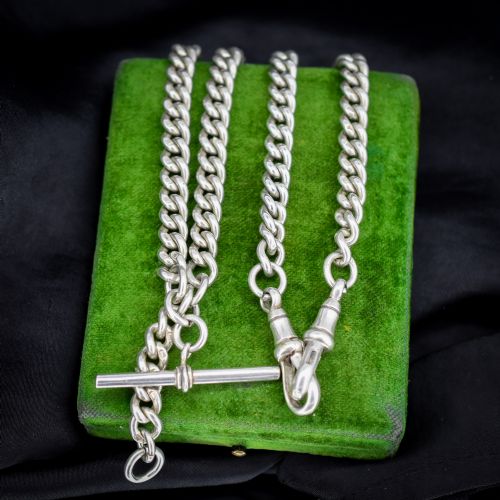
When you search for antique curb link, you encounter interlocking metal links that lie flat, forming bracelets, necklaces, and watch chains designed for daily wear. The origin of these items traces back to the late nineteenth and early twentieth centuries, encompassing Victorian and Edwardian aesthetics.
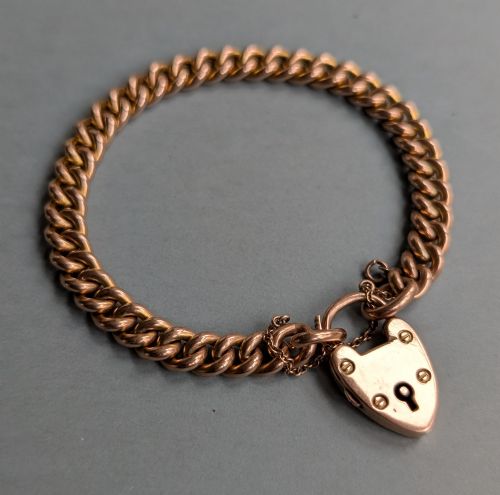
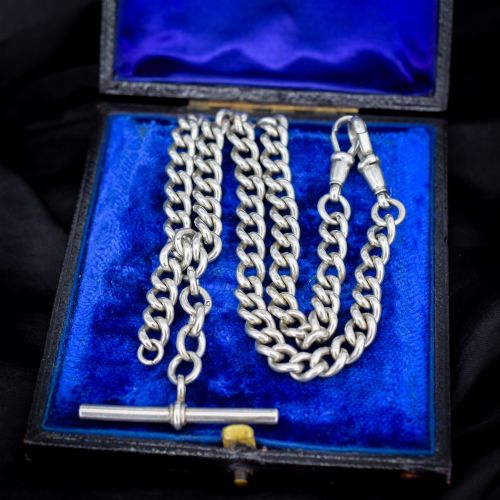
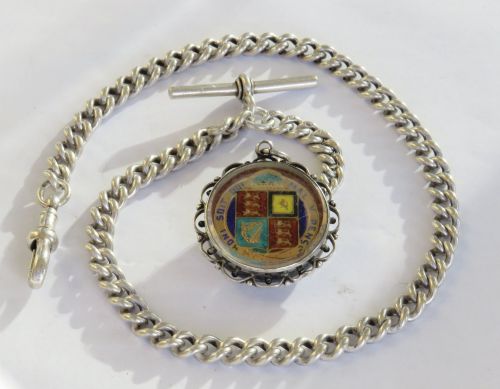
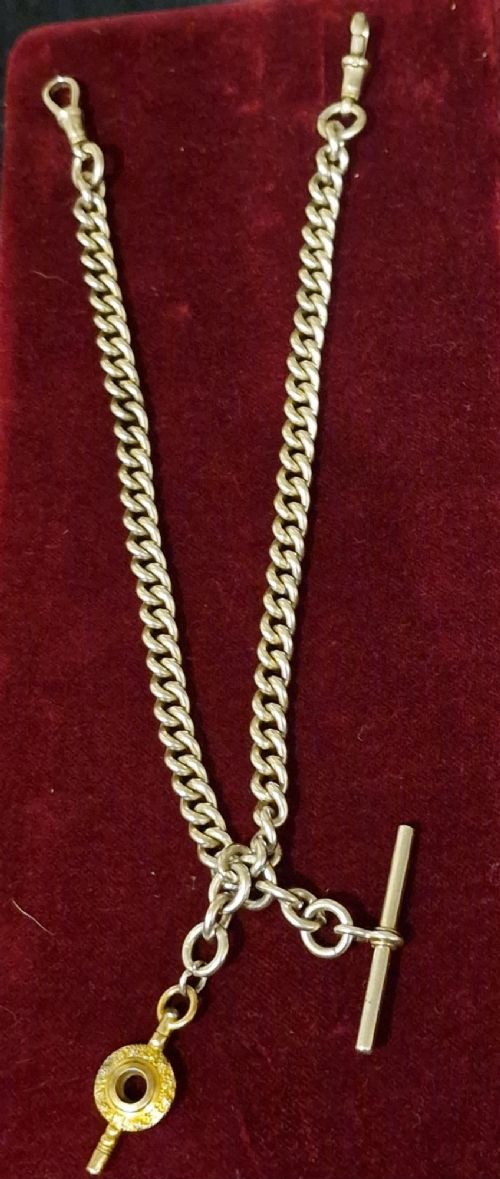
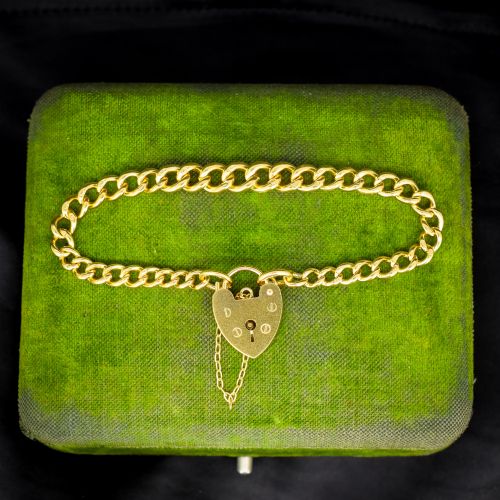
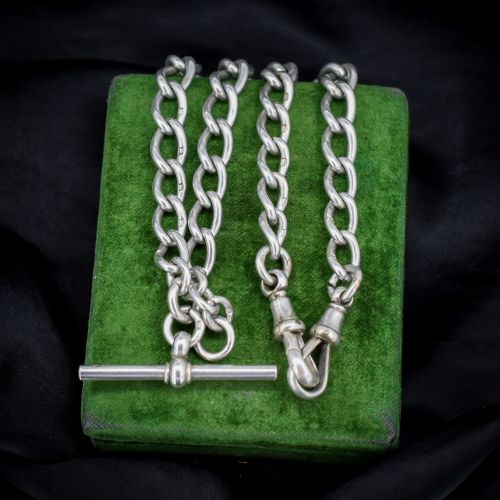
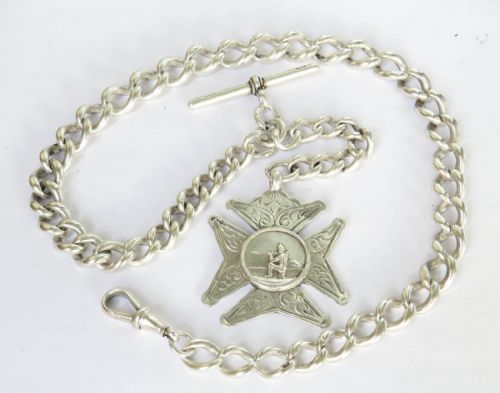
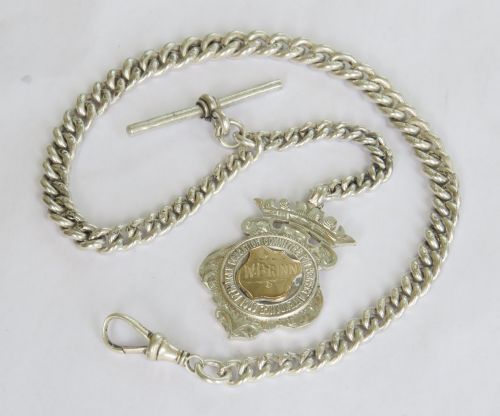
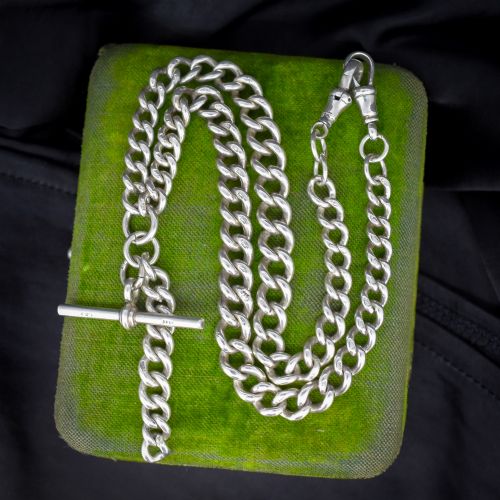
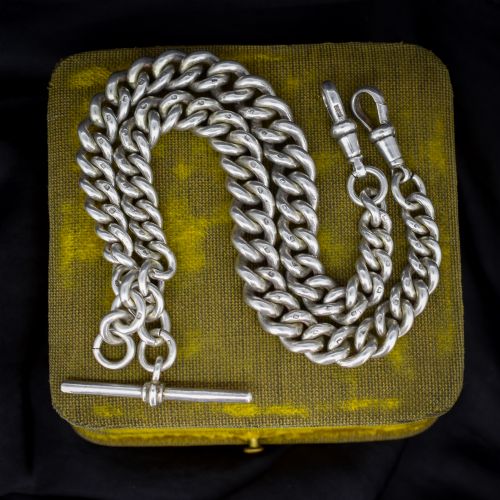
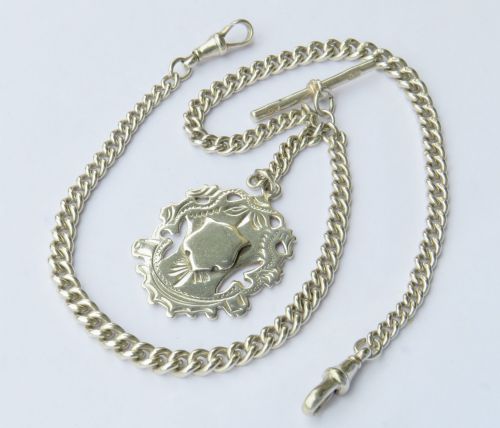
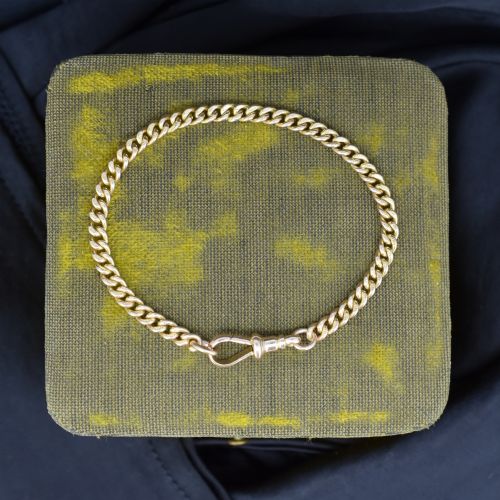
The version you are most likely to meet on this page is the gold or silver watch chain, often adapted as a necklace or bracelet, equipped with a dog clip or padlock fastener. These pieces frequently feature graduated links and hallmarks denoting specific assay offices and years.
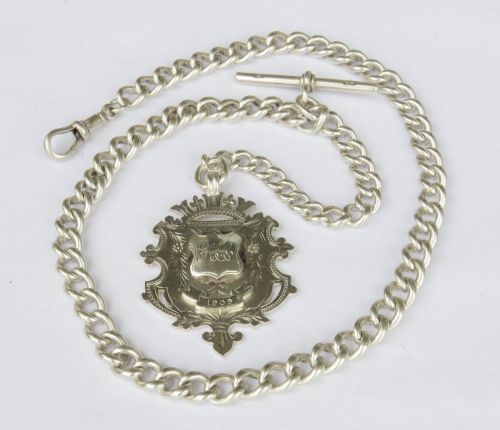
Beyond standalone chains, the selection includes guard chains and fob chains ornamented with charms, darts, or intaglios. Each form reflects the utilitarian origins of nineteenth-century pocket watch carriage converted into decorative jewellery.
Materials and Construction
The pieces on this page are fashioned predominantly from sterling silver, 9ct gold in yellow and rose hues, and higher purities including 15ct and 18ct gold. Goldsmiths and silversmiths shaped these metals into uniform or graduated curb links, often soldering individual components by hand.
Surface decoration frequently involves hand engraving on alternating links, alongside functional additions like swivel dog clips, T-bars, and heart-shaped padlocks. Hallmarks stamped into the metal record the assay town, purity, and year of manufacture.
Antique Curb Link Retail Price Guide 2026
Typical asking prices for curb link among the pieces listed under this phrase on Sellingantiques today, from the lower quarter to the upper quarter. They describe what is for sale here now, not the wider market.
Listings feature sterling silver and 9ct gold curb links alongside 15ct and 18ct gold variations originating from the Victorian and Edwardian eras.
Determining Quality
Quality in these pieces rests on the integrity of the individual links and the uniformity of graduation across the chain. Substantial gram weight and consistent wall thickness indicate superior production, ensuring the piece maintains its structural strength through decades of use.
The presence of crisp, legible hallmarks on every link or on the primary components elevates a piece, marking domestic British manufacture and accountability. Furthermore, original matching clasps, padlocks, and dog clips preserved alongside the main chain distinguish higher-tier examples from assembled ones.
Omega·Tavannes·Horos
The Antique Curb Link Glossary
- Curb link
- A type of chain made from interlinked flat oval links that twist to lie level against the skin.
- Dog clip
- A spring-loaded swivel hook used traditionally to secure pocket watches to albert chains.
- Albert chain
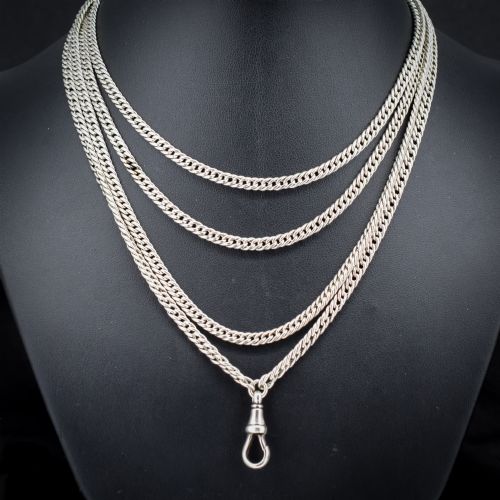
- A pocket watch chain named after Prince Albert, worn across a waistcoat or adapted as a necklace.
- Hallmark
- A stamp or series of marks applied by an assay office indicating metal purity and year of origin.
- Padlock
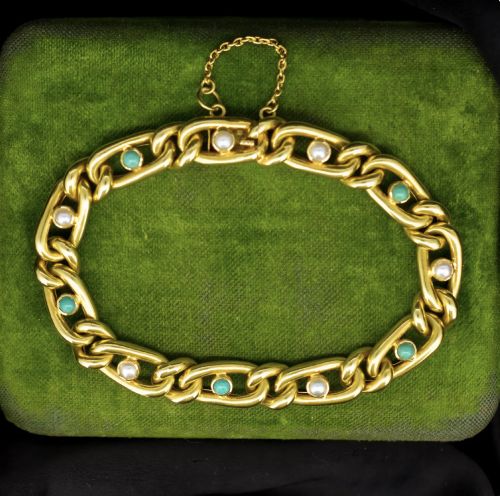
- A heart-shaped clasp commonly found fastening Victorian and Edwardian gold and silver bracelets.
Antique Curb Link: Frequently Asked Questions
How do I wear an antique watch chain?
Antique watch chains, such as albert chains, adapt easily into contemporary necklaces or multi-wrap bracelets. You can attach the existing dog clip or padlock directly to any link for a custom length.
Many pieces also accommodate pendants, lockets, or fobs originally designed to hang from pocket watch chains. This flexibility allows you to style the jewellery according to personal preference.
How do I date a silver curb link?
Dating these pieces relies heavily on British hallmarks stamped onto the metal links, dog clips, or T-bars. These official marks indicate the assay office, metal purity, and a specific date letter corresponding to the year of manufacture.
Stylistic cues, such as the inclusion of heart padlocks or specific engraving patterns, further help narrow down the decade. Victorian and Edwardian examples each display distinct proportional characteristics.
What is the difference between silver and gold?
Silver pieces from the Victorian and Edwardian eras utilise sterling silver, frequently paired with pocket watches and fob medals. Gold curb links appear in various purities, including 9ct rose gold, 9ct yellow gold, and higher grades like 15ct and 18ct gold.
While silver offers a bright, durable finish associated with utilitarian watch chains, gold provides a warmer tone often reserved for finer presentation pieces and bracelets.