
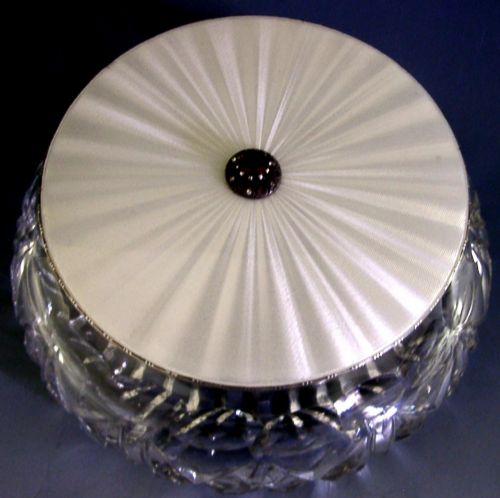


Antique Crystal Lidded Jar
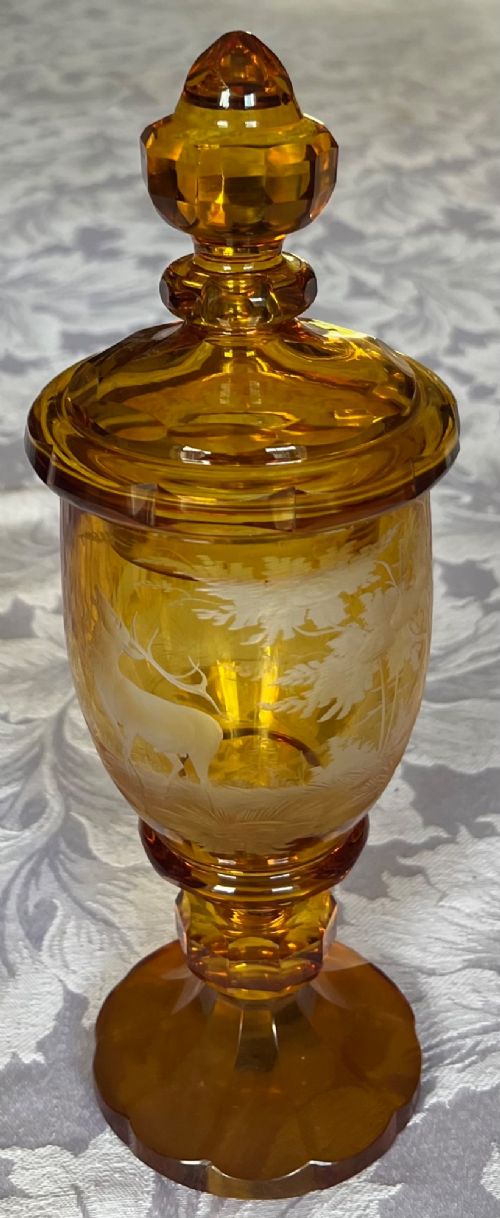
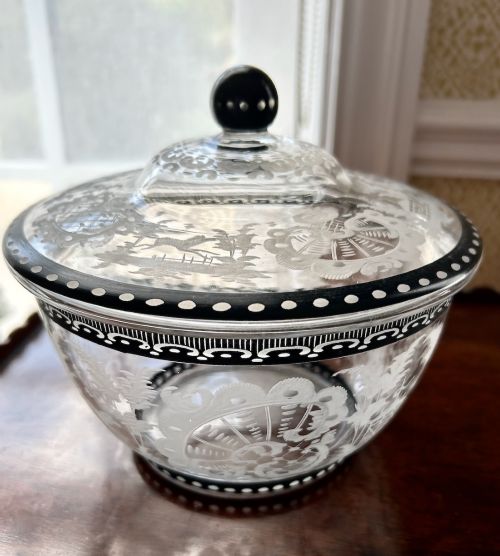
An antique crystal lidded jar brings heavy cut glass and precious metal mounts together to hold cosmetics, sweets or biscuits on a dressing table.
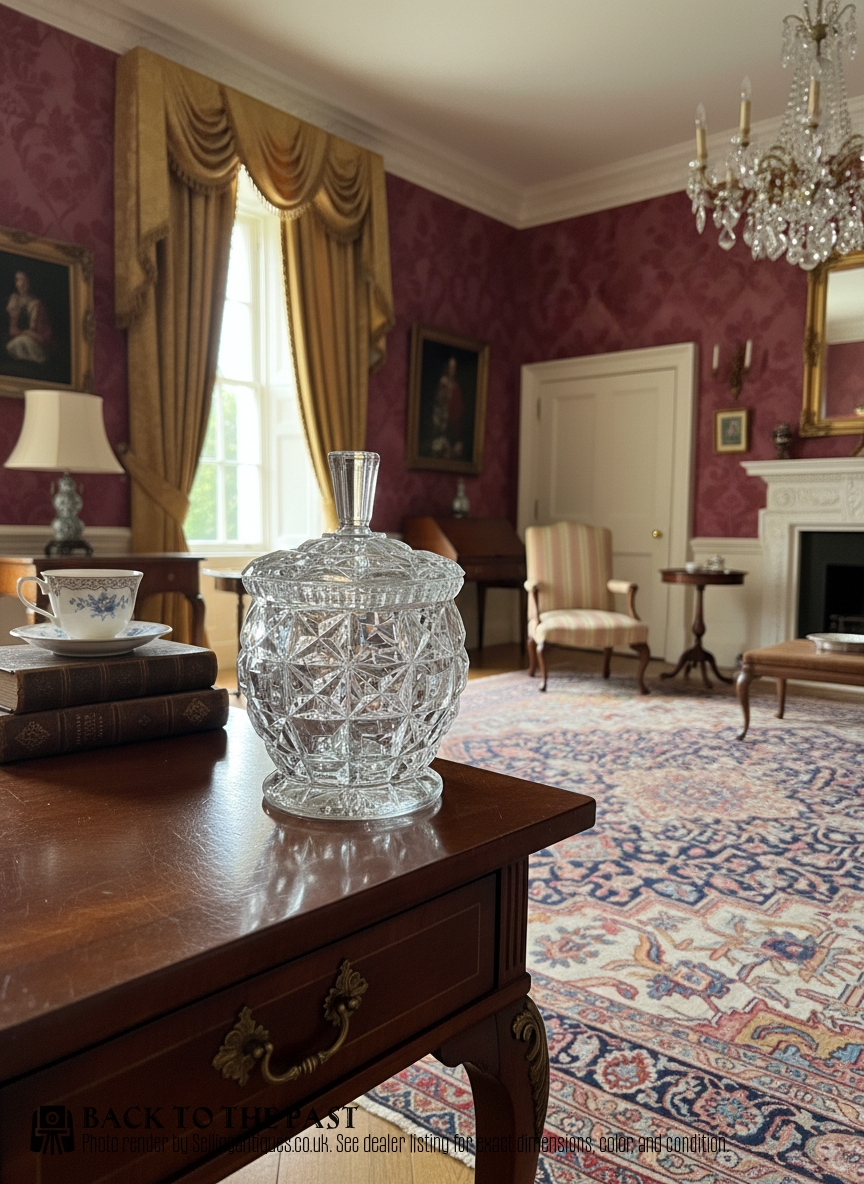
Antique Crystal Lidded Jar
When you search for an antique crystal lidded jar, you encounter a variety of functional containers spanning the Victorian, Edwardian and Art Deco periods. These pieces range from small vanity jars and scent bottles to large biscuit barrels, preserve pots and sweetmeat jars.
The most common examples on this page date from the nineteenth and early twentieth centuries, particularly the Victorian and Edwardian eras. They served daily domestic uses in bedrooms, dining rooms and drawing rooms before transitioning into decorative display items.
Materials and technique
The body of each piece relies on heavy cut glass or lead crystal, shaped by blowing or moulding before artisans cut geometric or floral motifs across the surface. This cutting creates sharp facets that catch ambient light and reveal the clarity of the material.
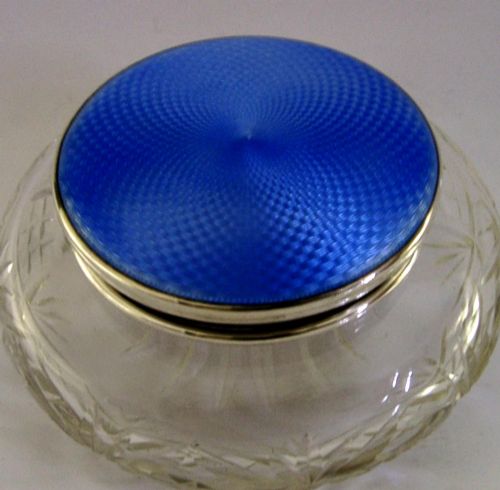
Lids and mounts utilise sterling silver, tortoiseshell, enamel or plated metals, often secured with hinged or screw fittings. Silversmiths and jewellers fitted these metal collars directly to the glass necks, frequently incorporating hallmarks to record the assay office and date.
One unexpected survival in the evidence is a dedicated pumpkin-shaped punch bowl from the early twentieth century, ready for seasonal Halloween gatherings.
Distinctions in manufacture
Quality rests upon the depth and crispness of the glass cutting, where sharper facets and intricate hand-polishing distinguish superior work from mass-produced pressed alternatives. Weight also signals substance, as genuine lead crystal provides a denser, more resonant feel in the hand.
The refinement of the metal mount adds another layer of distinction, seen in substantial sterling silver gauges, precise tortoiseshell inlays and undamaged enamel panels. Maker involvement, indicated by reputable retail signatures or clear hallmarks, elevates a piece further.
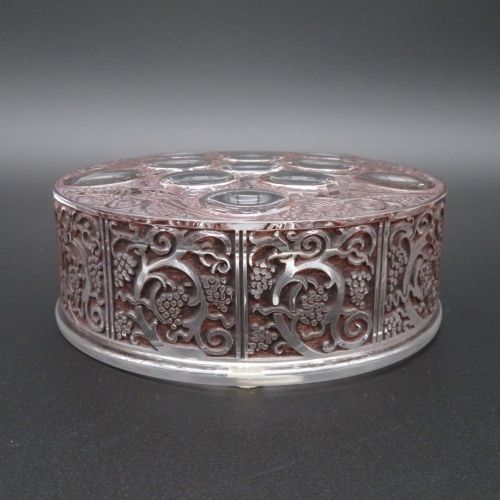
Asprey·Asprey & Co.·Lalique
The Antique Crystal Lidded Jar Glossary
- Cut glass
- Glass shaped and decorated by holding the vessel against a rotating abrasive wheel. This process produces deep incisions and facets characteristic of nineteenth-century tableware and vanity items.
- Lead crystal
- Glass containing a significant proportion of lead oxide, which increases weight, refractive index and brilliance. It allows for deeper, sharper cutting than standard soda-lime glass.
- Biscuit barrel
- A covered ceramic or glass container designed for storing dry biscuits on the dining table. Many surviving examples sit within metal frames fitted with swing handles.
- Sweetmeat jar
- A covered vessel historically used for holding small sugary confections, nuts or dried fruits. They often appear on footed pedestals with matching domed covers.
- Vanity jar
- A small lidded container intended for dressing table accessories such as creams, pins or powder. They frequently pair cut glass bodies with silver or tortoiseshell lids.
Antique Crystal Lidded Jar: Frequently Asked Questions
What were these jars originally used for?
These jars served practical functions in Victorian and Edwardian households, holding items like biscuits, preserves, perfumes, trinkets and cosmetics. Their varied sizes matched specific rooms, from dining sideboards to bedroom dressing tables.
Over time, changing domestic habits shifted their roles from daily utility to ornamental display. Today, they remain useful for containing small contemporary items while adding period character to a room.
How do I date an antique glass jar?
Dating relies on stylistic clues, manufacturing techniques and associated metal components. Victorian pieces often feature heavy, deep-cut glass and ornate sterling silver mounts with legible hallmarks.
Art Deco examples from the 1920s and 1930s introduce streamlined geometric shapes, coloured enamels or distinct signatures from makers like Lalique. Hallmarks on attached silver lids provide the most precise chronological anchor.
How should I clean a cut crystal jar?
Cleaning requires lukewarm water and mild soap, avoiding abrasive cloths or harsh chemicals that could scratch the glass or damage delicate silver and tortoiseshell mounts. Metal components should stay dry to prevent tarnishing or loosening from the glass neck.
Allowing the crystal to air dry on a soft towel preserves its clarity and prevents lint transfer. For silver lids, a dedicated polishing cloth used away from the glass maintains the metal finish safely.