


Antique Crystal Earrings
These antique crystal earrings combine centuries of craftsmanship and luminous stones, offering a timeless addition to any collection.
Antique Crystal Earrings
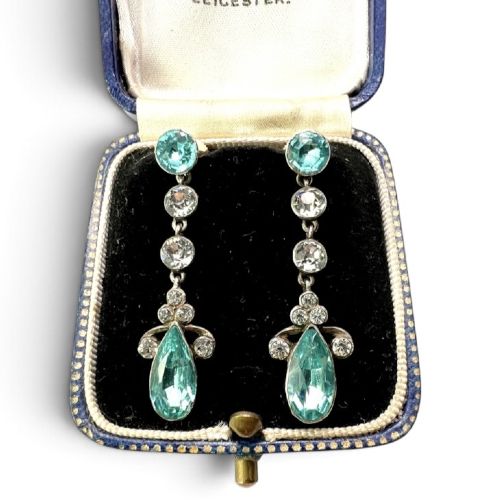
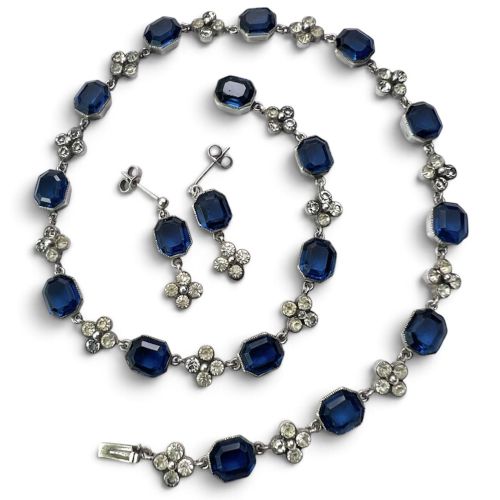
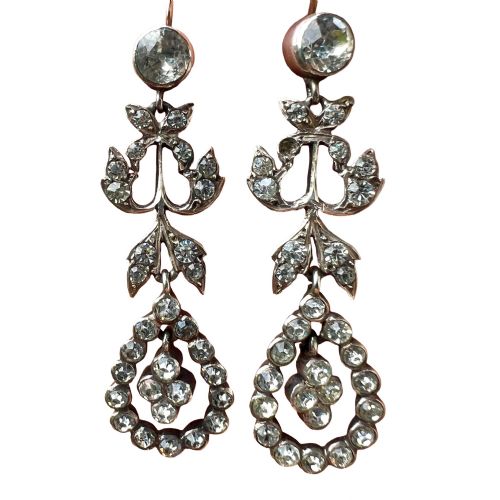
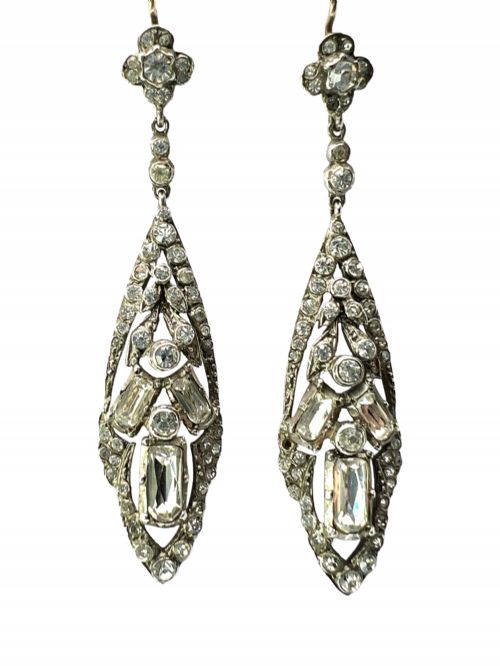
Antique crystal earrings encompass a diverse array of drop, chandelier, and dangling forms spanning from the Victorian and Edwardian eras into the mid-twentieth century. When searching for antique crystal earrings, collectors encounter pieces shaped by distinct historical periods ranging from nineteenth-century designs to Art Deco creations.
How they were made
Maker techniques rely heavily on setting rock crystal and paste glass into combinations of silver and nine-carat gold. Master jewellers utilised secure screwback closures, hinged lever backs, and delicate chain drops to construct durable yet elegant silhouettes.
Faceted stones receive careful cutting to maximise brilliance within metal frames that often pair silver over gold settings. Structural integrity is maintained through meticulous metalwork supporting briolette, cushion, and baguette cuts.
Listings feature silver, nine-carat gold, and eighteen-carat gold alongside rock crystal, paste glass, citrine, and tourmaline.
What varies in quality
Quality rests upon the precision of stone cutting and the integrity of the metal settings holding the crystals. Finer examples display superior clarity in rock crystal and expert foil-backing or faceting in paste glass.
The sophistication of the metalwork, whether involving intricate marcasite detailing or solid nine-carat gold components, distinguishes standard production from exceptional pieces.
The Antique Crystal Earrings Glossary
- Rock crystal
- A naturally occurring colourless quartz that jewellers cut and facet for clarity and brilliance. It forms the primary transparent stone in many Victorian and Edwardian pieces.
- Paste glass
- A heavy, highly transparent lead glass hand-cut and polished to imitate gemstones. It captures light in a manner distinct from modern synthetics.
- Screwback
- A mechanical fastening mechanism utilising a threaded post and screw closure designed for non-pierced ears. This fitting appears frequently on nineteenth-century and early twentieth-century pairs.
- Briolette
- A drop-shaped gemstone cut with triangular facets entirely around its surface. This cut allows the crystal to catch light from every angle.
- Marcasite
- Small, faceted pieces of iron pyrite polished and set closely together to create a glittering frame. It adds dark metallic contrast to silver settings.
Antique Crystal Earrings: Frequently Asked Questions
How do I clean antique crystal earrings?
Clean antique crystal earrings gently using a soft cloth dampened with warm water and mild soap. Avoid harsh chemical cleaners or ultrasonic machines that might damage delicate settings or foil-backed stones.
Dry each piece thoroughly with a lint-free cloth before storing it in a lined box. Taking care with moisture preserves both the metal settings and the historical integrity of the crystals.
Are these earrings for pierced ears?
These pieces feature various fastening types suited to different preferences. While many utilise standard hooks or modern conversions, several period examples retain original screwback fittings for non-pierced lobes.
Check the specific description of each listing to confirm the closure type. Jewellers can often adapt historic mechanisms if necessary.
How can I tell Victorian from Art Deco pairs?
Victorian pairs often incorporate ornate silver-on-gold settings, cushion cuts, and rich organic motifs. They lean towards romantic, cascading forms with sentimental stones.
Art Deco designs favour geometric lines, streamlined symmetry, and contrasting materials like jade glass or marcasite. The shift in metalwork and silhouette clearly marks the transition between eras.