



Antique Crystal Coupe Glasses
Antique crystal coupe glasses bring genuine theatre to a table, offering wide bowls designed for proper celebration and historical charm.
Antique Crystal Coupe Glasses
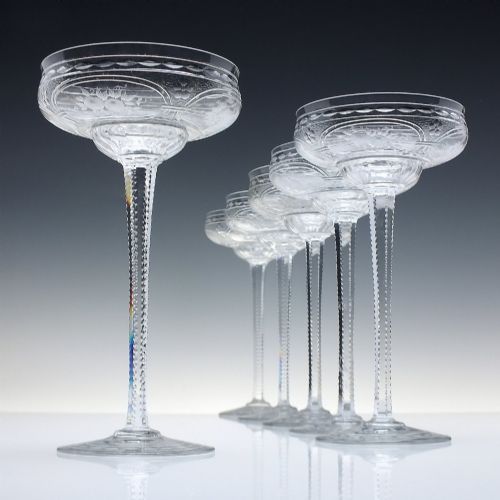
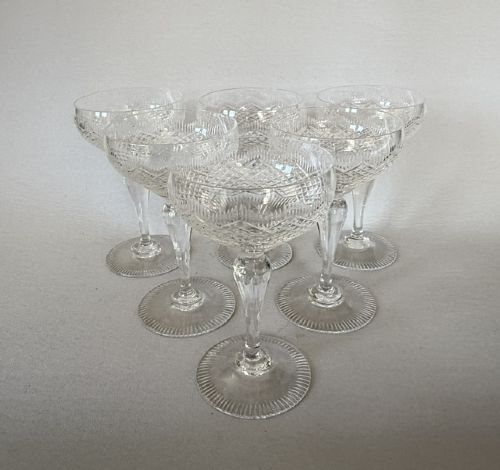
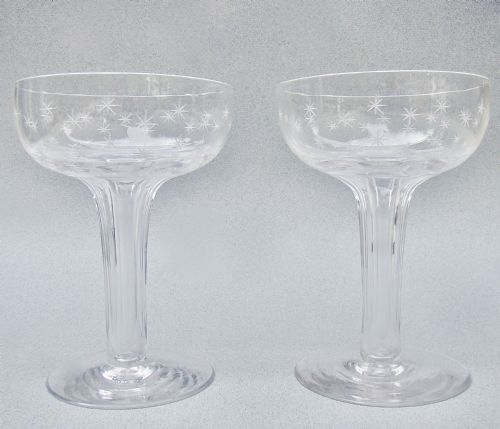
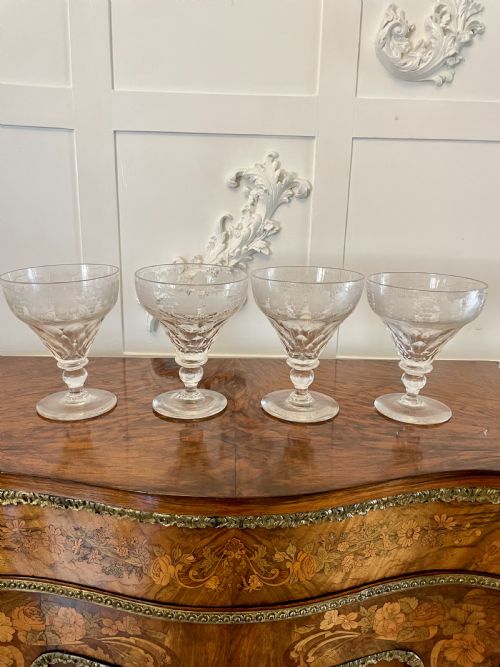
When you search for antique crystal coupe glasses, you encounter distinctive shallow bowls created for champagne and sparkling wine across several distinct periods. The listings span Georgian pedestal stems, Victorian star-etched or cranberry over crystal examples, and Edwardian or Art Deco sets featuring facet cut stems.
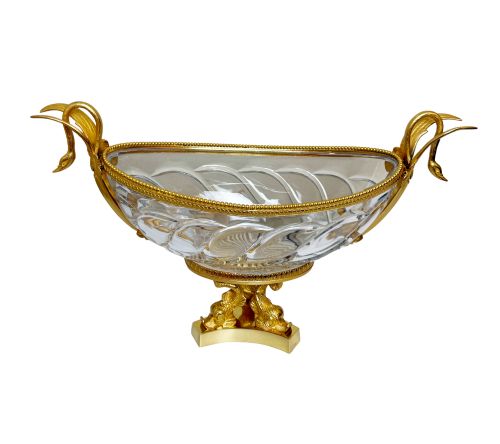
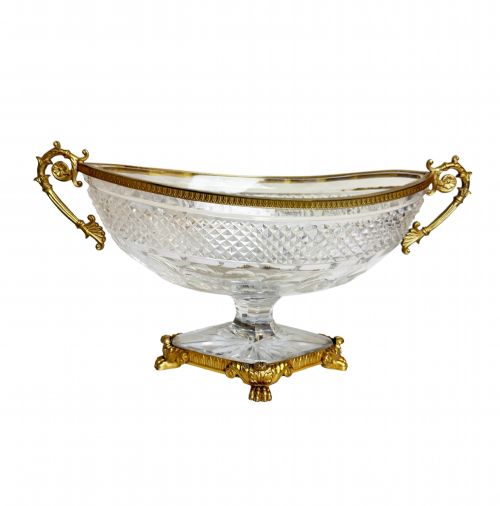
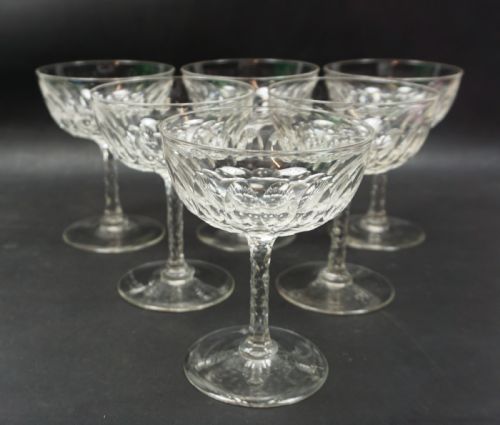
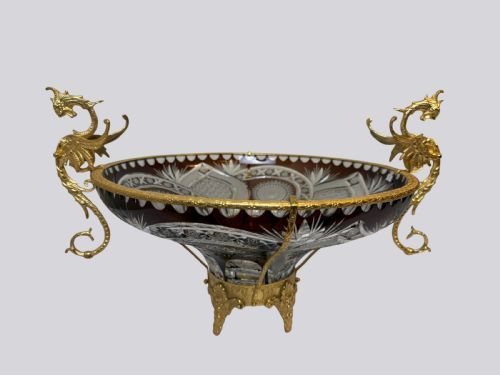
You also find large centrepiece bowls and gilt bronze or ormolu centrepieces that share the same heavy lead crystal and cut glass vocabulary. The most common offerings on this page are sets of six small cut glass champagne bowls and pairs of coloured over crystal coupes.
The styles shift from Regency and Empire to Belle Epoque and French nineteenth-century interpretations. Each era brings its own proportions, from the early eighteenth-century pedestal stems to the later twentieth-century coloured glass variants.
How they were made
The pieces on this page utilise heavy lead glass and lead crystal, shaped by blowing before receiving deep facet cuts or delicate wheel engraving. Makers applied wheel-cutting techniques to create geometric patterns, stars, and botanical motifs such as convolvulus and fruiting vines directly into the crystal surface.
Complex centrepieces combine this heavy cut crystal with cast gilt bronze and ormolu mounts. Coloured examples achieve their depth through layered glass techniques, fusing cranberry, green, or red glass over a clear crystal core before cutting through the outer layer.
Some Victorian glasses are star-etched on the underside of the hollow stem so the design catches the light from every possible angle.
What varies in quality
Quality rests on the clarity of the metal and the crispness of the cutting rather than the mere presence of decoration. Superior pieces display sharp, clean facet cuts that catch the light directly, alongside hand engraving that shows genuine depth and precision on the bowl and foot.
The weight of the lead crystal and the harmony of proportion between the shallow bowl, the stem, and the foot separate standard glassware from exceptional examples. In composite pieces involving metalwork, the quality of the gilt bronze mounts and their secure integration with the crystal determine the standing of the object.
The Antique Crystal Coupe Glasses Glossary
- Coupe
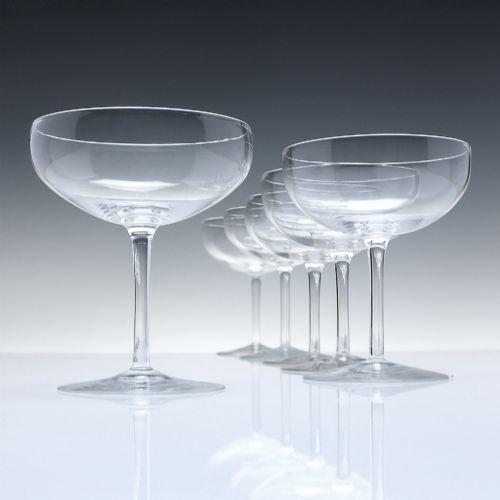
- A shallow, broad-bowled glass historically used for champagne and sparkling wine. Its wide rim allows the bubbles to dissipate quickly.
- Lead crystal
- Glass containing a high proportion of lead oxide, which increases weight, brilliance, and workability for deep cutting. It rings clearly when struck.
- Facet cut
- A decorative technique employing flat, polished planes ground into the surface of the glass. It creates geometric patterns that refract light.
- Cranberry over crystal
- A layered glass method where a thin casing of rich red-pink glass covers a clear crystal body. Cutting through the outer layer reveals the clear glass beneath.
- Ormolu
- Gilt bronze mounted onto or supporting decorative objects, particularly popular in French nineteenth-century centrepieces. It adds structural weight and metallic contrast to the crystal.
Antique Crystal Coupe Glasses: Frequently Asked Questions
Were these coupe glasses actually used for champagne?
These shallow bowls were the standard vessel for champagne throughout the Victorian and Edwardian periods. The wide design was intended to showcase the mousse and allow drinkers to consume sparkling wine easily.
Modern tastes often prefer flutes, but coupes remain prized for their vintage aesthetic and historical connection to celebratory dining.
How can I tell a Georgian glass from a Victorian one?
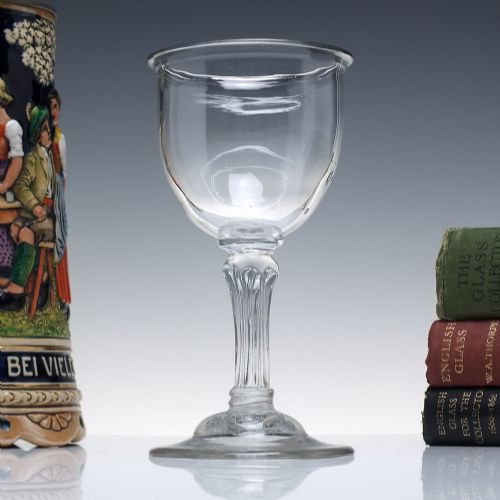
Georgian examples often feature heavier pedestal stems and simpler, heavier proportions reflecting eighteenth-century manufacturing methods. The metal itself may show characteristic small bubbles and tool marks from hand production.
Victorian and Edwardian pieces frequently introduce more complex machine or wheel cutting, star-etching, and brighter chemical colours like cranberry and green.
Can I mix different sets of antique coupes?
Mixing sets of cut glass coupes creates an eclectic table setting, provided the overall scale and tone of the crystal complement one another. Matching heights and similar lead crystal clarity help maintain visual harmony across the table.
Many buyers pair complementary pairs of coloured over crystal glasses with standard clear cut glass bowls for a varied display.