



Antique Crystal Clock
An antique crystal clock brings a brilliant play of light to a mantelpiece, combining precise mechanical movement with transparent housing.
Antique Crystal Clock
When you search for an antique crystal clock, you are looking at domestic timepieces designed to showcase their internal movements through glass and crystal panels. These objects range from portico clocks of the early nineteenth century to the elaborate four-glass and regulator mantel clocks produced later in the Victorian and Belle Epoque periods.
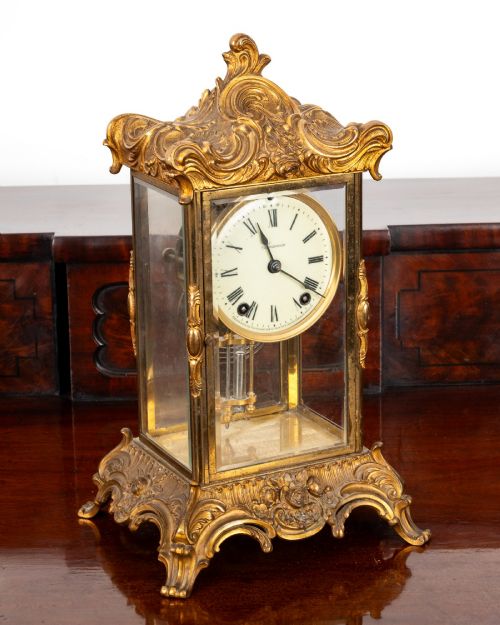
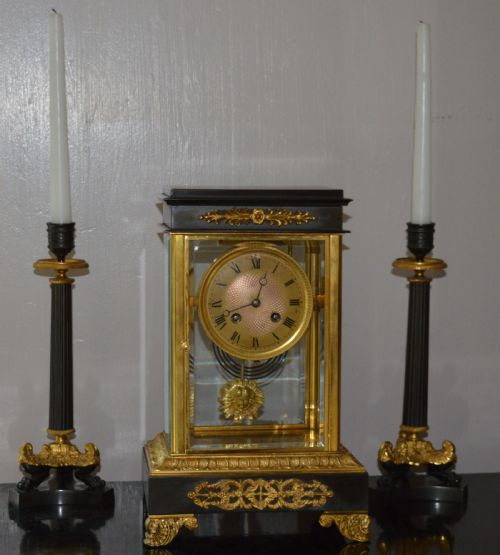
The version you are most likely to meet on this page is the French crystal regulator, often featuring bevelled glass encased in brass, gilt bronze, or ormolu. Such pieces frequently incorporate enamelled dial plates, sometimes adorned with painted floral details or coloured glass panels in shades of pink, green, or blue.
Originating predominantly from French workshops and occasionally American makers like Ansonia, these mantel clocks served as status symbols in nineteenth-century drawing rooms. Their architectural cases reflect historic revival styles, notably Louis XVI, Charles X, and Second Empire aesthetics, adapting classical proportions to transparent housings.
How they were made
Makers constructed these clocks using heavy cast brass, gilt bronze, or ormolu frames to support thick sheets of bevelled glass. The transparent panels allowed light to pass through the entire housing, illuminating the pendulum and escapement from multiple angles.
Clockmakers fitted the glass cases with intricate enamel dials, frequently painted with numerals and decorative motifs. Metal components were cast, chased, and gilded, while the crystal elements required precise cutting and bevelling to fit snugly into the metal mounts without adhesives.
Antique Crystal Clock Retail Price Guide 2026
Typical asking prices for crystal clock among the pieces listed under this phrase on Sellingantiques today, from the lower quarter to the upper quarter. They describe what is for sale here now, not the wider market.
Some clocks feature delicate pink and blue enamel panels, proving that nineteenth-century engineers enjoyed a splash of pastel.
What varies in quality
The calibre of the movement separates standard examples from exceptional ones, with established makers using superior gear trains and compensated pendulums. The weight and thickness of the cast bronze or ormolu frame also dictate quality, alongside the clarity and precision of the bevelled glass panes.
Enamel dials with finely hand-painted details or rich coloured panels represent a higher tier of production than plain white faces. The integration of matching side urns or candelabra in complete clock sets elevates the overall status of the piece within its period.
Ansonia New York·Samuel Marti et Cie·L Epee France
The Antique Crystal Clock Glossary
- Crystal regulator
- A mantel clock housed in a glass and brass or bronze case that exposes the mechanical movement from all sides. These pieces often feature a mercury or gridiron pendulum.
- Portico clock
- A monumental clock style featuring a classical architectural frame supported by columns. They frequently incorporate cut crystal pillars and heavy ormolu mounts.
- Ormolu
- Gilt bronze produced by applying a mercury and gold amalgam to a bronze base and heating it. This technique creates a rich, durable golden finish characteristic of French luxury objects.
- Bevelled glass
- Glass panes with edges ground and polished at an acute angle. This treatment catches the light and adds depth to the transparent housing of the clock.
- Enamel dial
- A metal clock face coated with fused powdered glass and fired in a kiln. Numerals and decorations are painted onto this glossy surface before a final firing.
Antique Crystal Clock: Frequently Asked Questions
How do crystal regulators work?
These clocks operate via a spring-driven or weight-driven mechanical movement housed within a central brass drum. The motion is transmitted to visible gears and regulated by a swinging pendulum suspended inside the glass case.
The transparent housing allows the observer to view the entire escapement and pendulum action from the sides and rear. Winding is typically performed through the dial face using a dedicated key.
Where should I place a mantle clock?
A mantel clock requires a stable, level surface away from direct sunlight and damp environments. Traditional placement is upon a fireplace mantel or a sturdy console table.
Because these pieces feature glass panels on multiple sides, positioning them where light can pass through the case enhances their visual impact. Ensure the surface is free from vibrations to maintain accurate timekeeping.
How do I identify French clock periods?
Dating relies on stylistic clues within the bronze casting, dial design, and architectural proportions of the case. Charles X examples often feature neoclassical portico frames, while later nineteenth-century pieces lean towards Rococo Revival or Second Empire opulence.
Maker marks stamped onto the brass movement plates provide definitive chronological markers. Signatures from firms like Samuel Marti help narrow production dates to specific decades.
What is a four glass clock?
A four-glass clock is a specific variant of the crystal regulator featuring glass panels on the front, back, and both sides. This design maximises visibility of the interior movement and the mercurial or gridiron pendulum.
These clocks frequently include a mercury-filled pendulum designed to compensate for temperature fluctuations. The brass frames are often gilded or enamelled to complement the room's decor.