

Antique Cross Jewellery
Antique cross jewellery spans centuries of devotional and decorative design, offering wearable history through gold, silver, gemstones and enamel.
Antique Cross Jewellery
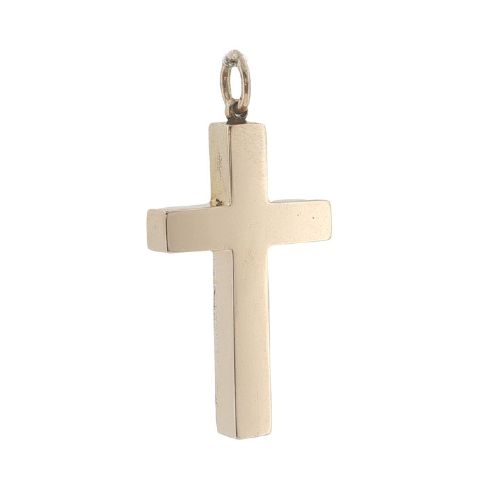
Antique cross jewellery encompasses pendants, brooches, necklaces and charms shaped around Christian symbols, personal devotion and decorative motifs. These pieces appear frequently as pendants intended for chains, alongside brooches and conversion pieces dating from the Georgian era through to the mid-century.
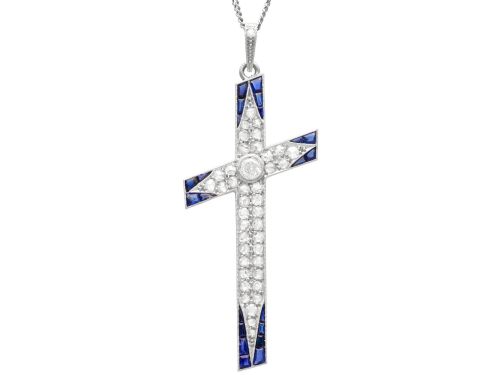
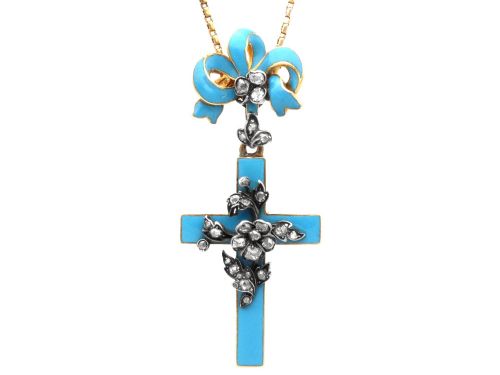
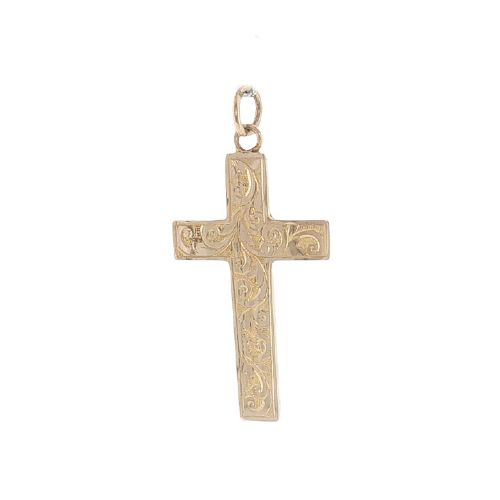
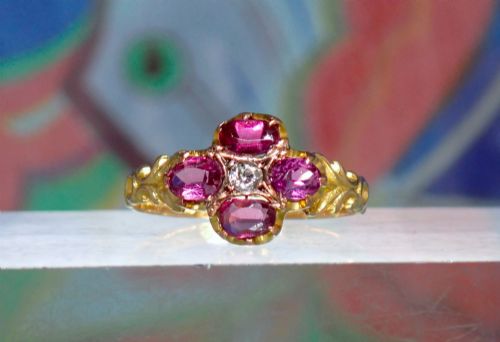
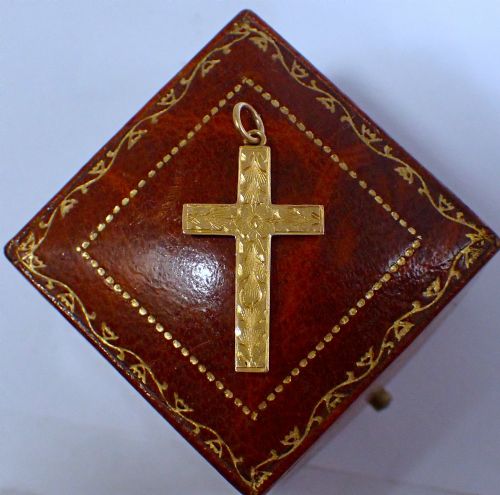
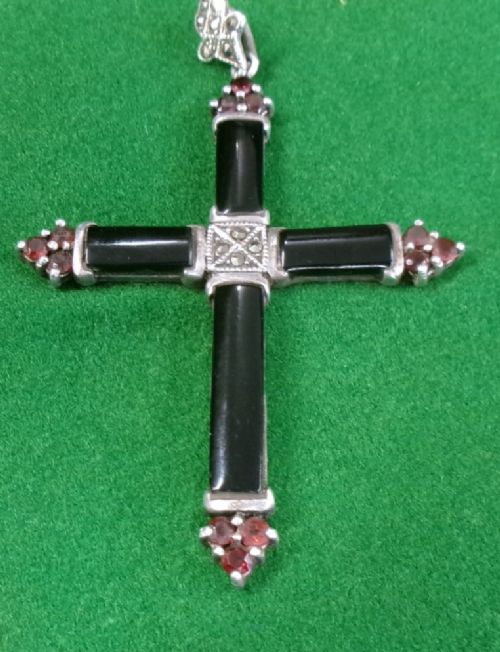
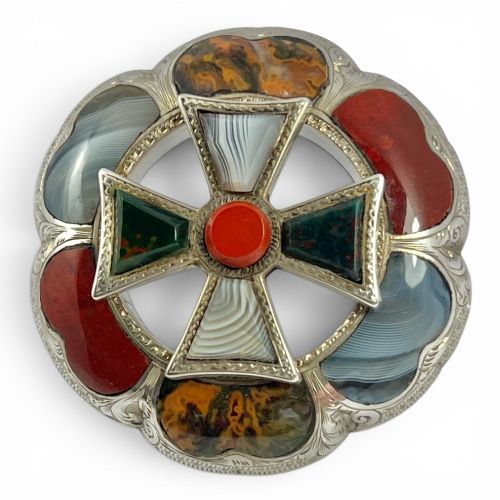
The selection ranges from early geometric forms and plain engraved gold to elaborate gemstone-set crucifixes and enamelled medallions. Victorian examples dominate the available styles, often combining turquoise, pearls, garnets or diamonds within gold or silver settings.
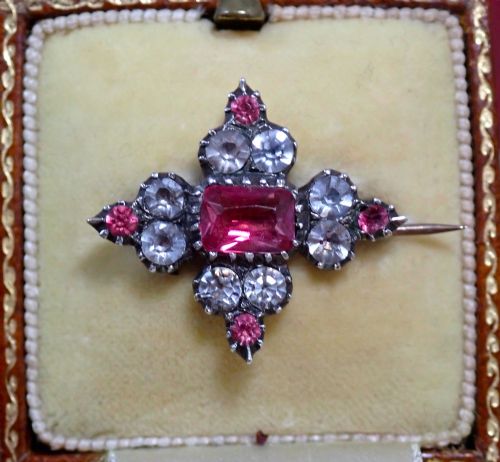
Buyers also encounter Georgian paste-set crosses, Edwardian hallmarked gold pieces and Arts and Crafts silver work. Each era brings distinct proportions and setting techniques to the traditional cross form.
Materials and Construction
Makers utilised gold in various purities, including 9ct, 15ct, 18ct and 24ct, frequently pairing silver with gold in earlier pieces to enhance the brilliance of diamond and paste settings. Enamel work, coral, seed pearls and turquoise added colour and texture to the metal framework.
Construction techniques evolved from hand-cut foiled pastes and closed-back settings in the Georgian period to more refined claw settings and detailed hand engraving during the Victorian and Edwardian eras. Hallmarks stamped into the metal often record the assay office and date of manufacture for British pieces.
Materials recorded on the page include gold across multiple purities, silver, platinum, bronze, enamel, coral, pearls, turquoise, amethyst and diamonds.
Distinctions in Quality
Quality rests upon the crispness of the hand engraving, the symmetry of the metalwork and the integration of the stones. Finer examples display secure setting of gems like diamonds, almandine garnets and sapphires without excess adhesive or crude solder joints.
The choice of materials dictates the baseline, where solid 15ct or 18ct gold and genuine gemstones distinguish higher tiers from rolled gold or plated alternatives. Original condition, intact enamel and legible assay marks elevate the standing of a piece.
Omar Ramsden and Alwyn Carr·Henry Cook
The Antique Cross Jewellery Glossary
- Paste
- Hand-cut glass used to imitate gemstones in historic jewellery. Georgian makers often foiled the backs of paste stones to increase their reflectivity.
- Almandine garnet
- A deep red variety of garnet commonly utilised in Victorian cluster rings and pendants. It provides a rich, dark tone under candlelight.
- Pique
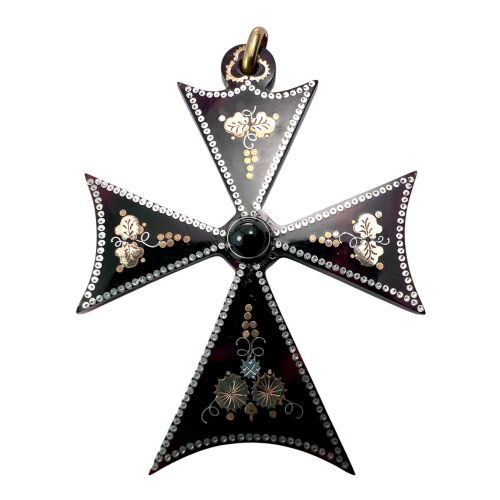
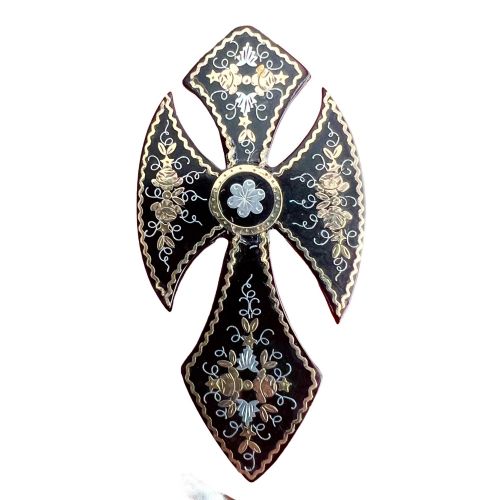
- A method of inlaying tiny points of gold or silver into tortoiseshell or other organic materials. This technique appears on decorative Victorian brooches.
Antique Cross Jewellery: Frequently Asked Questions
How do I date an antique cross?
Dating relies on hallmarks, metal purities, stone cuts and construction methods. British pieces often bear assay marks that pinpoint the exact year of manufacture.
Stylistic shifts, such as Georgian foiled settings versus Edwardian openwork, further clarify the period of origin.
Were all antique crosses worn for religious reasons?
Many crosses served as personal declarations of faith, yet others functioned purely as sentimental or decorative adornments. Victorian mourning jewellery and decorative revival pieces often utilised the cross motif for its balanced aesthetic.
Secular adoption grew alongside religious devotion throughout the nineteenth century.
Can I wear an antique cross pendant every day?
Daily wear is possible with robust gold or silver designs, though fragile pieces containing seed pearls, foil-backed pastes or delicate enamel require caution. Removing jewellery before bathing or physical work preserves the original materials.
Checking the security of loops and bails prevents accidental loss.
What is the difference between a cross and a crucifix?
A cross presents the bare geometric intersecting arms without additional figures. A crucifix specifically incorporates the corpus, or the figure of Christ.
Both forms appear across Georgian, Victorian and Edwardian inventories.