





Antique Crinoline Chair
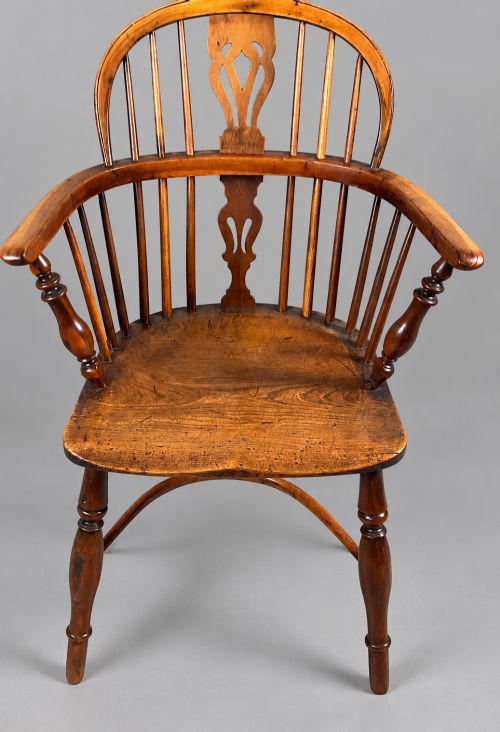
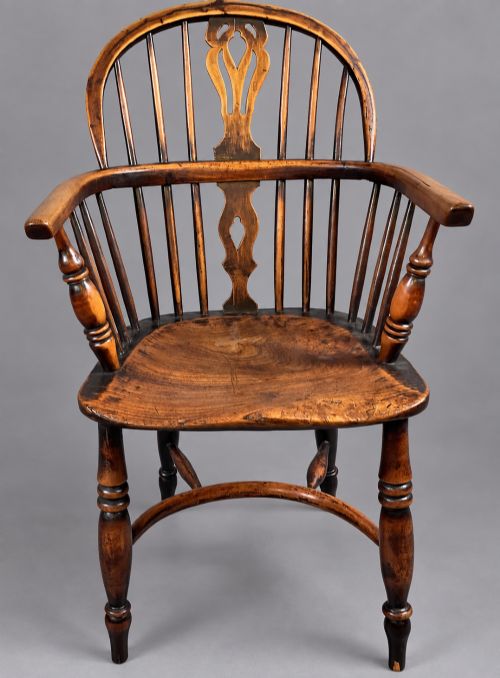
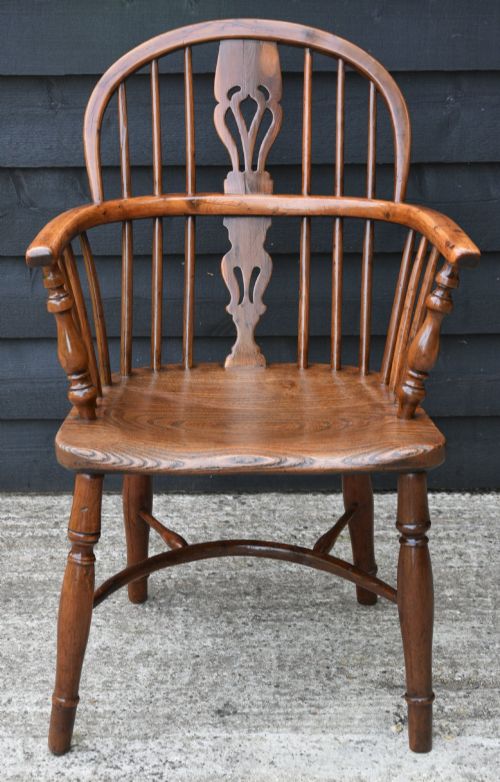
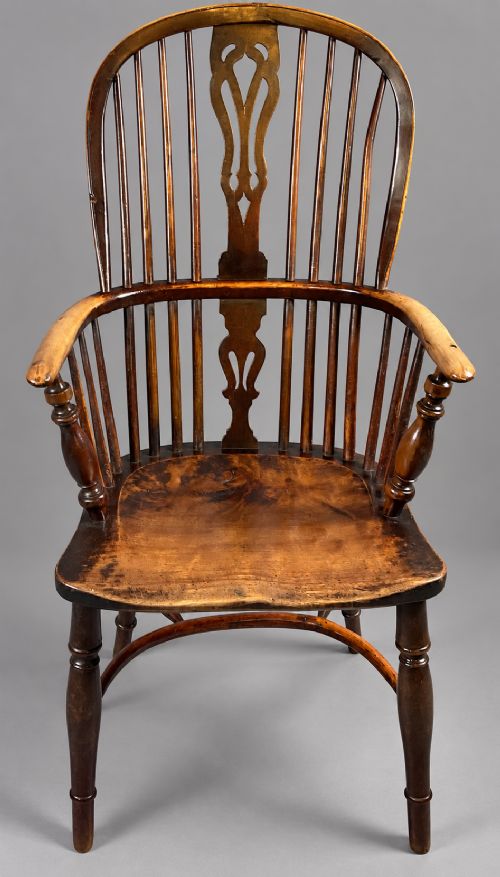
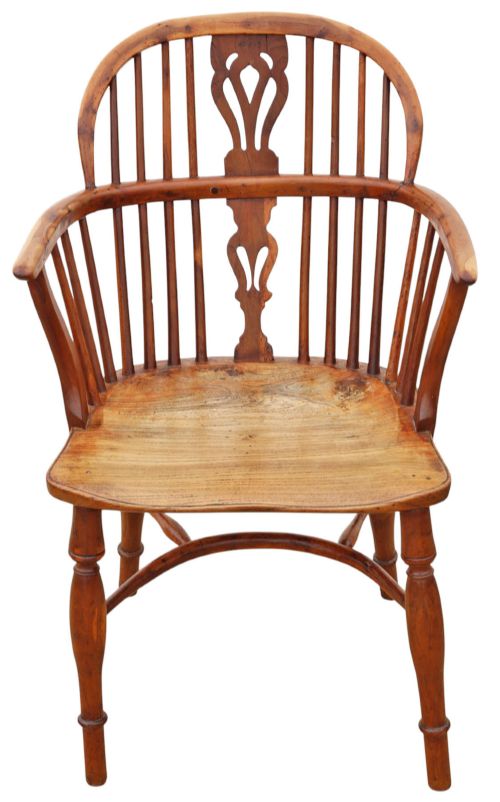
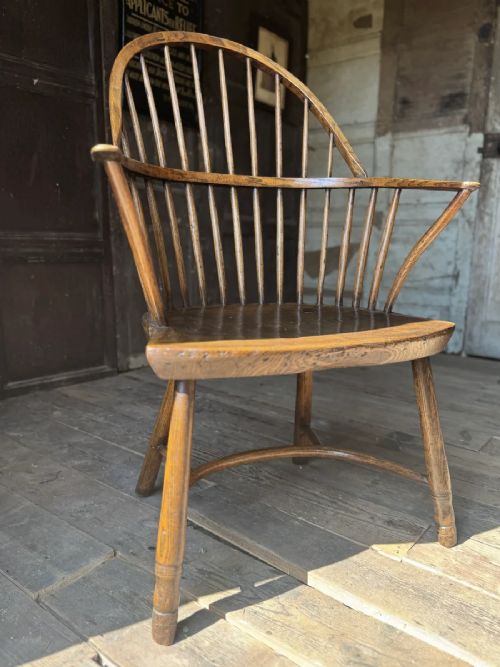
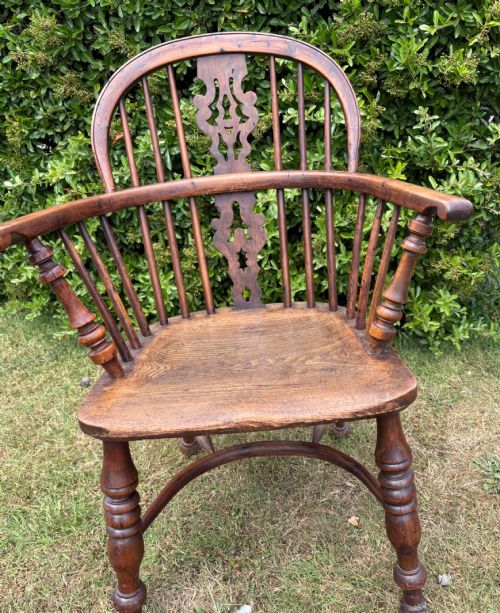
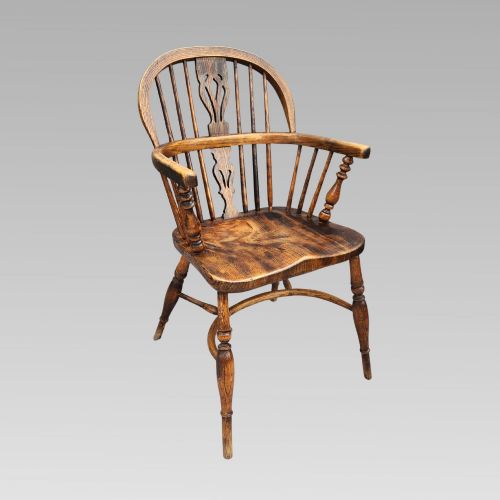
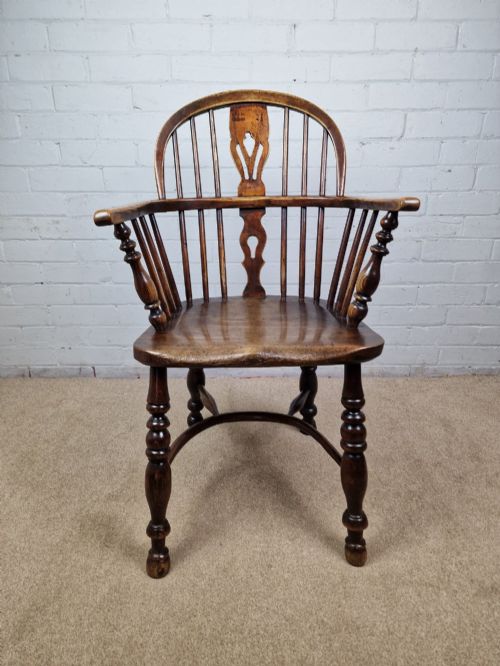
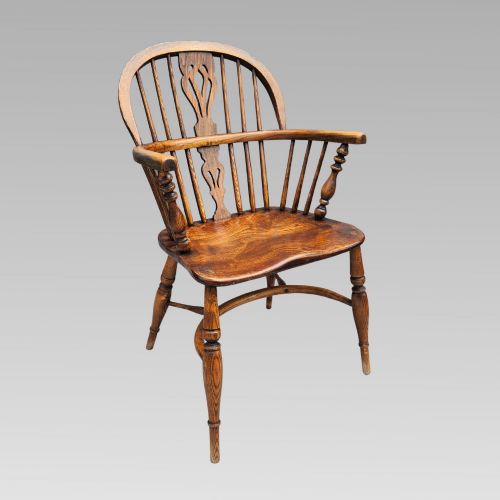
An antique crinoline chair is a traditional Windsor armchair defined by its curved stretcher, offering both robust country craftsmanship and distinct regional character for domestic seating.
Antique Crinoline Chair
The antique crinoline chair is fundamentally a Windsor armchair distinguished by a bentwood stretcher that curves outward from the central legs to reinforce the underframe. Most pieces encountered here stem from the eighteenth and nineteenth centuries, spanning Georgian and Victorian periods across English country workshops.
Forms vary between low back and high back variations, alongside armchairs, carvers, and occasional child's chairs. Makers utilised regional vernacular designs, producing sturdy seating for everyday use in country houses and rural homes.
How They Were Made
These chairs combine multiple native timbers within a single frame, pairing yew wood or elm seats with ash, beech, and oak spindles or legs. Craftsmen turned solid wooden seats and shaped the spindles by hand to support steam-bent bows and back splats.
Construction relies on traditional joinery where legs and spindles are wedged directly into bored seats. The distinctive crinoline stretcher was steam-bent into a hoop shape and pinned between the legs to provide lateral stability.
Antique Crinoline Chair Retail Price Guide 2026
Typical asking prices for crinoline chair among the pieces listed under this phrase on Sellingantiques today, from the lower quarter to the upper quarter. They describe what is for sale here now, not the wider market.
Child-sized Windsor chairs appear alongside full-scale armchairs, offering miniature seating complete with working crinoline stretchers.
What Varies in Quality
Quality rests upon the choice of timber and the richness of the grain, particularly in yew wood examples featuring burr back splats and figured seats. Well-defined turning on the legs and spindles indicates careful workshop production.
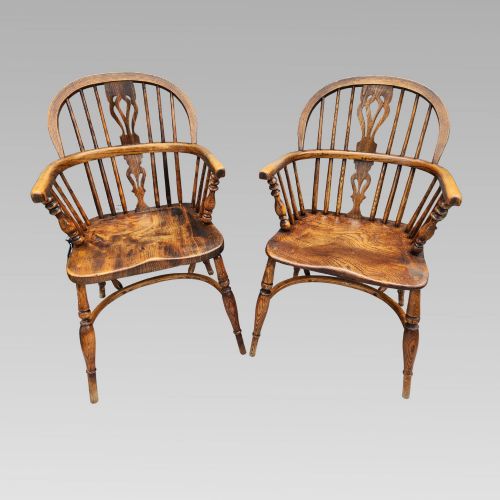
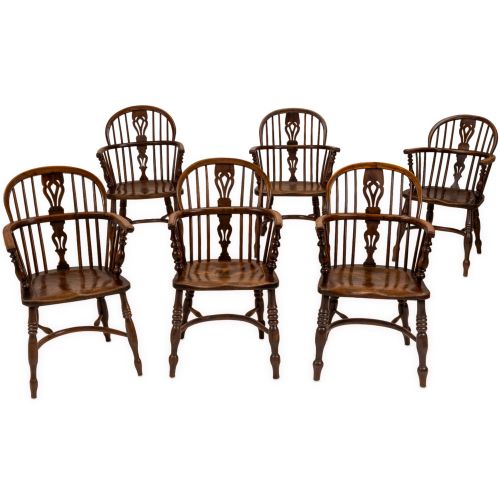
Proportion and symmetry distinguish finer examples from standard vernacular pieces. Matched sets and stamped maker attributions elevate the standing of individual chairs within regional traditions.
Gabbitass Worksop·Rockley Maker·Allsop Worksop·Fred Walker
The Antique Crinoline Chair Glossary
- Crinoline stretcher
- A curved hoop-shaped under-stretcher connecting the legs of a Windsor chair. It provides structural bracing and takes its name from the expanding crinoline petticoats of the nineteenth century.
- Windsor chair
- A wooden chair built with a solid carved seat into which the legs and back spindles are directly socketed. These seats are typically shaped from elm.
- Spindle back
- A chair back constructed from vertical turned wooden rods. They are pegged into the seat and the top rail to distribute weight evenly.
- Low back
- A chair design where the arms and back rail form a continuous low curve around the sitter. This style is frequently found on nineteenth-century vernacular seating.
- Carver
- An armchair designed in the same pattern as the smaller dining chairs of a set. They served as host seating at the head of a table.
Antique Crinoline Chair: Frequently Asked Questions
What is a crinoline chair?
An antique crinoline chair is a Windsor armchair featuring a characteristic curved stretcher beneath the seat. This hoop-shaped brace ties the legs together for added strength.
Such chairs emerged from English vernacular traditions, combining solid wooden seats with turned spindles and bentwood parts. They were produced primarily during the eighteenth and nineteenth centuries.
How do I date a Windsor chair?
Dating involves examining the combination of timbers, the profile of the turning, and the construction methods used in the underframe. Earlier pieces often display robust proportions and distinct regional traits.
Maker stamps and specific wood selections, such as figured yew and elm, help narrow the period of origin. Comparing the back height and arm scrollwork against known vernacular styles provides further context.
Where were these chairs made?
These chairs originated in English country workshops, with notable production centres in Nottinghamshire and the West Country. Local timber availability shaped the regional variations.
Craftsmen utilised native woods such as yew, ash, elm, and beech sourced directly from local woodlands. This regional specialisation gives each area its own distinct aesthetic.
How do I live with antique chairs?
Placing wooden country chairs in stable indoor environments protects the timber from extreme humidity shifts. Regular dusting and occasional waxing keep the aged surface conditioned.
These armchairs function well as desk seating, hallway accents, or around a dining table. Their sturdy construction ensures they remain practical for daily use.