
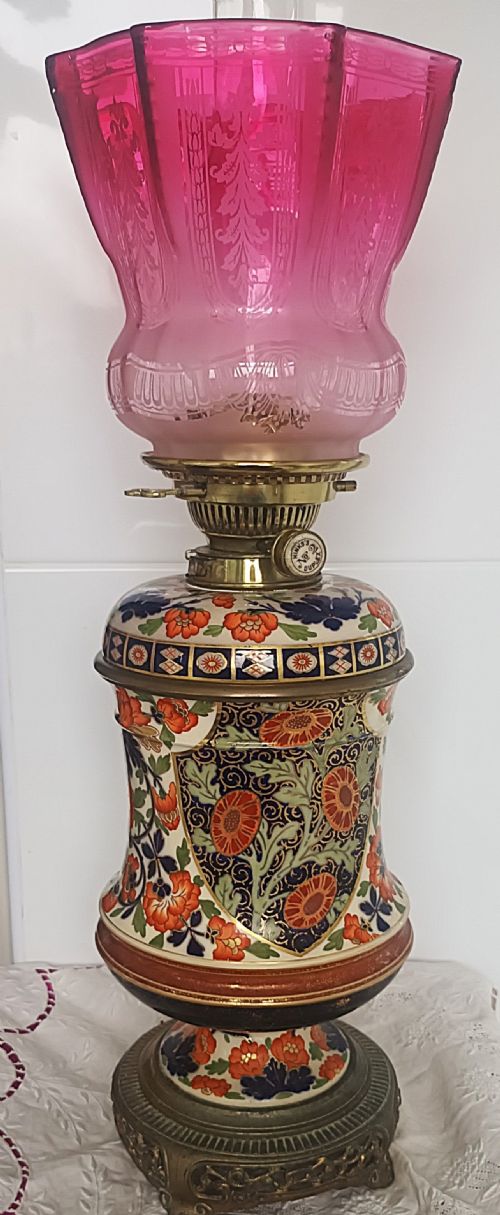
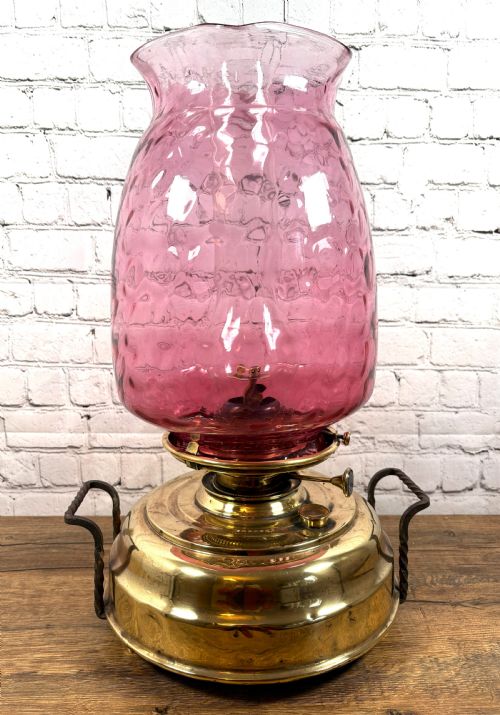


Antique Cranberry Paraffin Burner
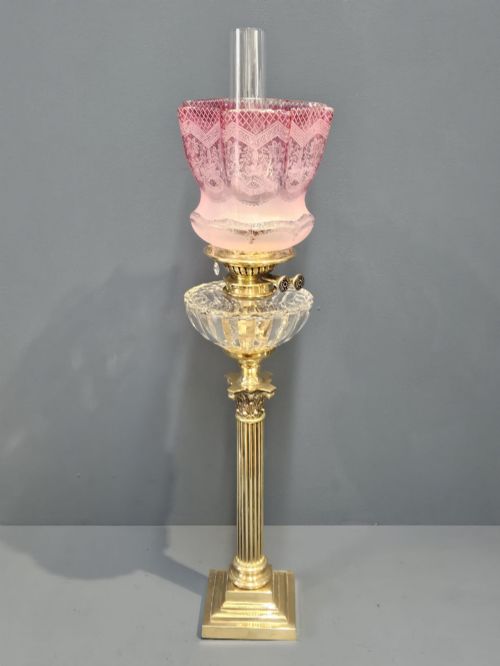
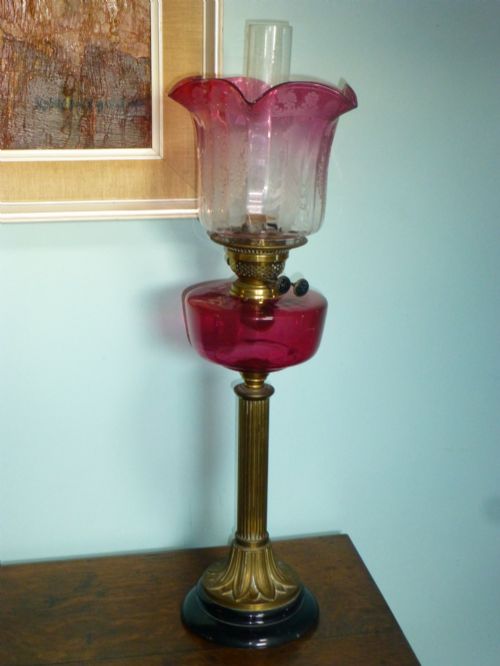
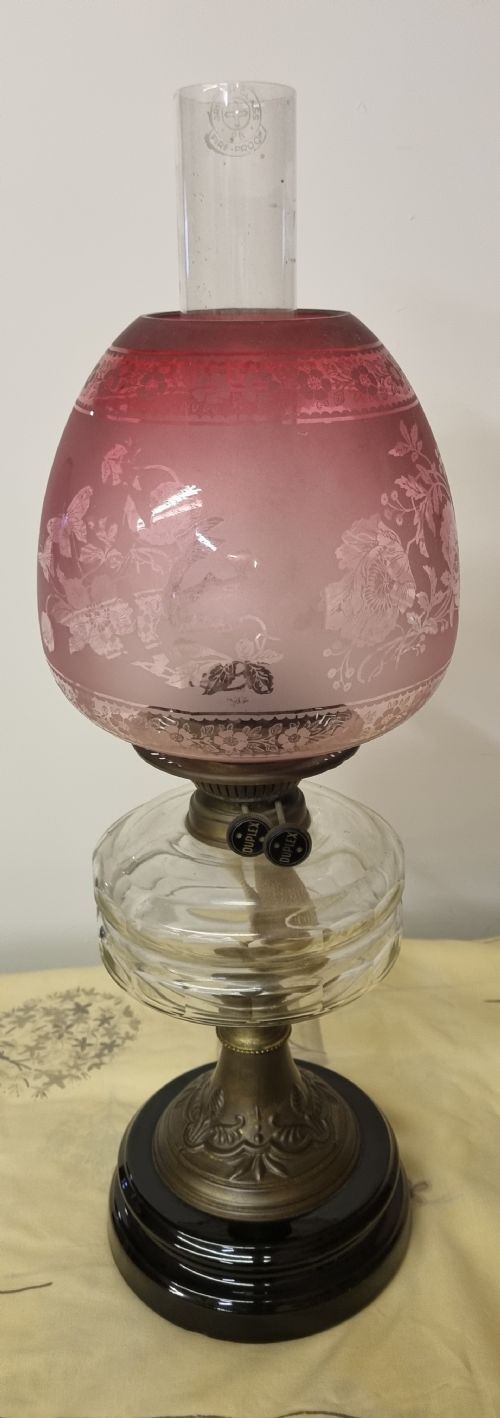
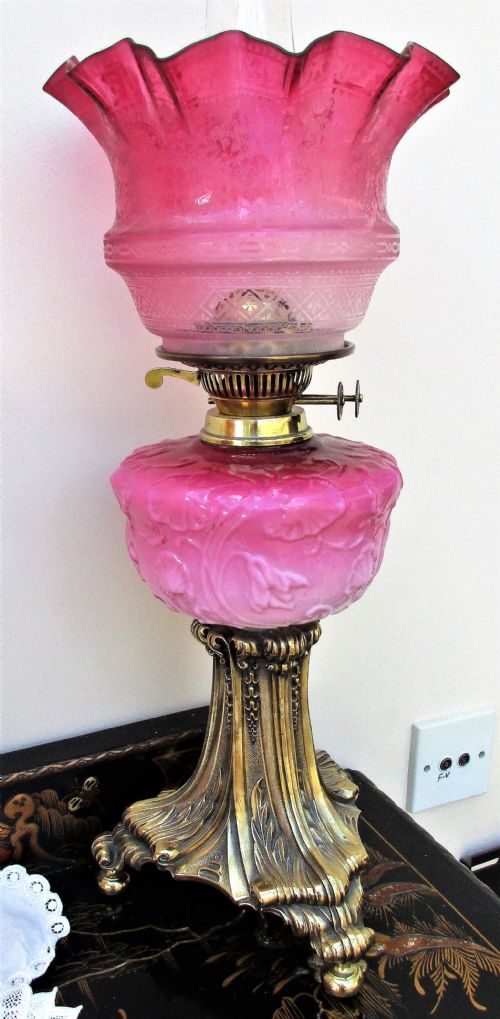
These antique cranberry paraffin burner pieces combine rich coloured glass fonts and shades with sturdy brass columns, offering a warm and decorative period illumination for the home.
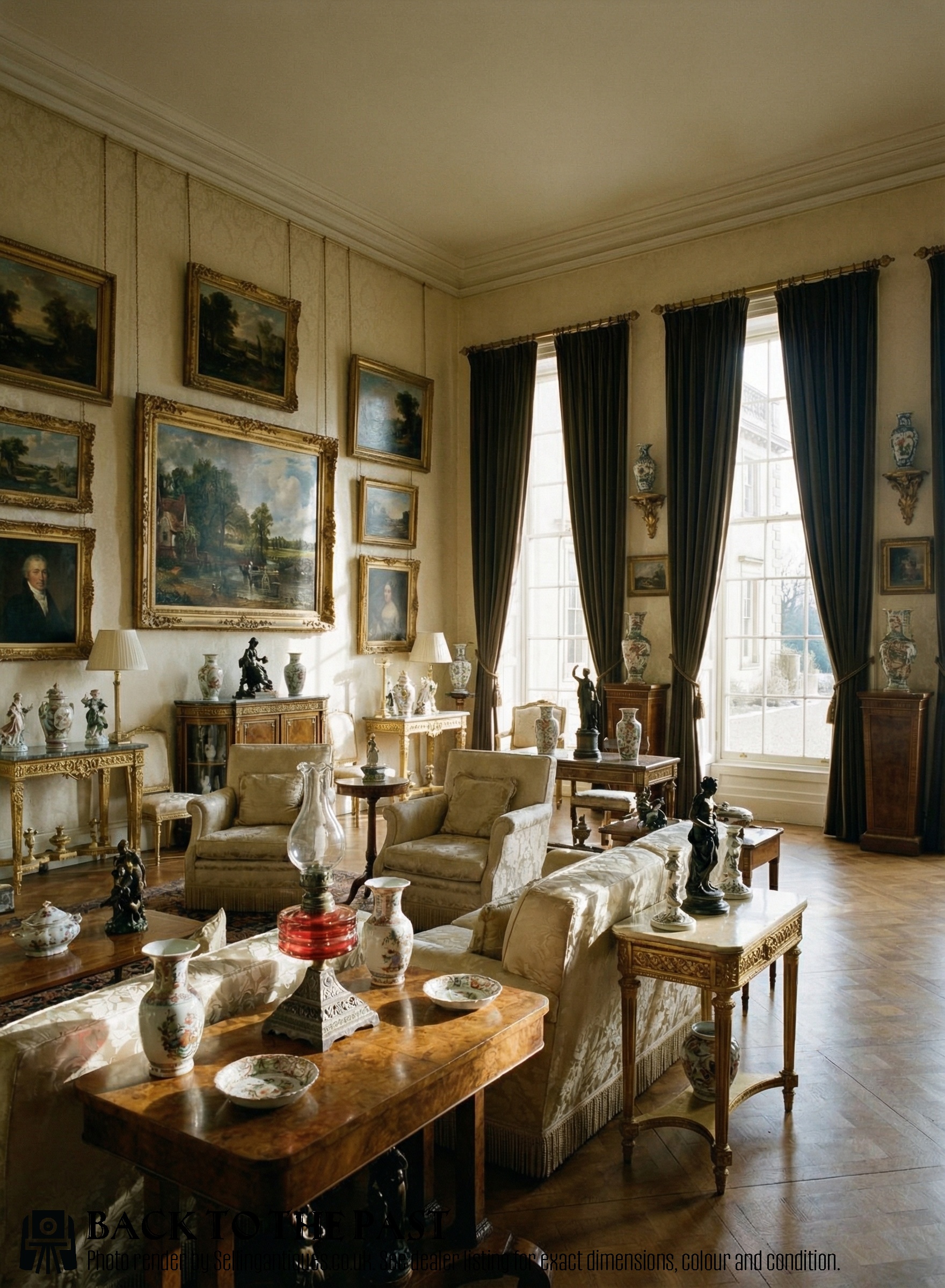
Antique Cranberry Paraffin Burner
An antique cranberry paraffin burner brings together functional Victorian lighting engineering and deeply saturated pink-red glass work. These lamps typically feature a glass reservoir or shade supported by a metal column, creating a striking visual contrast.
Most examples found within this selection date from the nineteenth century and the Edwardian era, spanning the Victorian period. They take forms ranging from tall Corinthian columns to ceramic and porcelain bodies.
Buyers will encounter various configurations including double burner setups and reeded column designs. Each piece reflects the domestic lighting technology of its specific decade, from the eighteen sixties onwards.
How they were made
Maker construction relies heavily on combinations of brass casting for the structural columns and blown glass for the cranberry reservoirs and shades. The rich red colour in the glass was achieved by adding gold chloride to the molten mixture during production.
Some models incorporate ceramic and porcelain elements alongside the metal and glass components, particularly in the base or font sections. Metalwork components were often fashioned from heavy brass, providing the necessary stability for tall lamp bodies.
One exceptional porcelain lamp takes the literal form of a wise old owl, watching over the Victorian parlour.
What varies in quality
Quality differences emerge in the crispness of the brass casting and the complexity of the glass components, such as cut glass detailing versus plain blown vessels. Architectural columns with well-defined Corinthian capitals represent a more ambitious standard of production than plain cylindrical stems.
The depth and consistency of the cranberry colour within the glass indicate the skill of the glasshouse. Heavier metal stands and refined ceramic bodies likewise separate standard domestic lighting from more elaborate workshop output.
Hinks·Taylor Tunnicliff·Sitzendorf
The Antique Cranberry Paraffin Burner Glossary
- Cranberry Glass
- A type of transparent pinkish-red glass produced by fusing gold into the glass batch during melting. It remains characteristic of Victorian decorative tablewares and lighting accessories.
- Paraffin Burner
- The mechanical assembly at the top of an oil lamp that holds the wick and controls the flame. These burners often feature twin wicks for increased light output.
- Corinthian Column
- An architectural column style featuring ornate, leaf-carved capitals adapted by Victorian makers for the stems of tall table lamps. This design adds formal classical proportion to the metalwork.
- Duplex Burner
- A specific twin-wick burner mechanism popular in nineteenth-century lighting. It allows for a brighter, wider flame than standard single-wick designs.
Antique Cranberry Paraffin Burner: Frequently Asked Questions
How do I clean a cranberry glass shade?
Wash the glass gently in warm, soapy water using a soft cloth, avoiding abrasive pads that might scratch the surface.
Dry the shade thoroughly with a lint-free towel to prevent water spots from forming on the coloured glass.
Can these lamps still burn paraffin?
Many of these pieces retain their original burner mechanisms and can technically function with appropriate lamp oil and wicks.
Most modern buyers choose to display them as decorative objects rather than active light sources for safety and preservation reasons.
How do I date a brass oil lamp?
Examine the style of the column and the markings on the burner thumbwheels, which often reference patent dates or maker names.
Victorian examples frequently feature classical architectural motifs like Corinthian capitals, while later Edwardian versions show simpler profiles.
What is the difference between a font and a shade?
The font is the enclosed vessel that holds the liquid paraffin fuel beneath the burner assembly.
The shade is the larger glass canopy positioned above the flame to diffuse the light and protect the surroundings.