
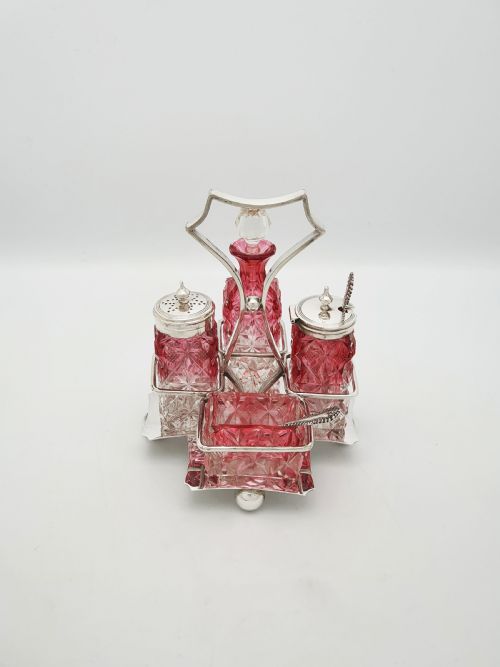


Antique Cranberry Glass Set
An antique cranberry glass set brings rich crimson colour to the table, combining blown glass with polished silver plate.
Antique Cranberry Glass Set
An antique cranberry glass set comprises matching or assembled items designed for dining, drinking, and display during the Victorian and Edwardian eras. Buyers seek these groupings for their vibrant pinkish-red tones and decorative presence in cabinets or on sideboards.
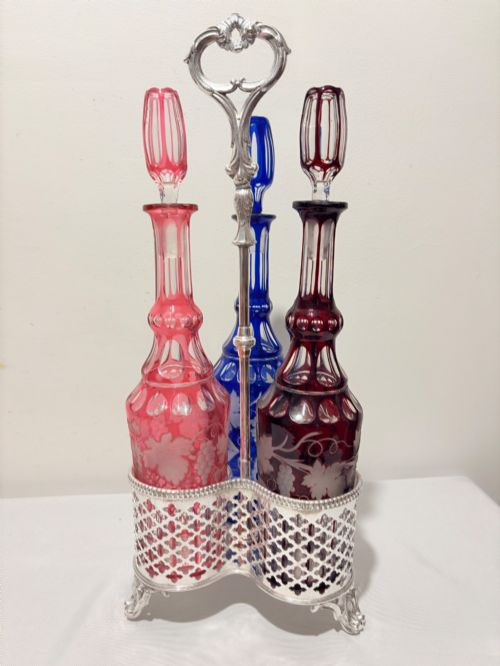
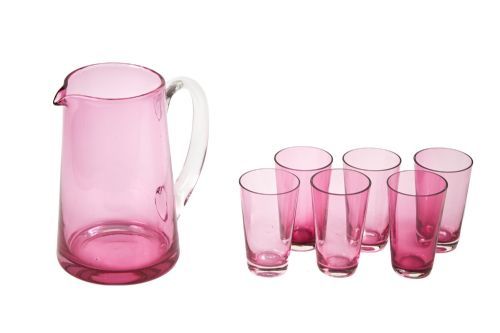
The most common configurations on this page include sets of six wine glasses, matched decanters, and cruet sets fitted into silver-plated stands. These domestic tablewares survive from the latter half of the nineteenth century and the early years of the twentieth century.
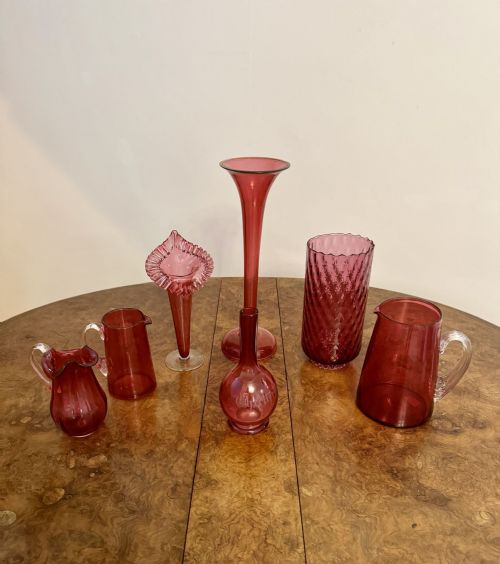
Forms range from simple preserve dishes and jugs to elaborate liquor stands combining frosted glass, cut crystal, and silver plate. Each grouping demonstrates the Victorian taste for colourful glass on the dining table.
How they were made
Maker utilise gold chloride added to the molten batch to achieve the characteristic rich red or pink hue of cranberry glass. Artisans then hand-blown or mould-blown the metal into shapes before applying decorative elements.
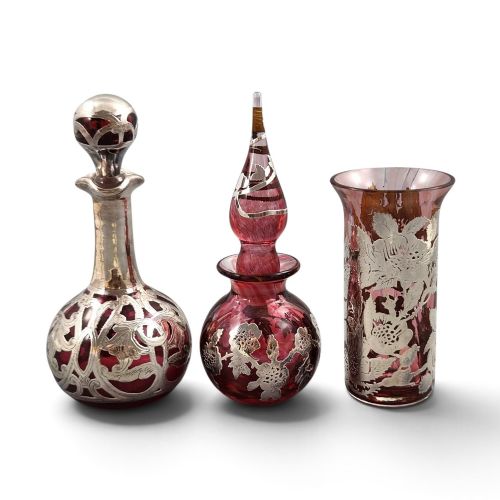
Many pieces feature wheel-cutting or flash-cutting techniques, where a clear glass body receives a thin outer layer of coloured glass that is partially cut away to reveal the clear metal beneath. Metalwork components involve silver plate or solid silver mounts fitted precisely to the glass vessels.
Victorian dining tables often glowed pink under candlelight thanks to these cheerful vessels.
What varies in quality
Depth and consistency of the glass colour separate standard domestic items from finer showroom pieces. Richer tones indicate a higher proportion of gold in the glass batch during production.
The crispness of the wheel-cutting and the weight of the metal stands determine the overall standard of a set. Matching sets with uniform glass thickness and undamaged silver plating command greater attention from collectors.
The Antique Cranberry Glass Set Glossary
- Cranberry Glass
- A type of transparent glass coloured with gold chloride, producing shades from pale pink to deep crimson. It became extremely popular for domestic tableware during the Victorian period.
- Cruet Set
- A matched set of glass bottles or jars held within a metal stand for condiments, oils, or vinegars. These stands often incorporate silver plate and carry handles.
- Flashed Glass
- A vessel formed of one colour of glass with a thin layer of another colour applied over the surface. Cutting through the outer layer creates contrasting patterns and panels.
- Silver Plate
- A base metal, typically copper or brass, coated with a thin layer of pure silver. This technique provided the appearance of solid silver for domestic wares at a lower cost.
Antique Cranberry Glass Set: Frequently Asked Questions
Can I use these wine glasses for dining?
These historical glasses can be used for special occasions, provided they are handled with care and washed by hand afterwards. Hand-blown antique glass has thinner walls than modern equivalents, so gentle handling is essential.
Inspect the rims and bases for any historical nibbles before use. Many collectors prefer to display them rather than risk daily wear.
How do I date an antique cranberry glass set?
Examine the style of the silver-plated stand, the pontil mark on the base of the glass, and the overall manufacturing technique. Victorian pieces often feature heavier hand-finished details and distinct pontil scars where the blowpipe was detached.
Edwardian items frequently display crisper cut crystal patterns and lighter mounts. Makers' marks on any accompanying silver plate also help narrow down the production decade.
What is the difference between ruby glass and cranberry glass?
Cranberry glass is coloured specifically with gold and tends to show a bright pinkish-red or magenta tone. Ruby glass often utilises copper or other mineral oxides, producing a deeper, darker, and less translucent red.
Victorian makers sometimes used the terms interchangeably, but the chemical composition and visual warmth distinguish them. Hold the glass to the light to observe the characteristic pink undertones of cranberry metal.