






Antique Cow Figurine
These antique cow figurine examples bring rustic charm into a room, offering centuries of ceramic and wooden craftsmanship.
Antique Cow Figurine
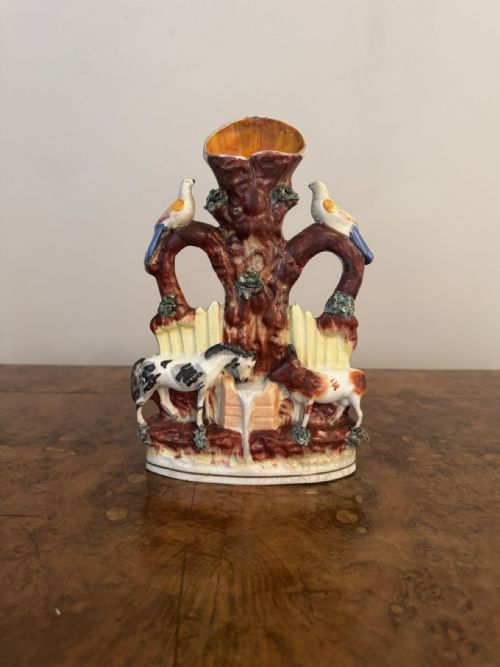
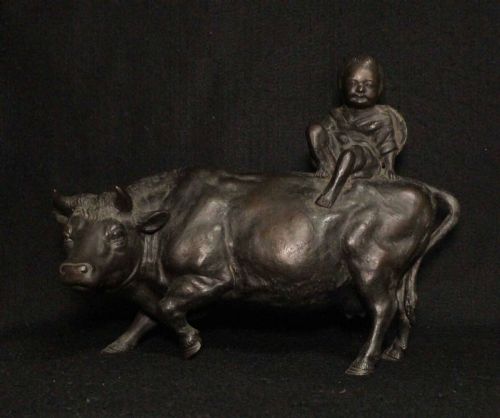
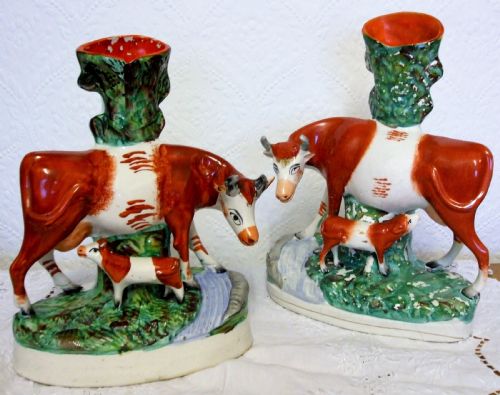
An antique cow figurine covers a diverse array of sculptural forms, spanning Staffordshire pottery, carved linden wood, and Dutch Delftware. Buyers searching for an antique cow figurine encounter domestic animals rendered as spill vases, creamers, pill boxes, and standalone sculptures.
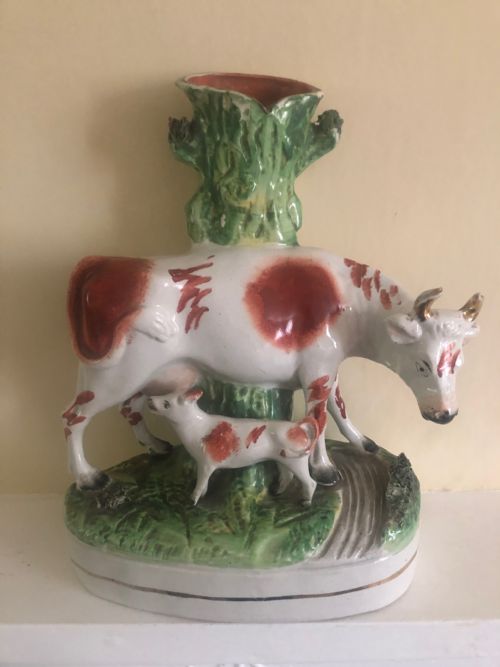
The Staffordshire earthenware versions dominate the selection, often appearing as pairs with calves or paired with milkmaids and boys. These pieces reach back through the Victorian, Regency, and Georgian periods, showcasing English folk art alongside continental European work.
How they were made
Potters shaped earthenware and tin-glazed ceramic into figures, applying rich glazes, enamel colours, and occasional gilt highlights. Staffordshire and Jackfield pieces rely on moulded clay bodies finished with characteristic dark or painted surfaces.
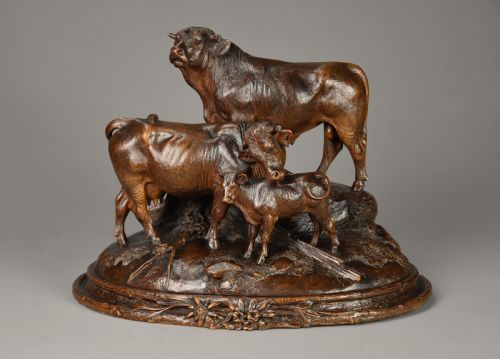
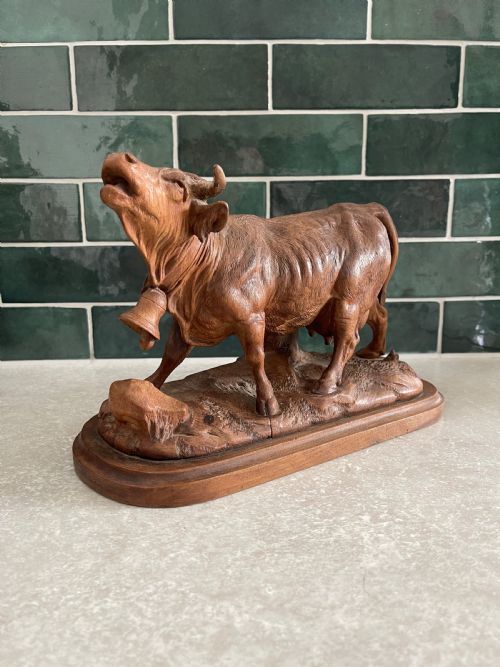
Carvers worked in Linden wood to produce detailed Black Forest cattle groups and individual sculptures. Other materials include cast bronze and sterling silver for smaller decorative items like pill boxes.
Listings feature earthenware, tin-glazed ceramic, carved wood, bronze, and sterling silver across the nineteenth and early twentieth centuries.
What varies in quality
The standard of modeling distinguishes a superior piece from a basic production, with finer examples displaying lively postures and careful anatomical observation in the animal's form. Surface decoration also marks the difference, as crisp enamel work and well-preserved glaze elevate earthenware and ceramic pieces.
In carved wooden groups, the depth of the carving and the sharpness of the tool marks define the artistry, while makers' marks such as stamps add distinction. The presence of matching pairs or original accompanying calves further elevates the interest of ceramic spill vases and figures.
J Huggler
The Antique Cow Figurine Glossary
- Staffordshire figure
- A ceramic sculpture produced in the potteries of Staffordshire, England. These earthen figures often depict animals, people, or domestic scenes in a folk art style.
- Spill vase
- A hollow ceramic holder designed to store wooden spills used for lighting fires or pipes. They frequently incorporate animal figures alongside the receptacle.
- Cow creamer
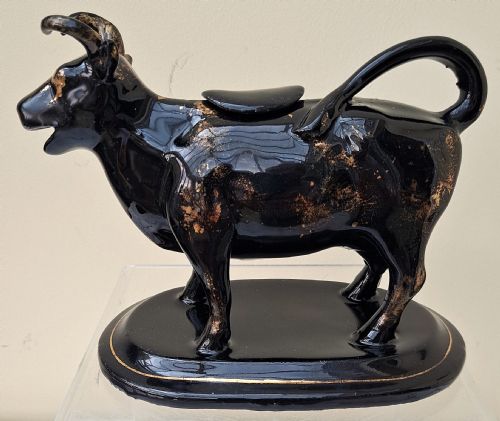
- A small ceramic jug shaped as a cow, with a opening on the back for cream and the tail forming the handle. They were popular domestic table wares in Georgian and Victorian times.
- Black Forest carving
- Wood sculpture originating from the Brienz region of Switzerland and the Black Forest in Germany. These pieces typically feature local fauna, particularly cattle, carved in linden wood.
- Jackfield pottery
- A type of British earthenware characterised by a lustrous dark black glaze. Pieces often replicate animal forms or utilitarian vessels from the Victorian era.
Antique Cow Figurine: Frequently Asked Questions
What is an antique cow creamer?
A cow creamer is a ceramic vessel shaped like a cow, featuring a lid on the back and a tail that serves as a handle. These items functioned as practical tableware for serving cream at the dining table.
Potters across England, including Staffordshire and Welsh workshops, produced these pieces in earthenware during the Georgian and Victorian periods.
How do I identify a Staffordshire cow figure?
Staffordshire cow figures typically present as earthenware ceramics with painted enamel details, often accompanied by calves or milkmaids. Many function as spill vases or flatback mantle ornaments.
These pieces date predominantly from the nineteenth century and reflect traditional English folk art styles of the Victorian era.
What are Black Forest cow carvings?
Black Forest cow carvings are wooden sculptures hand-carved from linden wood, originating from nineteenth-century European mountain workshops. They depict cattle either singly or in groups with realistic detailing.
Selected pieces bear maker stamps like J Huggler, indicating specific Swiss or German workshops known for this animal sculpture.
Were cow figurines used as vases?
Several ceramic cow figures incorporate a cylindrical tube alongside the animal, serving as a spill vase or spill holder. These receptacles held thin wooden splints used to transfer flames from a hearth to candles or pipes.
Victorian makers frequently produced these spill vases in pairs to balance mantles and sideboards.