

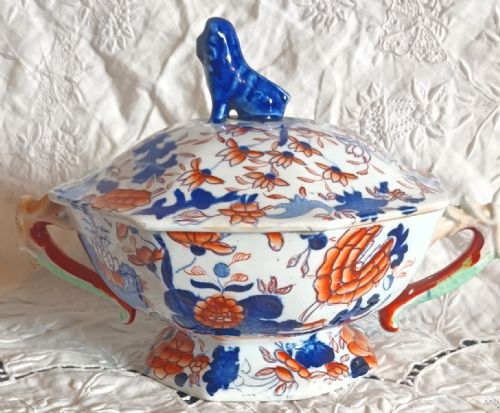


Antique Covered Tureen
An antique covered tureen brings the weight of formal dining tables from past centuries directly into modern homes as a functional centrepiece.
Antique Covered Tureen
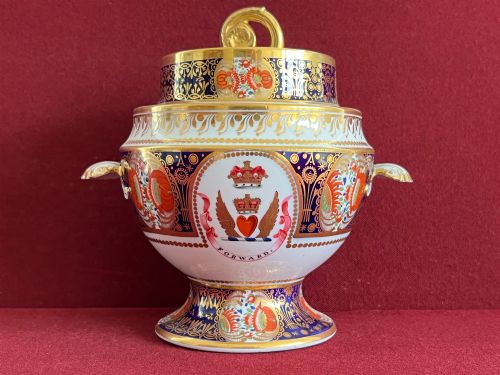
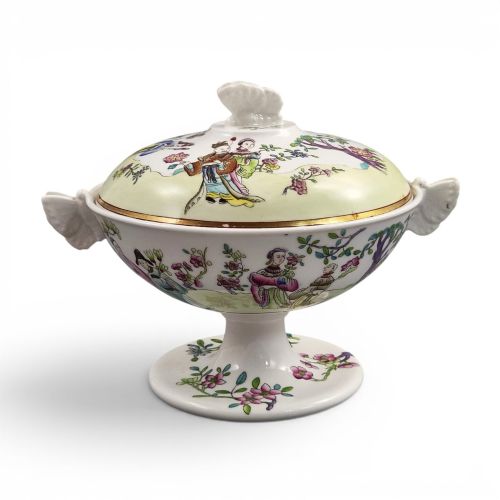
An antique covered tureen is a deep vessel designed for holding soup, sauce, vegetables, or game at the dining table, complete with a matching lid to retain heat. These serving dishes appear across the 18th, 19th, and early 20th centuries in forms ranging from grand George III silver soup vessels down to smaller Regency and Victorian porcelain sauce tureens.
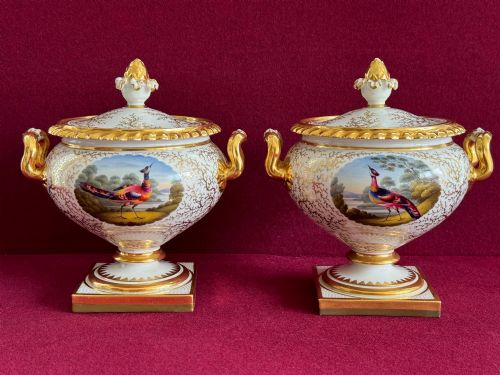
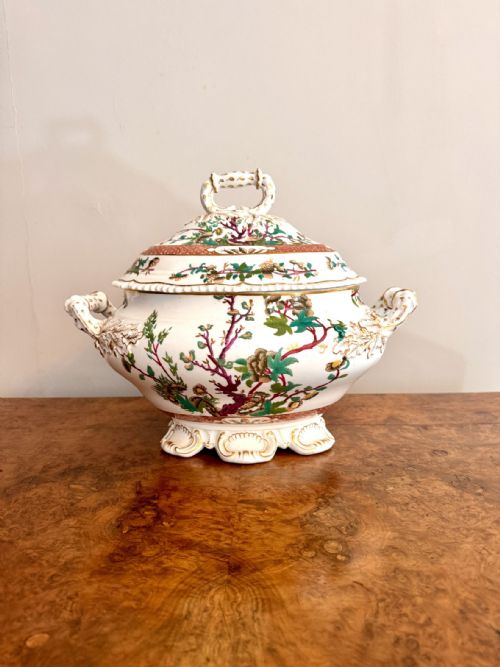
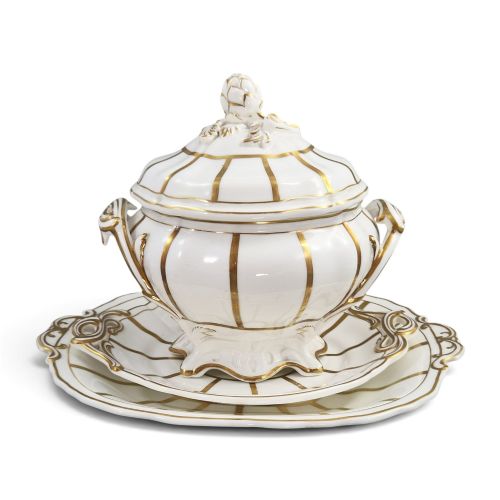
The pieces on this page span diverse utilitarian forms, including large soup tureens, smaller cream and sauce vessels, vegetable tureens, and lidded entree dishes. Buyers will encounter both individual centrepieces and matched pairs intended for symmetrical table service.
Origins stretch across major English potteries, silversmith workshops, and porcelain manufactories, linking domestic dining habits of the Georgian, Victorian, and Edwardian eras to tangible surviving objects.
Materials and construction methods
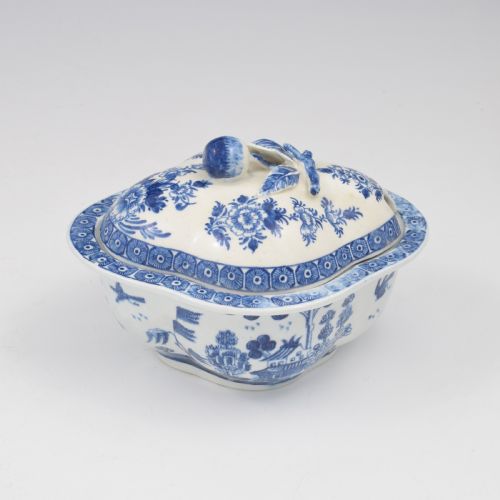
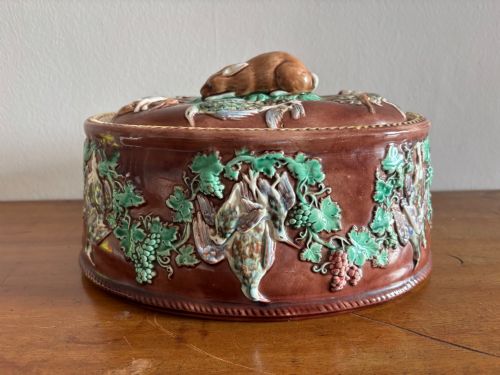
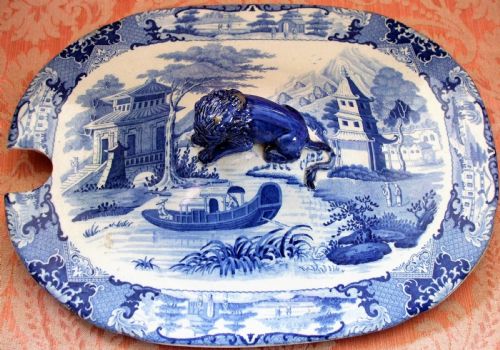
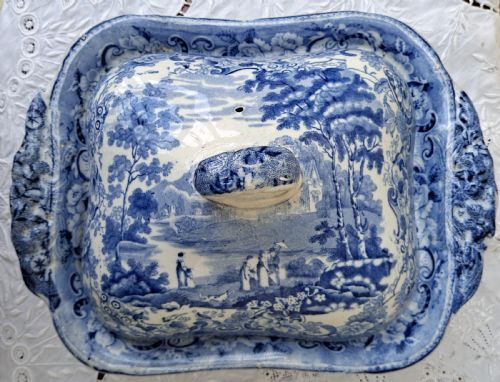
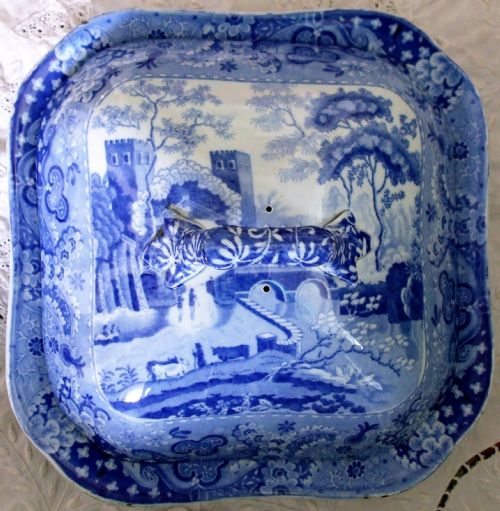
Pottery and porcelain tureens utilise bodies of earthenware, bone china, ironstone, or soft-paste ceramic, shaped through moulding or throwing before receiving hand-applied blue and white transfer prints, enamel painting, or rich glazes. Ironstone pieces offer notable weight and density, whilst porcelain versions display finer translucent walls.
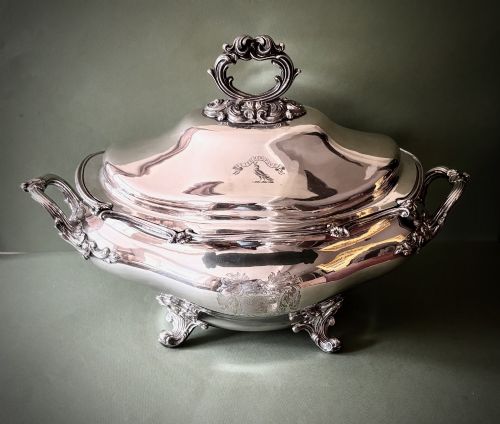
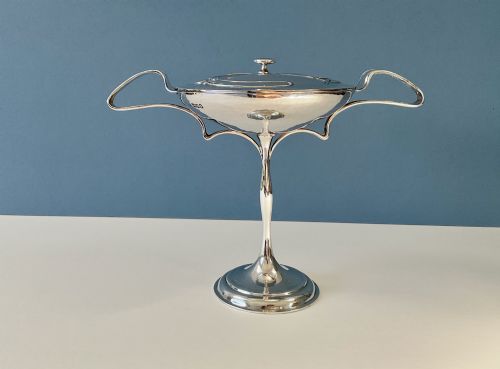
Metal alternatives employ sterling silver or old Sheffield plate and silver plate over base metals, shaped by hammering, casting, and soldering. Details like handles and finials often take the form of cast foliate or animal motifs fixed securely to the main body.
Antique Covered Tureen Retail Price Guide 2026
Typical asking prices for covered tureen among the pieces listed under this phrase on Sellingantiques today, from the lower quarter to the upper quarter. They describe what is for sale here now, not the wider market.
Some tureens feature handles shaped like delicate butterflies or game birds, reminding diners that formal dining once celebrated playful natural forms.
Assessing craftsmanship and condition
Quality rests in the crispness of the modelled handles, the alignment of lids, and the precision of hand-painted or transfer-printed decoration. Finer ceramic examples show clear glaze without excessive pooling, whilst silver and plated pieces depend on the preservation of crisp engraved crests and uniform metal surfaces.
Completeness dictates value and utility, separating single surviving vessels from matched pairs and sets that retain original stands, ladles, or lampstands. The clarity of factory marks on the underside further anchors authenticity and origin.
Flight Barr and Barr·Chamberlain Worcester·Davenport Bone China·Spode Felspar Porcelain·Mason's Ironstone·J. and R. Clews·John Rogers and Son·Coalport·Crown Derby·Mintons·William Bennett·William Grundy·Mappin and Webb·Hamilton and Inches·Doulton Burslem
The Antique Covered Tureen Glossary
- Ironstone
- A patented heavy earthenware developed in the 19th century known for its durability and resistance to chipping. It provides a sturdy body for transfer-printed dinner services.
- Transfer print
- A decorative technique where an engraved copper plate transfers a design onto paper, which is then stamped onto the ceramic body before glazing. This method allowed complex scenes like Canton River views to be produced consistently.
- Old Sheffield plate
- An early fused metal technique where a thin sheet of silver is fused to a thicker copper core by heat and pressure. It differs from later electroplate by showing subtle traces of copper along cut edges.
- Finial
- The decorative knob or handle attached to the top of a tureen lid. These often take sculptural forms such as fruits, flowers, or animals.
- Entree dish
- A shallow lidded vessel designed for serving individual courses or side dishes at formal meals. These rectangular or oval dishes often feature removable handles to allow the lid to double as a secondary serving dish.
Antique Covered Tureen: Frequently Asked Questions
What were tureens originally used for?
Tureens served as the primary vessels for holding and presenting communal soups, broths, and boiled meats at the centre of the dining table during formal meals.
Servants brought the covered vessel to the table hot, allowing the host to lift the lid and ladle portions directly into individual plates for guests.
How do I care for a ceramic tureen?
Washing antique ceramics by hand in warm water with mild soap protects the fragile glazes and historical surface decoration from harsh machine detergents.
Sudden temperature changes should be avoided to prevent thermal shock, which can cause historical pottery or porcelain to crack.
Can I use silver plated tureens for food?
Silver plated and sterling silver tureens remain suitable for serving dry foods, fruits, or bread provided they are cleaned gently without abrasive metal polishes.
For pieces with significant wear to the plating, lining them with a clean cloth or parchment paper helps protect both the food and the historical metal surface.