






Antique Country Estate Painting
An antique country estate painting captures the storied grounds, grand manors, and rural pursuits of historic properties.
Antique Country Estate Painting
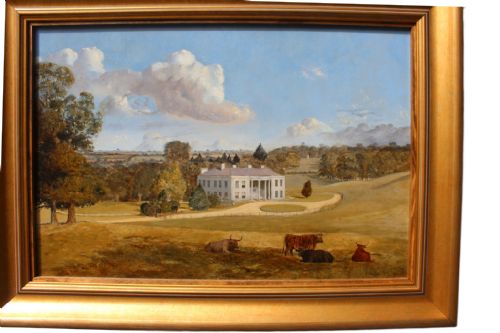
When you search for an antique country estate painting, you encounter canvases and panels depicting historic manors, parklands, and rural landscapes. These works often record specific properties such as Trentham Hall, Arundel Castle, and Newstead Abbey.
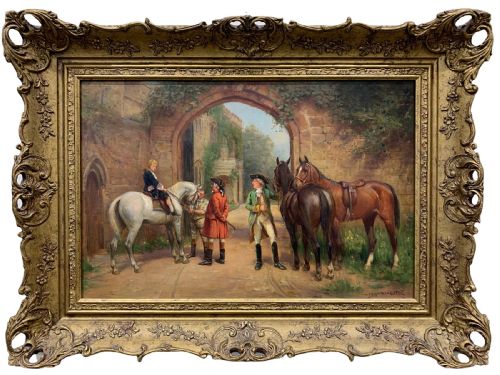
The pieces on this page span from the eighteenth century through the Edwardian period, encompassing oils on canvas, wood panels, and works on paper. They frequently combine architectural portraits with pastoral scenes of horses, cattle, and landed gentry.
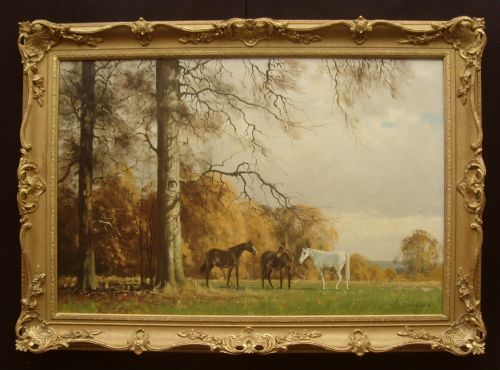
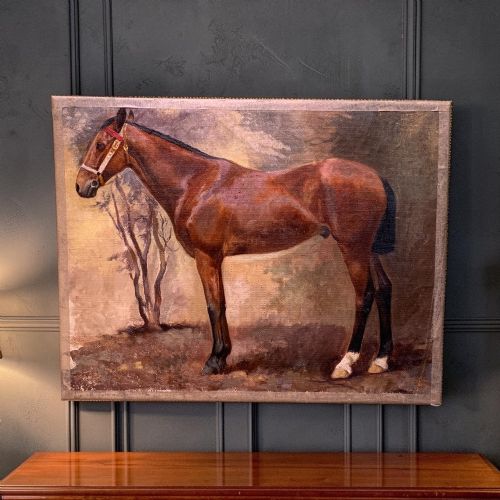
Beyond grand depictions of stately homes, the selection includes equestrian subjects and estate gate renderings. These varied forms reflect the deep connection between British landowning families and their surrounding acreage.
Materials and methods
Painters utilised oil paint applied to woven canvas supports or prepared wood panels to achieve rich, lasting colour. Many works retain their period giltwood frames, which complement the scale and subject of the central imagery.
Draftsmanship relied on fine brushwork for architectural detailing, contrasting with looser applications for surrounding parklands and foliage. Monochrome ink and watercolour on paper also appear among the framed works on this page.
Listings feature works spanning from the eighteenth century through the Edwardian period, utilising canvas, wood panel, and paper supports.
Judging the execution
Quality rests upon the artist's ability to render architectural perspective accurately while maintaining atmospheric depth in the landscape. Superior works capture the distinct character of named buildings and recognizable local topography.
The refinement of the brushwork, particularly in figures, horses, and foliage, separates standard topographical records from masterful compositions. The preservation of the original canvas and the presence of a period giltwood frame add to the integrity of the piece.
Clifton Tomson·Samuel Sidley·James Canter·John Sanderson Wells·Robert Thomas Buttery·Fred Merriman·Martin Pierre Denis·Henri Harpignies
The Antique Country Estate Painting Glossary
- Oil on canvas
- Pigments bound in drying oil applied to a woven fabric stretched across a wooden frame. This medium allowed artists to achieve rich tones and subtle blending.
- Giltwood
- Wood, often carved, that has been coated with a thin layer of gold leaf. Period frames utilising this technique enhance the presentation of nineteenth-century canvases.
- Wood panel
- A rigid wooden support used by artists before canvas became dominant. These panels provide a smooth surface for detailed pastoral scenes.
- Monochrome ink
- A drawing medium utilising a single ink colour, often combined with watercolour washes. This technique appears in framed architectural studies on paper.
- Equestrian subject
- Artwork depicting horses, riders, and hunting stables. These scenes frequently document the prized animals and rural activities associated with large estates.
Antique Country Estate Painting: Frequently Asked Questions
What periods are most common?
The selection spans from the eighteenth century through the Regency, Victorian, and Edwardian eras. Nineteenth-century works dominate the listings, reflecting a peak period for topographical and estate painting.
Earlier eighteenth-century examples focus on expansive prospects of country seats, while later Victorian and Edwardian pieces often incorporate lively equestrian elements and detailed garden architecture.
How should I frame these works?
Whenever possible, retain the period giltwood frame accompanying the painting, as these mouldings were selected to complement the scale and era of the artwork. If framing is required, choose traditional profiles that respect the aesthetic of the period.
Avoid modern synthetic mouldings that clash with antique canvas textures. Conservation-grade backing and proper glazing protect works on paper from environmental damage over time.
Where were these paintings displayed?
These paintings historically hung in the reception rooms, libraries, and long galleries of the country houses they depicted. They served as visible testaments to family lineage, land ownership, and agricultural improvement.
Today, they suit similar traditional interiors, libraries, or studies. Their subject matter provides a direct visual link to the history of British landed estates.