



Antique Cosmetics Case
An antique cosmetics case is a portable receptacle for grooming essentials that brings historic vanity to a modern dressing table.
Antique Cosmetics Case
An antique cosmetics case encompasses intimate personal receptacles ranging from pocket powder compacts to large travelling dressing boxes. When searching for an antique cosmetics case, you encounter items designed to hold grooming gear, loose powder, and crystal bottles.
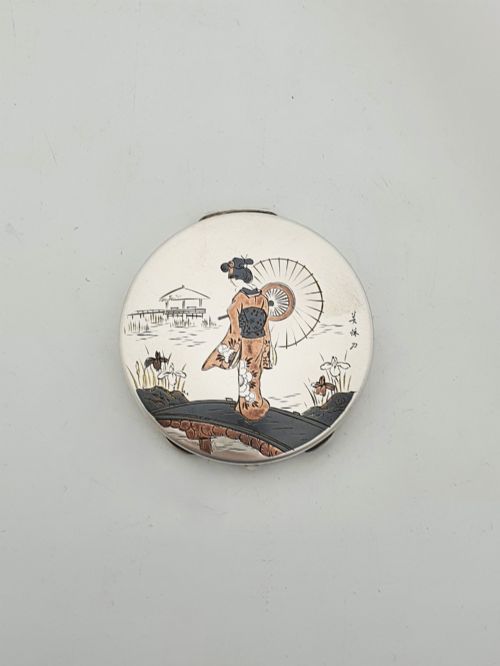
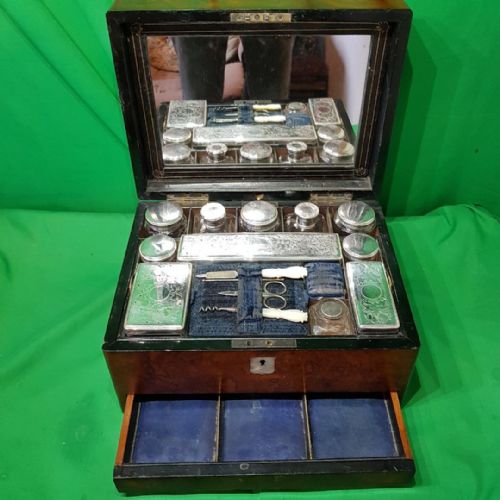
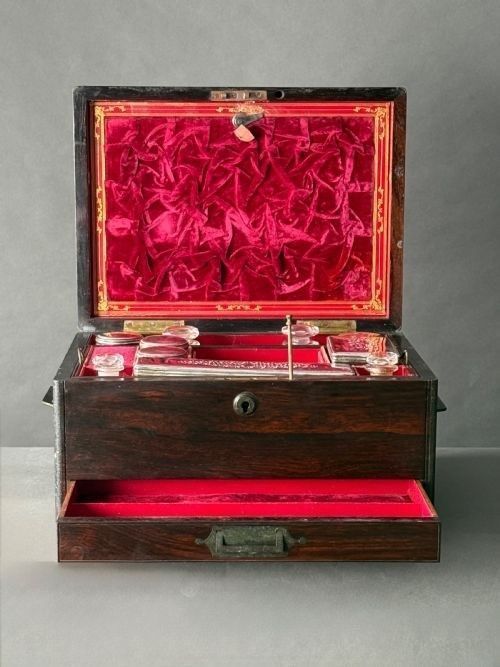
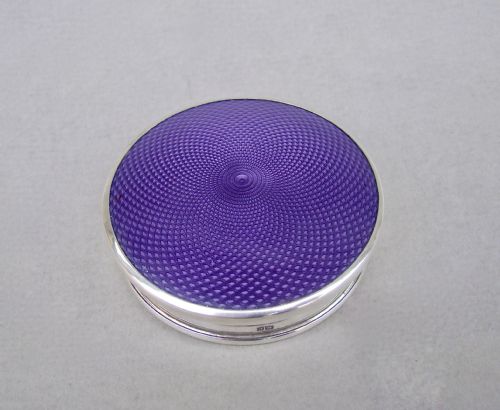
The selection on this page bridges eras, running from Georgian rosewood boxes and Victorian burr walnut travelling sets to Art Deco silver and enamel pocket compacts. Smaller items tend towards pocket-sized powder compacts, whereas larger examples take the form of fitted wood vanity boxes.
Origins span English cabinetmaking traditions alongside Persian silver work and twentieth-century European compact production. These pieces reflect the changing habits of personal care and portable cosmetics through successive generations.
How they were made
Cabinetmakers constructed larger vanity boxes from dense timbers such as rosewood, burr walnut, and coromandel, often lining the interiors with velvet. These wooden carcasses housed fitted compartments designed to secure crystal cut bottles and matching trays.
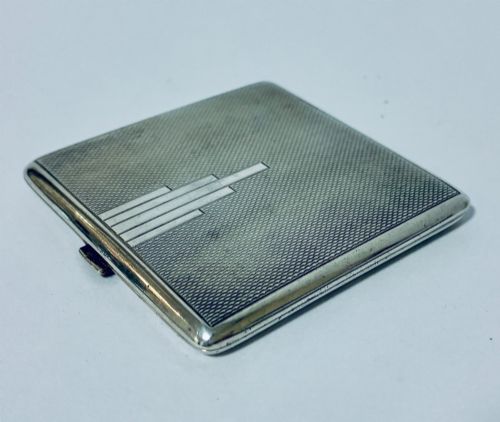
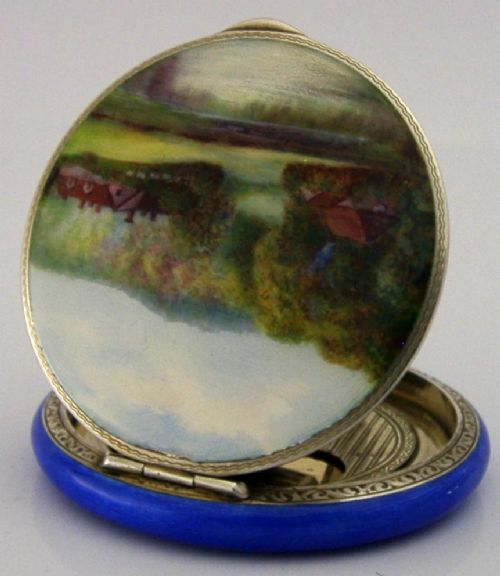
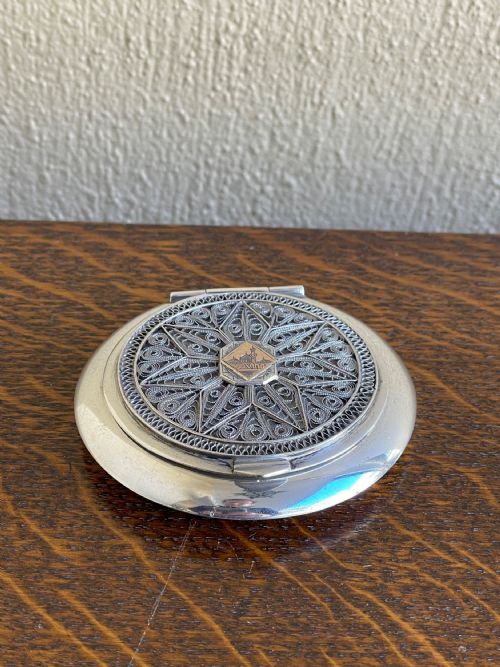
Smaller compacts and cases utilise metals including brass, sterling silver, and general base metal. Artisans decorated these metallic surfaces using hand-painted enamel panels, intricate filigree metalwork, and distinctive Art Deco geometric motifs.
Antique Cosmetics Case Retail Price Guide 2026
Typical asking prices for cosmetics case among the pieces listed under this phrase on Sellingantiques today, from the lower quarter to the upper quarter. They describe what is for sale here now, not the wider market.
Object forms on this page range from portable pocket powder compacts to large English travelling dressing table boxes.
What varies in quality
Quality rests upon the integrity of the materials and the complexity of the interior fittings. A well-preserved rosewood box with its original crystal cut bottles and complete velvet lining sits higher in the scale than a basic wooden carcase stripped of its fittings.
Surface decoration drives the distinction in smaller items, where hand-painted enamel scenes and delicate silver filigree demand greater skill than plain metal surfaces. Maker attribution also elevates certain pieces, particularly signed Art Deco compacts associated with known houses.
Richard Hudnut
The Antique Cosmetics Case Glossary
- Powder compact
- A small handheld container fitted with a mirror and a compartment for face powder. These pocket items became particularly prominent during the Art Deco period.
- Vanity box
- A larger portable chest or box designed for dressing table use or travel. They typically contain fitted trays, compartments, and glass bottles.
- Filigree
- Ornamental work consisting of fine wire formed into delicate openwork patterns. This technique appears on silver lids and mounts.
Antique Cosmetics Case: Frequently Asked Questions
What fits inside an antique cosmetics case?
Smaller compacts hold loose face powder, puffs, and mirrors for immediate touch-ups during the day. Larger vanity boxes accommodate crystal cut bottles, jars, and grooming implements.
Interior layouts vary by period, with Georgian and Victorian examples favouring fitted wooden partitions for glass containers, while Art Deco pieces focus on slim profiles for powder and mirrors.
How do I care for wooden vanity boxes?
Wood exteriors such as rosewood and burr walnut benefit from occasional gentle polishing to maintain the grain. Velvet linings require careful dusting with a soft brush rather than liquid cleaners.
Keep these boxes away from direct sunlight and damp environments to protect the timber carcase and interior fabric from degradation.
How do I distinguish Art Deco compacts?
Art Deco pieces from the nineteen-thirties display geometric lines, stylized motifs, and often feature enamel work or figural designs such as flapper scenes. They are typically fashioned from silver or base metal rather than the rich timbers seen in earlier boxes.
These compacts focus on pocket portability and combination functions, contrasting with the heavier dressing table boxes of the Victorian and Georgian eras.
Were these cases used for travel?
Many larger examples served as travelling dressing sets, housing bottles and brushes securely within fitted compartments for journeys by carriage or train. Leather-covered or sturdy wood boxes protected fragile glass components on the move.
Smaller compacts were designed for personal daily carry in handbags, reflecting the changing social habits of women in the early twentieth century.