



Antique Cornwall Seascape
An antique cornwall seascape captures the rugged southwestern coast through the eyes of artists drawn to its harbours and dramatic light.
Antique Cornwall Seascape
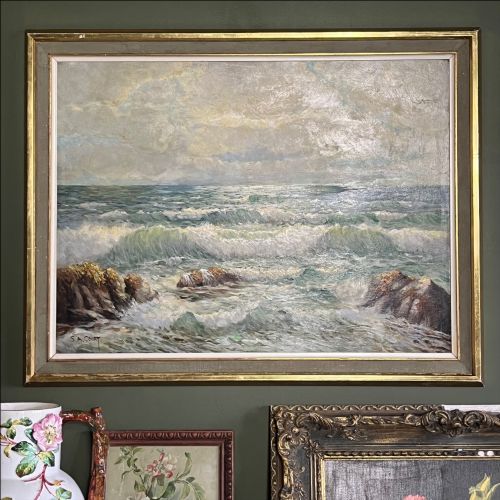
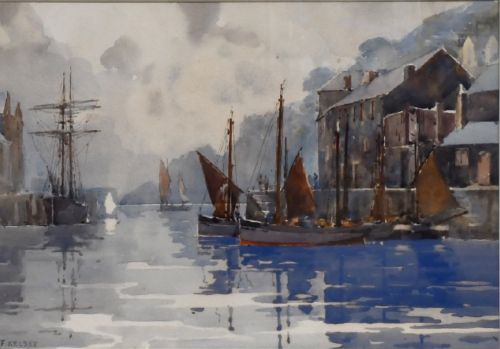
An antique cornwall seascape brings the distinct character of the southwestern coast into a room through framed watercolours and oils. These works record local harbours, fishing luggers, and tidal inlets from periods ranging from the eighteenth century to the mid-twentieth century.
The selections on this page focus heavily on Victorian and Edwardian interpretations, alongside British Impressionism and Post-Impressionism. Scenes frequently centre on familiar locations such as St Ives, Polperro, and St Michael's Mount.
Buyers encounter both intimate watercolour paintings on paper and larger oil paintings on canvas. Each piece reflects the enduring appeal of the Cornish maritime landscape to generations of visiting and resident artists.
How They Were Made
Artists captured these coastal scenes using oil paint on canvas or watercolour applied to paper, mounted within wood and gilt wood frames. Oil paintings allowed for textured brushwork that built up the heavy movement of the sea and the weathered surfaces of wooden boats.
Watercolours offered a fluid medium suited to recording rapid shifts in coastal weather, sea spray, and bright Cornish light. Works were preserved behind glass to protect the paper from moisture and atmospheric degradation over the decades.
Salt air seeped into many nineteenth-century studio spaces, occasionally leaving microscopic traces of sea spray preserved deep within early oil layers.
What Varies in Quality
The strength of a composition depends on the artist's ability to render the specific weight of water, the play of light across granite cliffs, and the accurate rigging of local vessels like trawling luggers. Stronger examples display confident handling of tone and atmosphere rather than mere topographical recording.
Condition plays a role in overall quality, particularly the stability of the canvas or paper, the preservation of original pigments, and the compatibility of period frames. Works retaining their original gilt wood framing generally command greater interest from collectors of regional maritime art.
William Banks Fortescue·Frank Kelsey·Edward Matthew Elliott·Charles Napier Hemy·Richard Harry Carter·George Turland Goosey·Ernest F Hill·Frederick Stuart Richardson·Hendrik Yan Wolter·S J Lamorna Birch·Herbert James·William Edward Webb·Arthur Joseph Meadows·Thomas Sidney·Frank Hider
The Antique Cornwall Seascape Glossary
- British Impressionism
- A painting style influenced by the French movement that focused on natural light, loose brushwork, and plein-air observation. Practitioners often travelled to coastal colonies to record changing weather conditions.
- Lugger
- A traditional two-masted fishing boat with standing lug sails, commonly seen in historical West Country maritime art. These vessels were essential to the working harbours of Cornwall.
- Gilt Wood
- Timber framing coated with a thin layer of gold leaf or metallic gilt, typical of nineteenth and early twentieth-century presentation. These frames provide structural support and historical context to the artwork.
- Plein-Air
- The practice of painting outdoors to capture direct observation of light and atmosphere. This method defined much of the regional art produced along the Cornish coast.
Antique Cornwall Seascape: Frequently Asked Questions
How do I identify the specific Cornish location in a painting?
Artists often inscribed titles, signatures, or location names directly onto the mount, canvas reverse, or frame. Familiar coastal landmarks like St Michael's Mount or specific harbour walls also help pinpoint the exact setting.
Local architectural details, such as granite cottages and historical pier designs, further confirm the geographic origins of the scene depicted.
Should I choose oil or watercolour for a coastal scene?
Oils offer rich texture and deeper colour saturation, making them ideal for heavy seas and dramatic coastal weather. Watercolours provide a lighter, luminous quality that captures bright coastal skies and transparent shallows.
Both mediums require careful placement away from direct sunlight to preserve the integrity of the pigments and paper or canvas supports.
What is the St Ives School?
The St Ives School refers to the community of artists who settled in the Cornish fishing port to paint the local light, harbour life, and rugged coastline. This artistic hub grew significantly from the late nineteenth century onward.
Works associated with this movement often display a direct engagement with the maritime environment and the daily routines of local fishermen.
How do I care for an antique painted canvas?
Keep painted canvases away from damp environments and extreme temperature fluctuations to prevent the canvas from sagging or cracking. Dust the surface very gently with a soft, dry brush without applying pressure.
Avoid using any liquid cleaners or commercial solvents on the paint layer, and consult a professional conservator if cleaning is required.