



Antique Cornwall Landscape Art
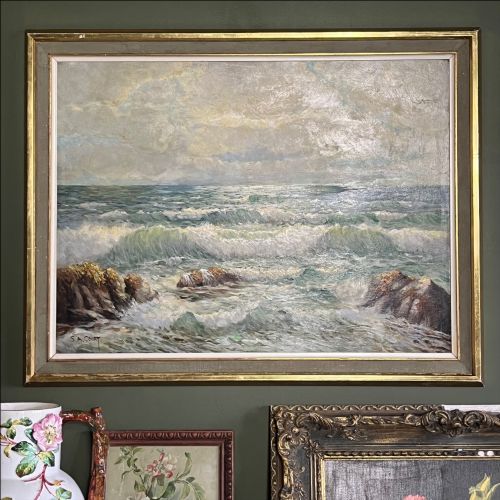
Antique cornwall landscape art captures the rugged cliffs, bustling harbours, and soft coastal light of the West Country through the eyes of Victorian and early twentieth-century painters.
Antique Cornwall Landscape Art
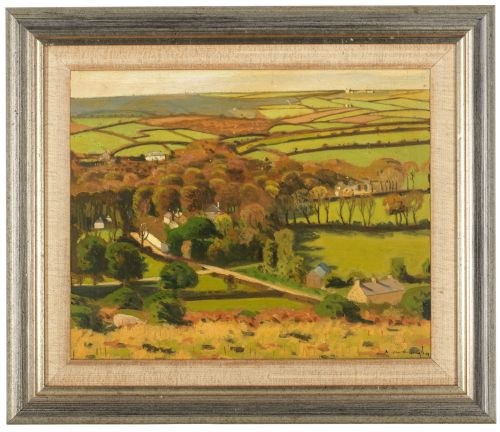
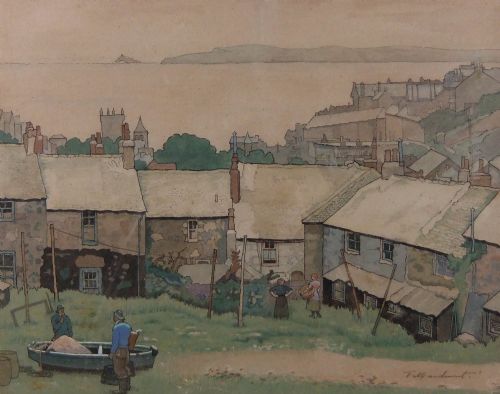
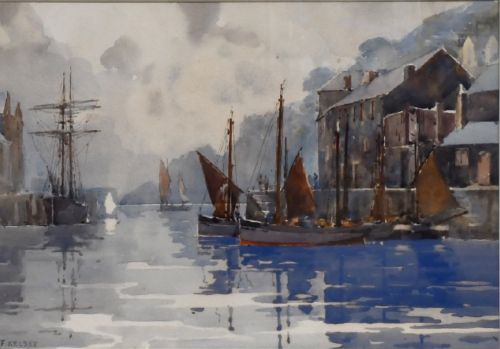
Antique cornwall landscape art encompasses oil paintings and watercolour paintings that record the coastal towns, fishing harbours, and rural views of the far south-west of England. These works range from late nineteenth-century watercolours to early twentieth-century canvases produced during the height of the St Ives School and Newlyn School movements.
Buyers seeking these works will most frequently encounter framed watercolours and oil paintings on canvas depicting iconic local sites such as St Ives, Polperro, and Mousehole. The selection balances intimate village scenes with expansive maritime vistas captured by artists working across the Victorian and Edwardian eras.
How They Were Made
Artists working on these regional landscapes relied primarily on oil paint applied to canvas or wood panels, alongside delicate watercolours worked on paper. These traditional mediums allowed painters to capture the distinct atmospheric conditions and changing light found along the Cornish coast.
Finished works were typically mounted behind glass within gesso and wooden frames, which served to protect the delicate paint layers and paper surfaces from moisture and handling over the decades.
The inventory combines paper watercolours and canvas oil paintings spanning the Victorian period through the mid-twentieth century.
What Varies in Quality
Quality in these coastal paintings rests upon the artist's ability to render the specific topography and maritime atmosphere of locations like St Michael's Mount or Looe with conviction. Stronger examples demonstrate confident brushwork and a sophisticated handling of natural light that elevates a local view into a compelling pictorial composition.
The degree of finish and the harmony of the palette also distinguish finer works from simpler topographical records. Painters associated with established regional groupings often achieved a more integrated sense of space and colour than lesser-known jobbing artists.
William Banks Fortescue·Thomas Maidment·Frank Kelsey·George F Pennington·Edward Matthew Elliott·George Turland Goosey·William Pitt·Joseph Farquharson·Frederick Stuart Richardson·William Lambert Bell·Walter Sweet·Hendrik Yan Wolter·S J Lamorna Birch·Herbert James·William Edward Webb·Arthur Joseph Meadows·John Baragwanath King
The Antique Cornwall Landscape Art Glossary
- Newlyn School
- An artist colony based in the Cornish fishing village of Newlyn during the late nineteenth and early twentieth centuries. Painters in this group focused on naturalistic depictions of rural and coastal life, frequently working out of doors.
- St Ives School
- A twentieth-century designation for artists who lived and worked in and around the Cornish port of St Ives. The movement bridged traditional landscape representation and later modernist developments.
- Gesso
- A plaster-like mixture applied to wooden frames as a base for moulding and gilding. It provides a smooth surface for decorative details surrounding the artwork.
- Watercolour
- A paint consisting of pigment suspended in a water-soluble vehicle, typically applied to paper. It allows for translucent washes that suit the depiction of coastal mists and open skies.
Antique Cornwall Landscape Art: Frequently Asked Questions
What subjects appear most often in this art?
These works focus heavily on maritime views, bustling harbour scenes, and coastal cliffs. Popular locations include St Ives, Polperro, Mousehole, and St Michael's Mount.
Rural village scenes and quiet inland vistas of the West Country also appear among the watercolours and oil paintings from this regional tradition.
How do I identify a Newlyn or St Ives piece?
Attribution often relies on artist signatures recorded in historical records, alongside stylistic ties to the plein-air painting methods practised in these coastal colonies.
The subject matter itself frequently points directly to specific Cornish fishing ports and local landmarks documented by artists working in the area.
Are these works usually framed?
Most surviving examples retain their period frames, which commonly feature moulded wood or gesso decoration suited to the Victorian or Edwardian eras.
These original surrounds help house and protect the paper watercolours and canvas oil paintings from physical damage.
What periods do these paintings cover?
The available works span from the Victorian era through the Edwardian period and into the mid-twentieth century. Dates range from the late nineteenth century into the nineteen-fifties and sixties.
This timeline captures the transition from traditional academic landscape painting towards the regional modernism associated with coastal artist colonies.