

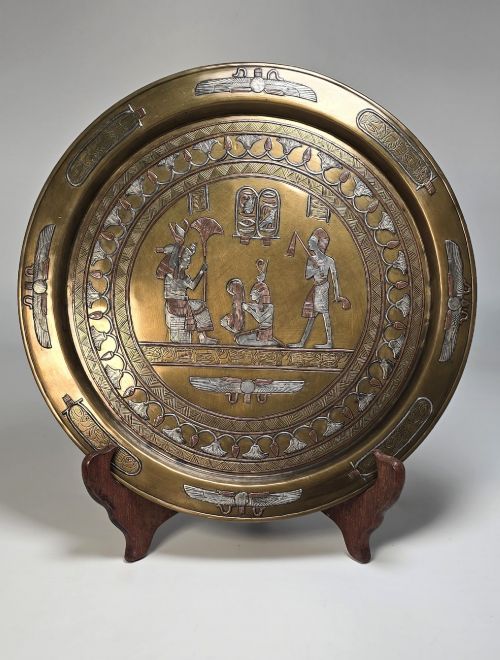


Antique Copper Wall Plate
When you search for an antique copper wall plate, you are looking at substantial metal vessels formed for display rather than the table.
Antique Copper Wall Plate
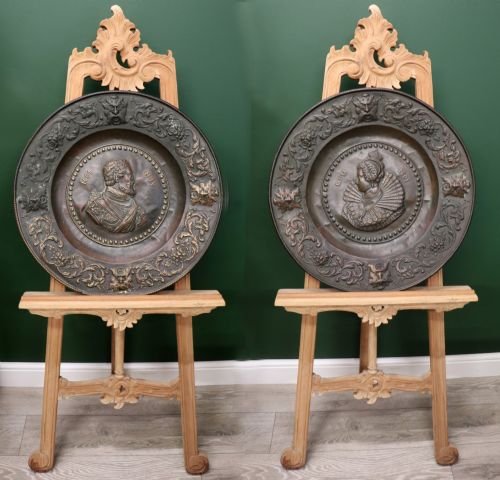
An antique copper wall plate encompasses decorative chargers, wall plaques, and large metal dishes originating from various global craft traditions during the nineteenth and early twentieth centuries. These heavy plates were produced to hang on walls or rest on sideboards, displaying complex surface ornament rather than serving food.
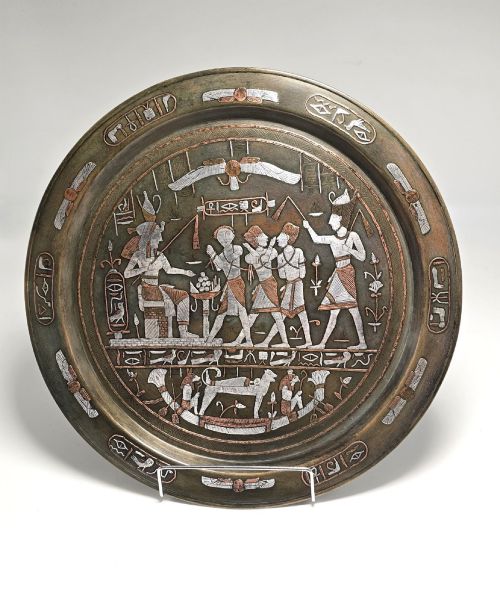
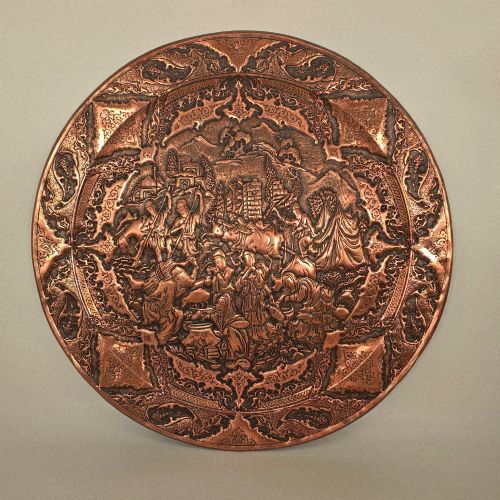
The versions most commonly met on this page span the Victorian era, the Meiji period in Japan, and the Arts and Crafts movement. You will encounter hammered British domestic work alongside Persian Cairo Ware, Japanese cloisonné enamel, and Indian repoussé copper.
These items function simultaneously as metalwork, decorative art, and records of nineteenth-century international taste. Their forms range from flat trays with raised rims to deep, broad chargers bearing pictorial or botanical motifs.
How they were made
Makers shaped the primary body of each plate from sheet copper, bronze, or brass using hammering techniques. Artisans also employed repoussé methods to push the metal from the reverse side, creating raised relief patterns on the front.
Surface embellishment frequently involved inlaying silver, brass wire, or coloured enamel into the copper base. Cloisonné pieces utilised thin metal wires soldered to the copper plate to form cells which were subsequently filled with powdered glass pastes and fired.
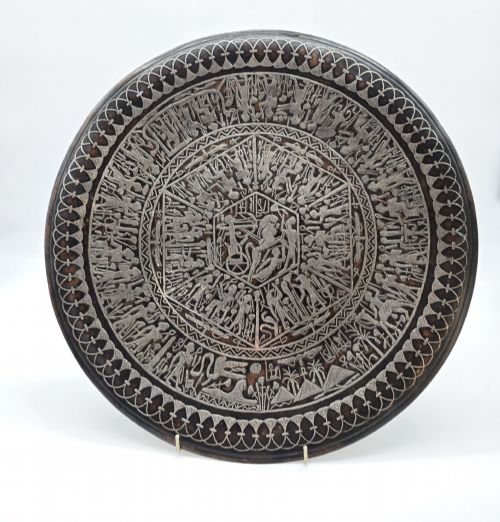
Certain regional workshops applied patination treatments to darken the background metal and increase contrast against engraved or plated designs. Other pieces received silver plating or hand-engraved detailing to accentuate figures, foliage, and script.
Antique Copper Wall Plate Retail Price Guide 2026
Typical asking prices for copper wall plate among the pieces listed under this phrase on Sellingantiques today, from the lower quarter to the upper quarter. They describe what is for sale here now, not the wider market.
What varies in quality
The standard of an antique copper wall plate depends upon the precision of the hand-worked detail and the depth of the metal relief. Pieces with crisp, deeply chased repoussé work or flawless, intricate enamel cells demonstrate superior craftsmanship compared to shallowly stamped variants.
Design complexity and composition also distinguish finer examples from standard production pieces. Well-executed works balance negative space with detailed imagery, such as dragon motifs, stylized trees, or complex Cairo Ware silver inlay.
The integrity of the surface decoration, whether inlaid wire, enamel, or engraved lines, dictates the overall grade of the item. Retaining original patination and unblemished metal surfaces separates museum-grade plates from heavily worn examples.
Liberty and Company·Faulkner Bronze Company
The Antique Copper Wall Plate Glossary
- Repoussé
- A metalworking technique where the artisan hammers the metal from the reverse side to form a raised design on the front. This process allows for expressive, three-dimensional surface ornamentation.
- Cloisonné
- An enamelling method where thin metal wires are soldered to a metal base to create compartments that are filled with enamel paste and fired. The resulting surface shows distinct coloured patterns separated by fine metal lines.
- Cairo Ware
- Metalwork produced in Egypt, typically featuring brass or bronze inlaid heavily with silver and copper wire in Islamic geometric or calligraphic patterns. These objects were popular during the nineteenth-century Grand Tour.
- Charger
- A large decorative plate or platter utilised for display on tables or walls rather than for serving food. They provide an expansive surface for elaborate engraving and metalwork.
- Patinated Copper
- Copper that has been chemically treated or aged to produce a specific surface colour or dark oxide layer. This finish highlights bright inlaid metals or engraved details.
Antique Copper Wall Plate: Frequently Asked Questions
How do I hang a heavy copper plate safely?
Heavy metal wall plates require specialised adjustable spring hangers or custom brass brackets that distribute the weight evenly across the rim. Ensure the fixture is anchored directly into a wall stud rather than relying on standard plaster plugs.
Avoid using adhesives or tight wire setups that place stress on the centre of the plate. Check the hanger periodically to ensure the metal has not shifted within the grip.
Were these plates meant for food use?
These pieces were created primarily as decorative items for display on walls, sideboards, or mantels. Many incorporate toxic inlay materials, silver plating, or delicate cloisonné enamel that would be damaged by acidic foods.
Using them for dining can scratch the soft copper surface and ruin historic patination. Their heavy weight and shallow bases make them unsuited for practical table service.
How do I tell Japanese Meiji copper apart from Arts and Crafts pieces?
Japanese Meiji pieces often feature precise cloisonné enamel, complex dragon motifs, or mixed-metal inlay work associated with traditional craftsmanship. They reflect meticulous detail and often bear artist signatures.
Arts and Crafts pieces from Britain typically display hand-beaten copper surfaces, stylized tree or pomegranate motifs, and a focus on visible craftsmanship. They avoid intricate enamel in favour of honest, tactile metalworking.