
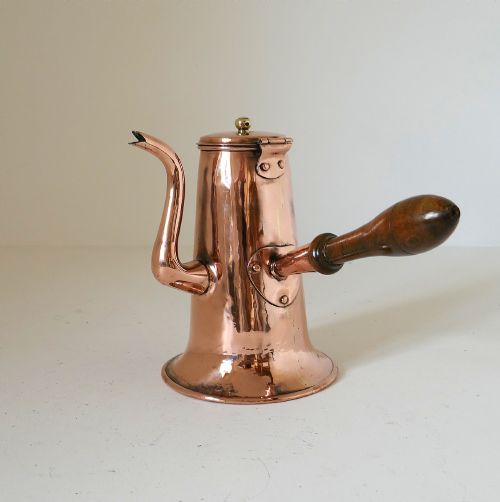
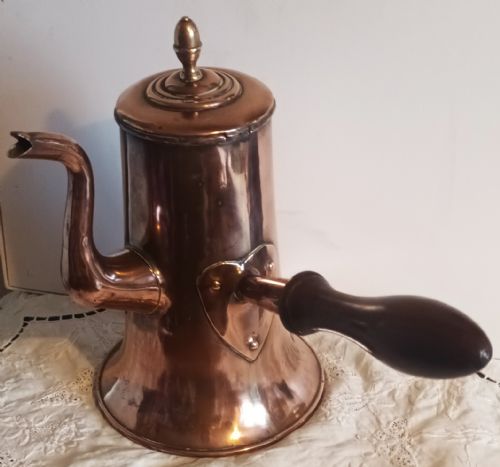
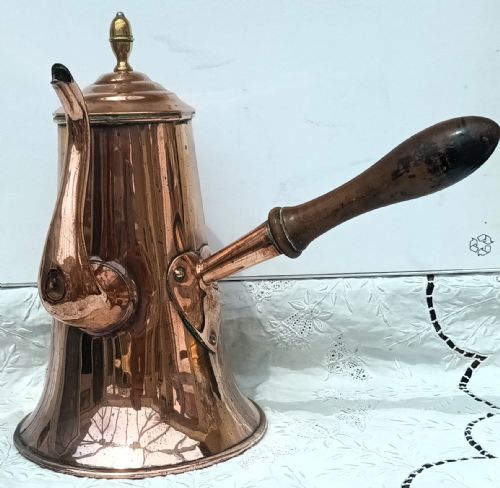
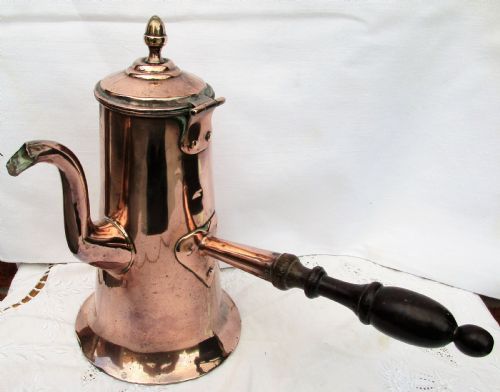
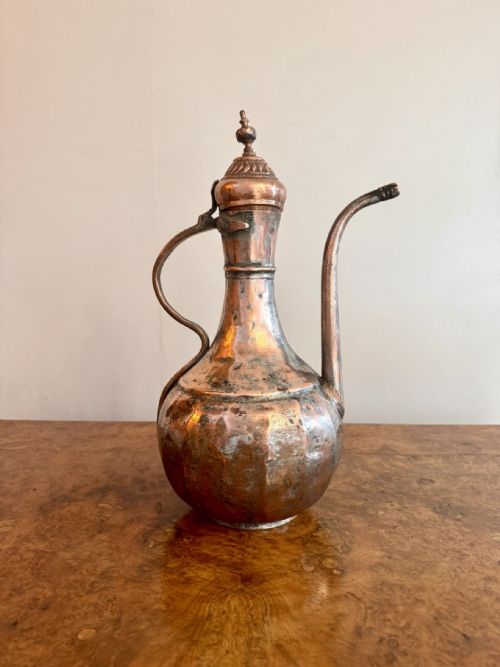


Antique Copper Coffee Vessel
An antique copper coffee vessel brings warm metal tones and rich domestic history into a modern room.
Antique Copper Coffee Vessel
When you search for an antique copper coffee vessel, you are looking at utilitarian drink-serving ware shaped by hand from warm metal during past centuries. These items range from domestic English kitchen metalware to decorative Middle Eastern forms and structured Arts and Crafts breakfast collections.
The versions you are most likely to meet on this page belong to the Georgian and 19th Century periods, alongside earlier 18th Century examples with side handles. They appear as standalone coffee pots, ewers, and pitchers formed in copper and accented with brass or wood.
Originating across England and the Middle East, these vessels reflect both daily domestic service and regional metalworking traditions. Their varied forms bridge the gap between working kitchenware and decorative display pieces.
How they were made
These vessels are formed primarily from hammered sheet copper, joined at seams and polished to catch the light. Makers combined this conductive metal with contrasting materials like brass for spouts or mounts, and wood for heat-resistant handles.
Internal surfaces were frequently tinned to prevent direct contact between the beverage and the reactive copper. Exterior finishes rely on the natural warmth of the metal rather than applied surface decoration, showing the hammer marks of the artisan.
Some early pots require you to pour coffee sideways, proving that Georgian mornings demanded a slight adjustment in coordination.
What varies in quality
Quality in an antique copper coffee vessel rests on the crispness of the hand-formed silhouette and the integration of secondary materials. Pieces with secure wooden handles and well-proportioned spouts demonstrate greater craftsmanship than standard utilitarian wares.
The distinction between ordinary kitchen metalware and superior examples lies in the weight of the copper sheet and the refinement of the finishing details. Makers such as William Soutter & Sons represent a standard of named workshop execution that elevates a simple pot into a collected piece.
William Soutter & Sons
The Antique Copper Coffee Vessel Glossary
- Ewer
- A large jug with a wide-spouted mouth, often used for pouring water or serving liquids before dedicated coffee pots became common. These vessels share manufacturing techniques with standard coffee pots.
- Tinned interior
- A protective metallic coating applied to the inside of copper vessels to prevent metallic taste and toxicity. This lining is essential for understanding how the pots were kept safe for consumption.
- Kitchen metalware
- Utility items made from copper, brass, and tin for use in food preparation and service. This broad category includes pots and pitchers designed strictly for domestic labour.
- Side handle
- A mounting configuration where the wooden grip is attached at a right angle to the spout rather than opposite it. This style is frequently encountered on mid 18th century English pots.
Antique Copper Coffee Vessel: Frequently Asked Questions
Can I still use an antique copper coffee pot?
Most of these vessels are best preserved for display rather than daily brewing due to their age and delicate internal linings. Collectors typically prize them for their decorative warmth in a kitchen or living space.
If you do wish to use one, check the interior tinning and seals carefully. Modern usage requires intact protective layers to keep the beverage safe from copper contact.
How do I clean antique copper?
Gentle dusting and occasional use of non-abrasive metal cleaners help maintain the surface without stripping the character built over centuries. Avoid harsh chemical dips that remove the natural aged tone.
Allowing a soft patina to remain is standard practice among collectors who value the historical appearance of the metal. Over-polishing can diminish the visual depth of the piece.
How do I tell an English pot from a Middle Eastern one?
English examples from this selection frequently follow Georgian stylistic lines with structured spouts and wooden handles. They reflect domestic tea and coffee traditions of the eighteenth and nineteenth centuries.
Middle Eastern pieces often feature distinct regional ornamentation and forms associated with local service rituals. Their silhouettes and surface finishes contrast with the standard Georgian pots produced in England.
What period do most of these vessels come from?
The majority of the pieces listed date from the nineteenth century, encompassing Georgian revivals and mid-period manufacturing. Earlier eighteenth-century examples also appear with specific side-handled configurations.
Occasional twentieth-century Arts and Crafts pieces represent a later shift in design focus toward breakfast collections. Each era brings distinct manufacturing traits to the materials used.