




Antique Commercial Clock
An antique commercial clock brings practical public timekeeping into a private room, offering heavy timber cases and clear painted dials.
Antique Commercial Clock
When you search for an antique commercial clock, you encounter heavy wall-mounted timepieces built for railways, factories, offices, and shops rather than domestic mantelpieces. These span periods from the Victorian era and Edwardian years through to the 1930s and 1940s.
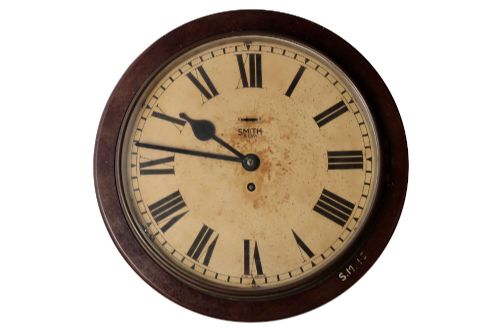
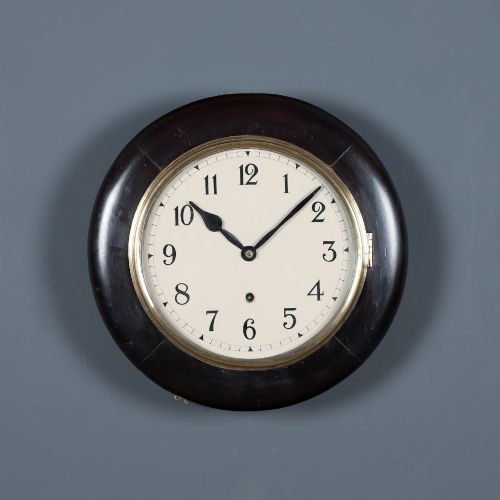
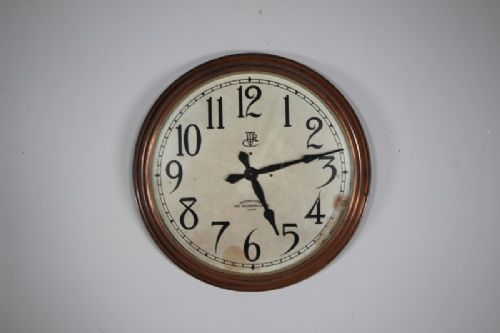
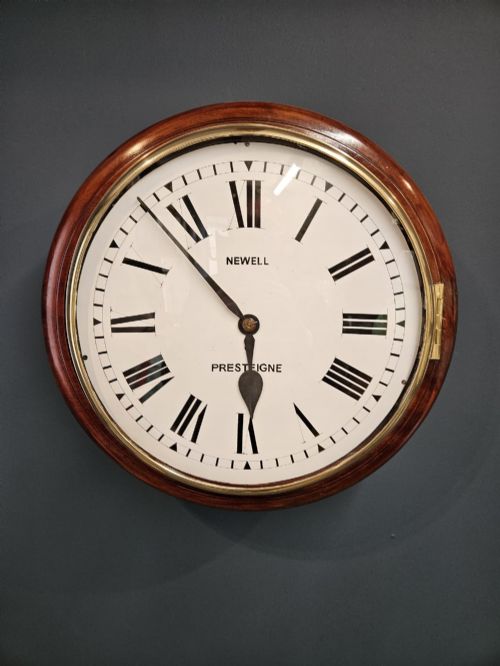
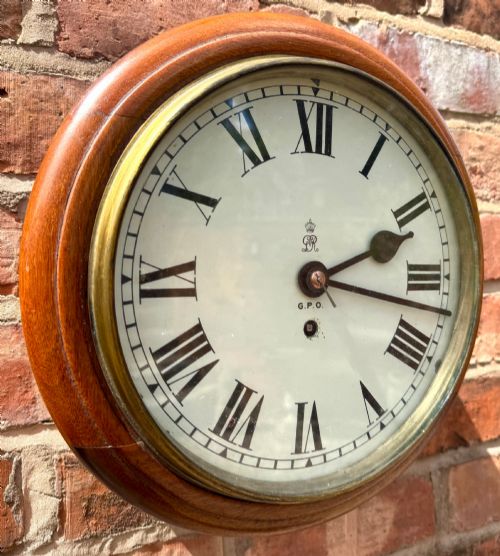
The version you are most likely to meet on this page is a round dial wall clock framed in mahogany or oak, often bearing the stamp of railway companies like the GPO or British Railways. Alternatively, you might find larger industrial station clocks or advertising pieces featuring bold lettering on the face.
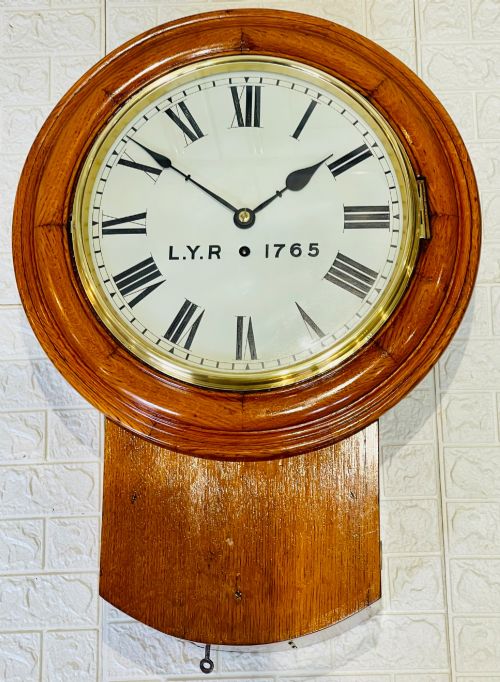
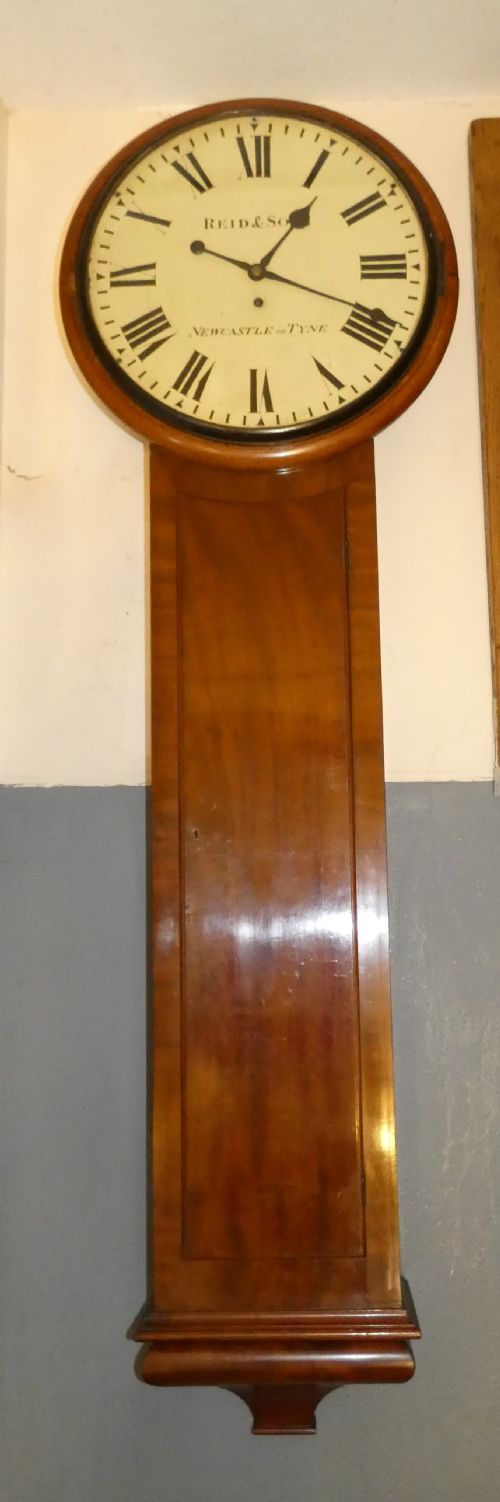
Object types on offer range from standard wall clocks and drop dial fusee timepieces to trade signs and double-sided hanging clocks. They draw their character from utilitarian service rather than decorative excess, making them substantial focal points for high-ceilinged rooms.
Materials and Construction
Cases rely on durable hardwoods such as mahogany and oak to withstand industrial environments, vibration, and public handling. Metal, iron, and brass form bezels, inner movements, and structural brackets, while chrome and early plastics like bakelite appear in later twentieth-century examples.
Dial faces use painted wood, metal, or glass protected by hinged brass bezels designed for quick access by maintenance staff. Movements frequently utilise chain or wire fusee mechanisms to maintain even tension as the mainspring unwinds, ensuring reliable timekeeping for public spaces.
Antique Commercial Clock Retail Price Guide 2026
Typical asking prices for commercial clock among the pieces listed under this phrase on Sellingantiques today, from the lower quarter to the upper quarter. They describe what is for sale here now, not the wider market.
Some timepieces recorded factory shifts rather than the hours of the day, catching workers arriving late.
Factors of Quality
Quality in these utility timepieces rests on the integrity of the original movement and the preservation of the timber case. A clock retaining its matching numbered case and a clean fusee movement stands apart from one altered by modern replacements or conversion to quartz.
The legibility and originality of the painted dial also dictate the standing of the piece. Crisp lettering from makers or railway commissioners, alongside untouched hands and original brass bezels, elevates a clock far above standard utilitarian production.
Smiths of London·John Walker·Camerer Cuss·Gledhill Brook·Anglo Swiss Watch Co·Josef Herzog
The Antique Commercial Clock Glossary
- Fusee
- A conical pulley used in clock movements to equalise the power of the mainspring as it runs down. This mechanism ensures consistent force is delivered to the escapement throughout the duration of the wind.
- Drop dial
- A wall clock featuring an extended lower wooden case that houses the pendulum swing below the circular dial face. This configuration provides space for the longer drop required by certain weight-driven or fusee movements.
- Bezel
- The metal or wooden ring that holds the glass protecting the clock face. In commercial clocks, this is commonly hinged with a small latch to allow easy hand-setting and regulation.
- Dial
- The visible face of the clock where the numerals and minute tracks are painted or applied. These frequently display railway company ciphers or commercial advertising alongside the maker's name.
Antique Commercial Clock: Frequently Asked Questions
How do I wind a fusee wall clock?
You use a matching winding key inserted into the dial hole to turn the movement clockwise until it meets resistance. Care must be taken not to overwind older mechanisms.
Most chain or wire fusee models require weekly winding to maintain accurate timekeeping across public or domestic spaces.
Were these clocks used outdoors?
Most commercial clocks listed here were manufactured for interior use in railway stations, ticket offices, factories, and retail shops. They needed protection from severe weather despite their robust construction.
Double-sided variants often hung in large booking halls or corridors where passengers could view the time from multiple angles.
How do I identify a railway clock?
Railway timepieces often feature company initials, inventory numbers, or specific depot stamps painted on the dial or stamped into the timber case. Names such as GVR, GPO, or British Railways frequently appear.
The movements inside were built to strict standards to ensure synchronisation across the network.
How do I hang a heavy wall clock?
These timepieces require direct fixing into masonry or substantial timber wall studs using heavy-duty screws and wall plugs. The weight of the mahogany or oak case demands secure anchorage.
Once mounted, the case must be plumbed vertically so the pendulum swings evenly and the movement keeps correct time.