



Antique Cockerel Figurines
Antique cockerel figurines are spirited avian sculptures rendered in silver, bronze, jade and pottery that bring character and sculptural presence to a desk or mantelpiece.
Antique Cockerel Figurines
When you search for antique cockerel figurines, you enter a diverse field spanning Asian carving, European silverwork and continental foundry casting. These sculptures take the form of domestic table ornaments, desk accessories, money banks and car mascots.
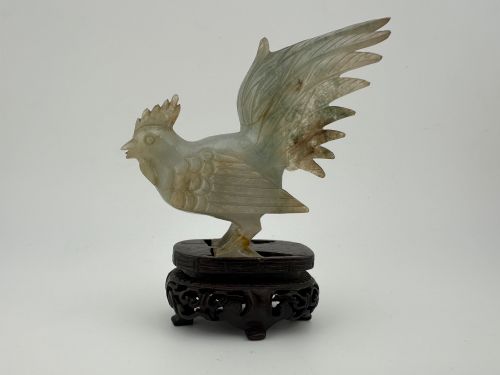
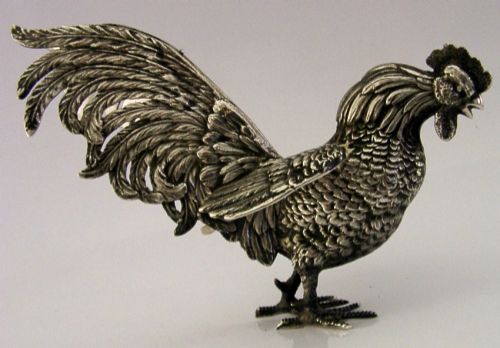
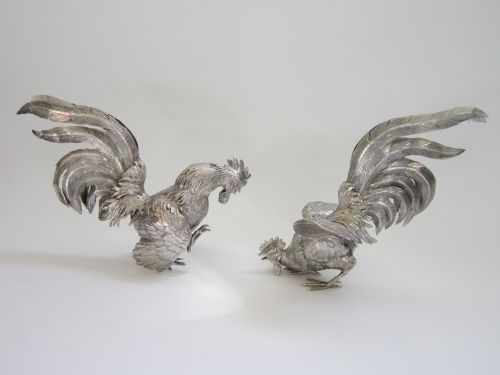
The versions most likely to be met on this page range from Victorian silver table ornaments and cold-painted bronze figures to Chinese jade and porcelain carvings. They capture the bird in various postures, from calm standing positions to aggressive fighting stances.
Origins stretch across Britain, continental Europe and China, drawing on periods from the nineteenth century through the mid-twentieth century. Each regional tradition applies distinct materials and stylistic conventions to the subject.
How they were made
Metal figurines rely on casting techniques, particularly the cold-painting method applied to bronze where polychrome pigments sit on top of the cast surface. Sterling silver, 833 silver and silver plate are worked through casting, chasing and detailed surface texturing to define plumage.
Carved pieces utilise natural materials such as pale green jade and hardstone paired with fitted hardwood stands, or rely on moulded porcelain finished with coloured glazes. Tin metal and terracotta provide alternative mediums for folk art and continental workshops.
Antique Cockerel Figurines Retail Price Guide 2026
Typical asking prices for cockerel figurines among the pieces listed under this phrase on Sellingantiques today, from the lower quarter to the upper quarter. They describe what is for sale here now, not the wider market.
Listings feature sterling silver, jade, bronze and terracotta across periods spanning the nineteenth century to the mid-twentieth century.
What varies in quality
The distinction between ordinary and exceptional cockerel figurines lies in the sharpness of the casting or carving and the fidelity of the anatomical detail. Fine feather chasing, realistic posture and well-preserved cold-painted pigments elevate a bronze or silver piece.
In ceramic and jade examples, quality rests on the purity of the stone, the subtlety of the glaze application and the proportion of the carving. Maker attribution and the retention of original components, such as hardwood stands, also influence the standing of a piece.
Franz Bergman·Rene Lalique
The Antique Cockerel Figurines Glossary
- Cold-painted bronze
- Bronze sculptures finished with oil-based paint applied after casting rather than fired in a kiln. This technique allows for polychrome detail on small figures.
- Qing Dynasty
- The final imperial dynasty of China, spanning the seventeenth to early twentieth centuries. Pieces from this era often feature traditional porcelain glazes and careful carving.
- Hanau
- A German town historically known for silver production, particularly the creation of decorative items and novelty figures that often referenced earlier styles.
- Car mascot
- An ornamental sculpture mounted on the radiator cap of an automobile during the early and mid-twentieth century. These pieces were frequently sculpted by prominent glass and metal artists.
Antique Cockerel Figurines: Frequently Asked Questions
How do I clean silver cockerel figurines?
Silver figures should be dusted gently with a soft brush and cleaned sparingly with a dedicated silver cloth to preserve the underlying metal texture.
Avoid liquid dips, as they can strip away intentional patination and fine chasing within the feather details.
Are cold-painted bronzes fragile?
The polychrome painted surface on cold-painted bronzes is susceptible to flaking if handled roughly or exposed to excessive moisture.
Display these figures in stable environments away from direct sunlight to maintain the integrity of the original pigments.
What is a car mascot figurine?
Car mascots were decorative ornaments mounted on motor vehicle radiator caps during the early twentieth century. Sculptors created them in glass, bronze and metal to give individuality to automobiles.
Many of these figural designs were later mounted on bases to serve as desk or display objects.
How do I date a jade cockerel?
Dating jade carvings involves examining the quality of the stone, the style of the carving work and the execution of any accompanying hardwood stands. Material characteristics and workshop conventions help narrow the period of production.