




Antique Cobalt Crystal Glasses
These antique cobalt crystal glasses bring deep blue colour and brilliant refraction to any table setting, prized for their rich hues and heavy lead crystal sparkle.
Antique Cobalt Crystal Glasses
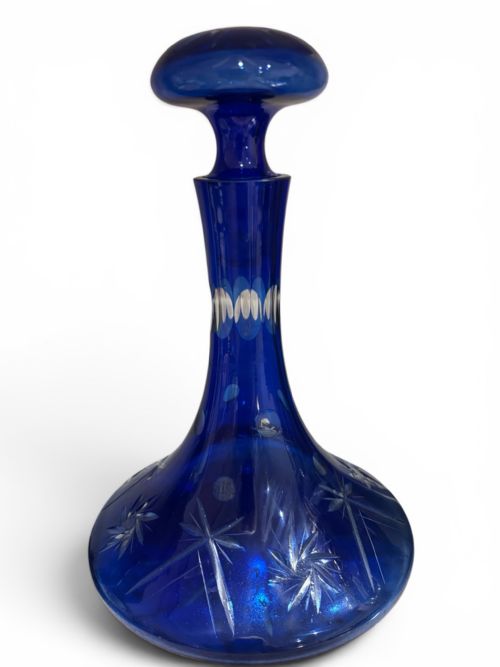
The pieces on this page include lead crystal and cut glass vessels shaped by European makers working in Bohemian, Viennese, and French traditions. Most examples use intense blue coloration applied through solid cobalt glass or layered overlay techniques.
How they were made
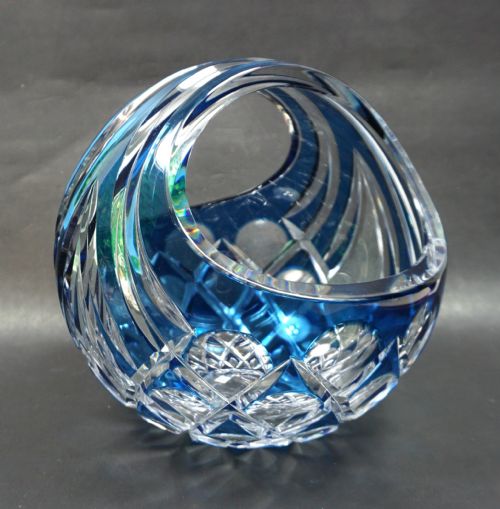
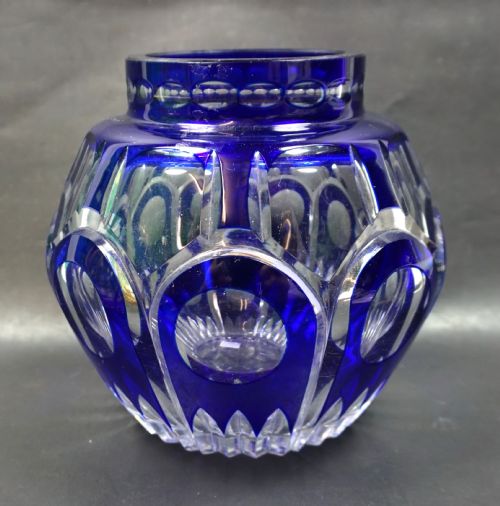
Makers produced these drinking vessels using heavy lead crystal blown into moulds or shaped by hand. Craftsmen then added deep surface cuts to expose clear crystal beneath the cobalt outer layer.
Silver and metal mountings often complemented the glassware, while precision cutting defined the geometric patterns seen in later Art Deco and Vienna Secession designs.
Listings feature items from the Victorian, Edwardian, and Art Deco periods, utilising lead crystal, cobalt glass, and silver.
What varies in quality
Quality rests in the depth of the cobalt hue and the crispness of the cutting across the crystal surface. Superior examples exhibit precise facet work that sharpens the refraction of light through the blue glass.
Weight and balance also separate standard production wares from pieces designed by prominent European workshops. Clarity in the underlying lead crystal remains vital to the overall appearance.
Moser Crystal·Val St. Lambert
The Antique Cobalt Crystal Glasses Glossary
- Cobalt glass
- Glass coloured deep blue by the addition of cobalt oxide during the melting process. This intense shade forms the base of the rich colour seen in Victorian and Edwardian tablewares.
- Lead crystal
- High-purity glass containing lead oxide, which increases the weight, brilliance, and workability of the material. It allows for deep, sharp facet cutting.
- Cut to clear
- A technique where a coloured glass overlay is sliced away to reveal the clear crystal underneath. This process creates striking contrast between the blue exterior and transparent body.
- Overlay
- A manufacturing method involving a layer of coloured glass fused over a clear glass base. Artisans cut through the outer layer to form decorative patterns.
Antique Cobalt Crystal Glasses: Frequently Asked Questions
How do I clean antique crystal glasses?
Wash these pieces by hand in warm water using a mild detergent. Avoid sudden temperature changes to protect the historic glass.
Dry each glass immediately with a lint-free cloth to maintain the brilliance of the lead crystal and metal mounts.
Are these glasses safe for daily use?
Many collectors prefer to reserve antique stemware for special occasions rather than everyday dining. Hand washing prevents accidental knocks against modern ceramic sinks.
Careful handling preserves the sharp facet cutting and polished rims of the nineteenth and twentieth-century glassware.
How can I tell Victorian from Art Deco glasses?
Victorian examples tend to feature ornate floral motifs, heavier cut-to-clear patterns, and rounded bowl shapes. They reflect the romantic aesthetic popular during the nineteenth century.
Art Deco glasses showcase geometric lines, minimalist profiles, and influences from Vienna Secession design. These later pieces emphasise symmetry and streamlined silhouettes.
What causes the blue colour in cobalt glass?
The intense blue tone results from metallic cobalt oxide added to the molten glass batch. This chemical compound produces a stable, deep colour that does not fade over time.
Different concentrations of the oxide create variations from bright sapphire to dark midnight blue across different European traditions.