



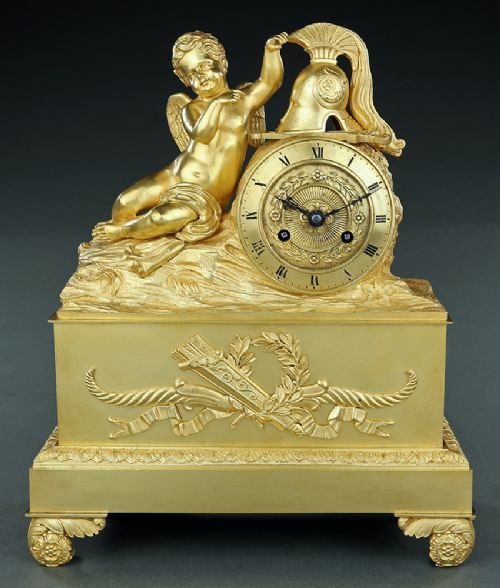
Antique Clock with Cherub
An antique clock with cherub brings sculptural charm to a mantelpiece, combining fine horology with neoclassical and rococo figural artistry.
Antique Clock with Cherub
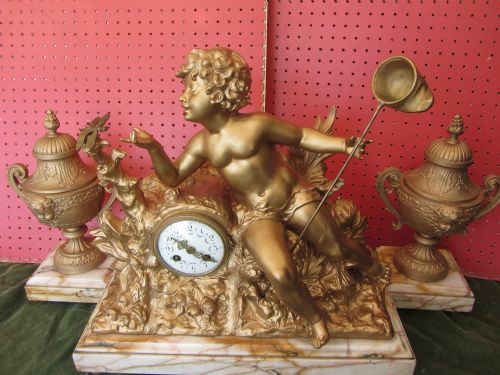
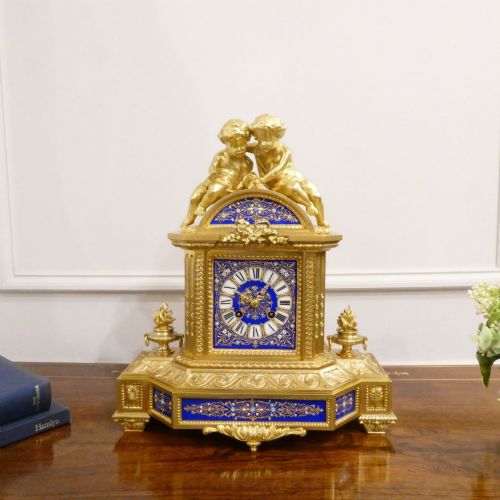
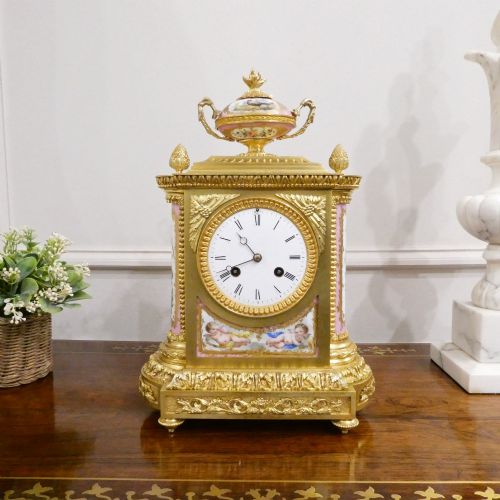
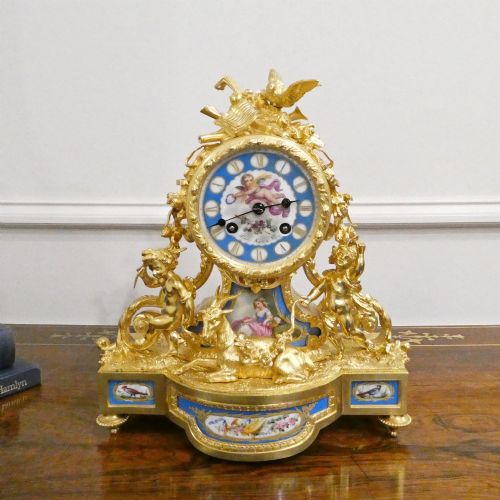
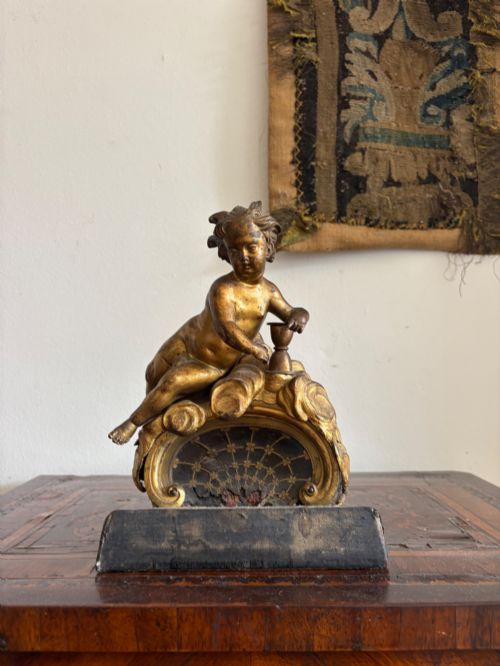
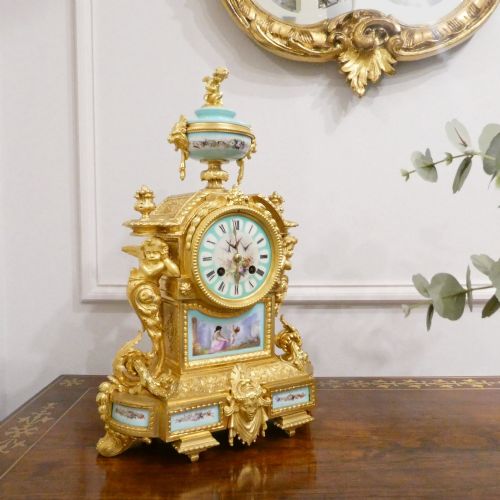
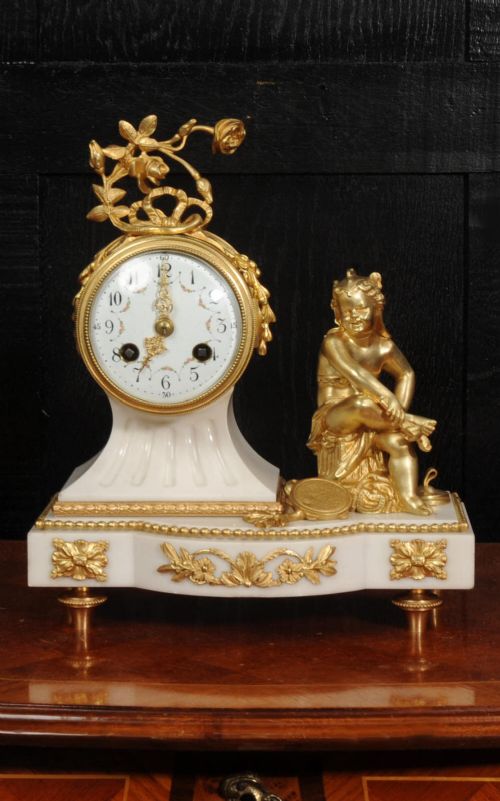
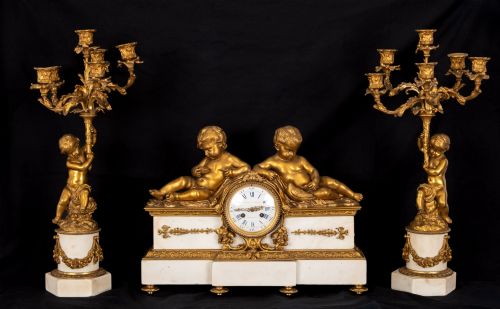
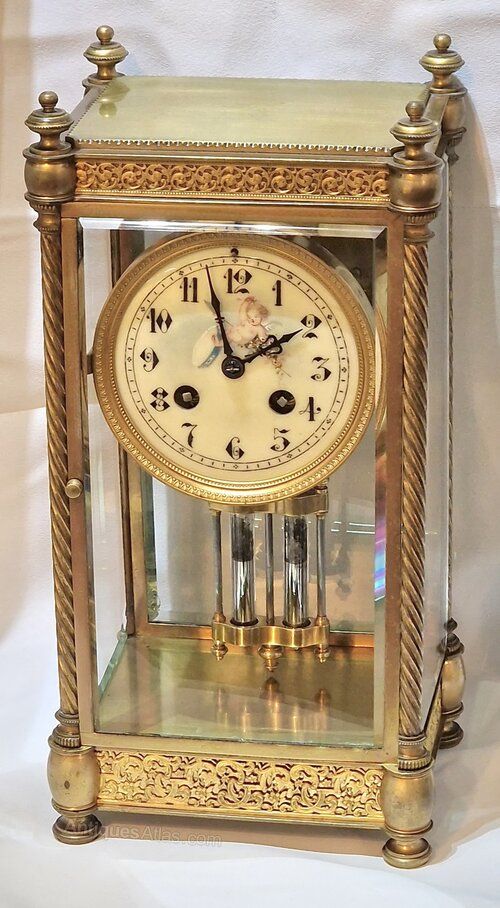
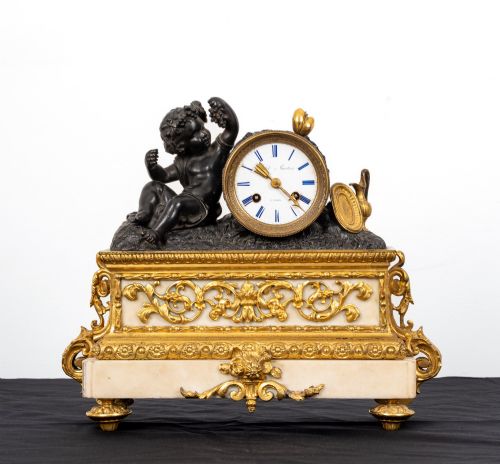
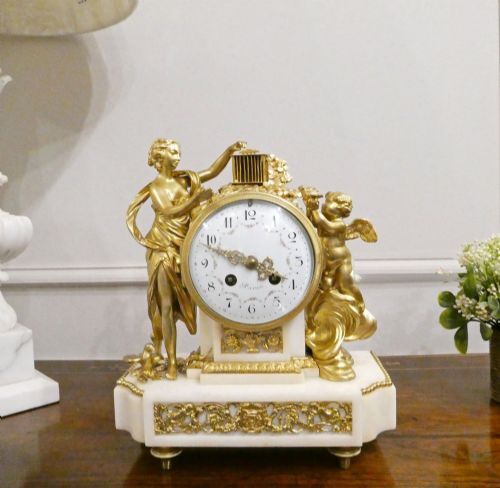
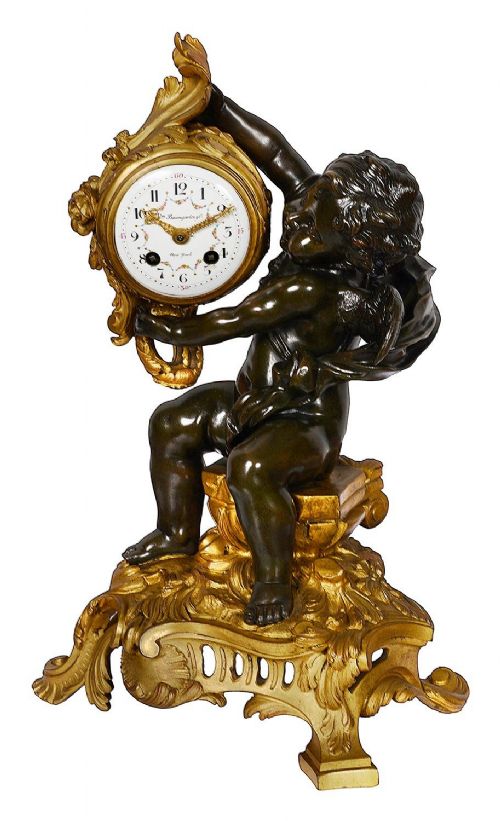
An antique clock with cherub typically takes the form of a mantel clock featuring cast figures of putti, cherubs, or cupids alongside the dial. These pieces are predominantly French in origin, spanning the nineteenth century through the early twentieth century.
The horological housing sits upon substantial stands of marble or rosewood, accompanied by decorative elements such as enamel dials and visible pendulums. Buyers will encounter various revivals, including Louis XVI, Rococo, and Second Empire styles.
Makers integrated these winged figures into diverse table and mantel formats, ranging from swinging pendulum designs to elaborate clock sets flanked by maiden or animal motifs.
How they were made
The manufacture of these pieces relies heavily on cast metals, specifically utilising gilt bronze, ormolu, patinated bronze, and brass. Founders and horologists combined these metallic elements with natural materials like marble, glass, and bovine inlay.
Antique Clock with Cherub Retail Price Guide 2026
Typical asking prices for clock with cherub among the pieces listed under this phrase on Sellingantiques today, from the lower quarter to the upper quarter. They describe what is for sale here now, not the wider market.
Listings feature nineteenth-century mantel clocks combining gilt bronze, marble, and enamel with French neoclassical and rococo revival styles.
What varies in quality
Quality diverges notably in the crispness of the bronze casting and the depth of the gilding applied to the ormolu surfaces. Finer examples display meticulous chiselling on the cherub figures, capturing delicate facial expressions and feather details on the wings.
The selection of the supporting material also indicates grade, where heavy specimen marble or finely figured rosewood elevates the piece above standard brass-cased alternatives. Furthermore, signed movements by recognised makers lend greater horological significance to the clock.
Leon Message·Jollet et Cie·BELLENOT PARIS·Henry Berkeley Square London·Dumont·F Marti·Farcot·P.H. Mourey
The Antique Clock with Cherub Glossary
- Ormolu
- Gilded bronze produced by applying a mercury and gold amalgam to a bronze base, creating a rich golden surface. This technique was widely employed on nineteenth-century French mantel pieces.
- Putto
- A plump, naked male child figure, frequently winged, appearing across classical and revival art. In horology, these figures are commonly referred to as cherubs or cupids.
- Silk suspension
- An early method of hanging the pendulum from a fine loop of silk thread rather than a metal spring. This delicate system is typically found on mid-nineteenth-century movements.
- Fusee
- A conical pulley used in clock mechanisms to maintain equal drive power as the mainspring unwinds. It ensures more accurate timekeeping throughout the running period.
- Specimen marble
- Decorative stone composed of various polished mineral fragments or multicolored marble blocks. It provides a heavy, multicolored base for figural clock cases.
Antique Clock with Cherub: Frequently Asked Questions
How do I wind an antique clock?
Most mechanical clocks require a specialised key inserted into the dial holes to tension the spring barrel. Care must be taken not to overwind the movement.
Eighty-day and eight-day movements dictate the frequency of winding, maintaining the kinetic operation of the pendulum and gear train.
What is a silk suspension movement?
This mechanism suspends the pendulum from a braided silk thread rather than a modern steel spring. It represents an older horological method.
Clocks utilising this setup generally date to the earlier part of the nineteenth century and require careful handling during transport.
Where should I place my clock?
These mantel clocks need a stable, level surface such as a wooden sideboard or a dedicated slate mantelpiece. Vibrations can disrupt the pendulum beat.
Direct sunlight and fluctuating room temperatures should be avoided to protect the delicate enamel dials and gilt bronze finishes.
How do I identify French mantel clocks?
French pieces often feature foundry stamps or maker signatures engraved directly onto the brass backplate of the movement. Stylistic cues include Louis XVI or Rococo revival cast ornament.
The integration of cherubs, marble plinths, and enamel chapter rings further points towards nineteenth-century French workshops.