




Antique Classical Urn Garniture
These antique classical urn garniture sets bring architectural symmetry and heavy nineteenth-century metalwork to a mantelpiece.
Antique Classical Urn Garniture
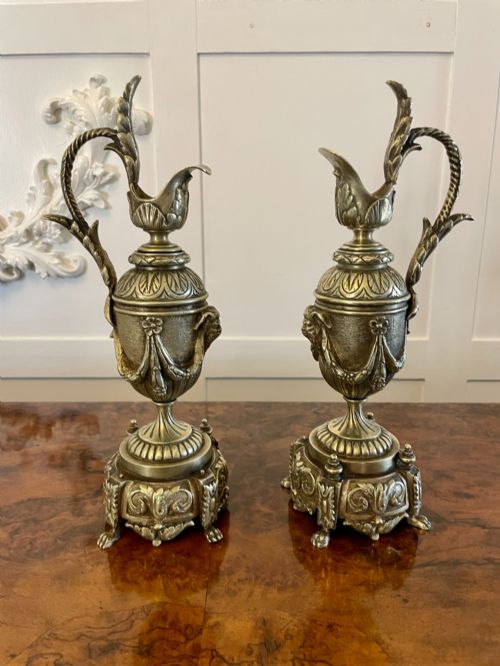
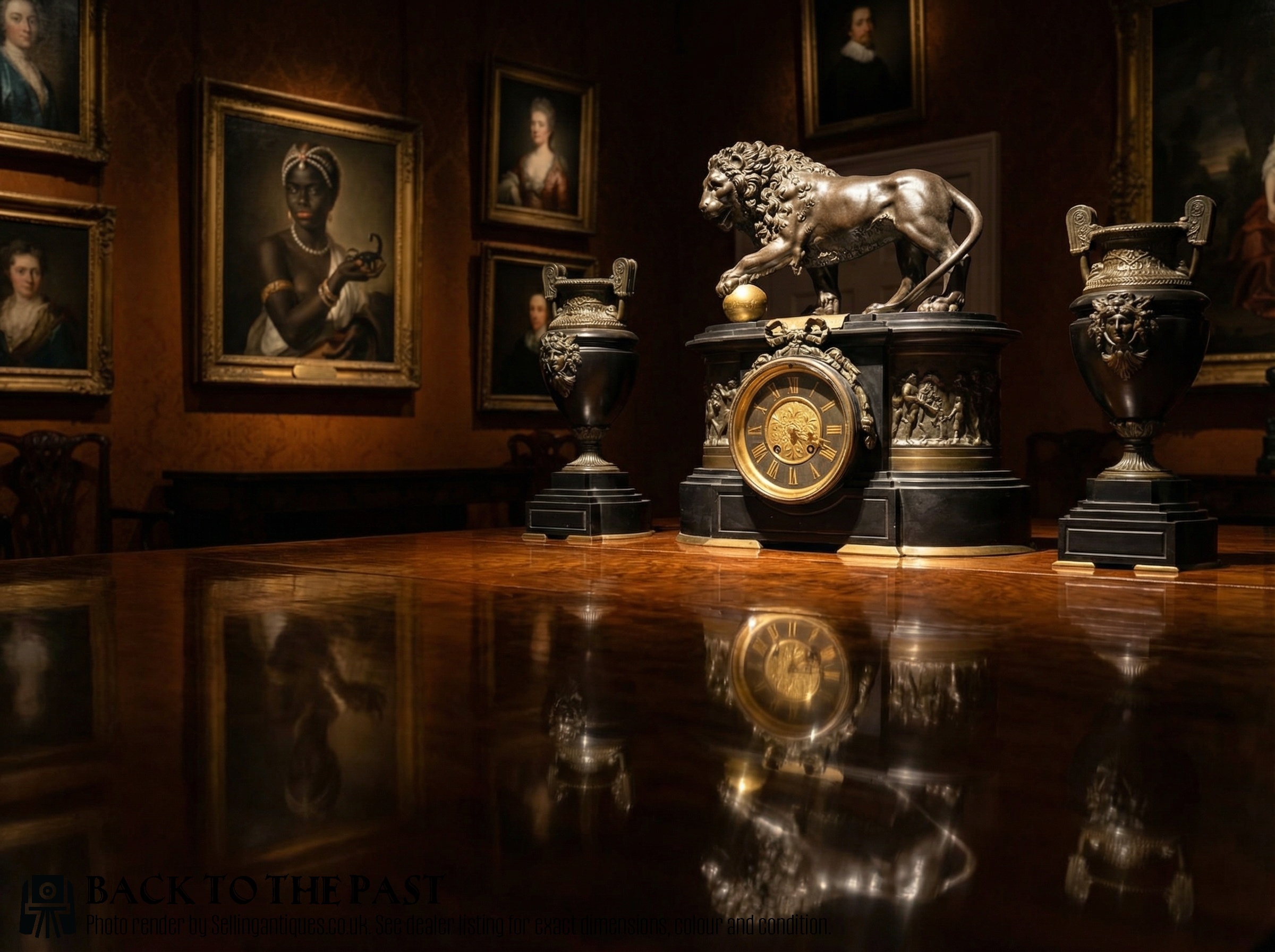
An antique classical urn garniture typically consists of a central clock flanked by matching urns or candelabra, designed to create a balanced focal point on a mantelpiece or sideboard. These decorative ensembles draw heavily from French Empire, Louis XVI, and Victorian Classical Revival vocabularies, often taking the form of paired vases, cassolettes, or ewers.
The pieces appearing on this page originate predominantly from the nineteenth century, spanning from the eighteen-sixties through the eighteen-nineties. Alongside clock sets, buyers will find standalone pairs of decorative urns and vase garnitures created in both French and Italian workshops.
Makers utilised established motifs such as acanthus leaves, classical figures, and amphora profiles, reflecting a widespread nineteenth-century fascination with antiquity. Whether cast in bronze or turned from marble, these sets served as principal ornamental fixtures in formal nineteenth-century interiors.
Materials and construction methods
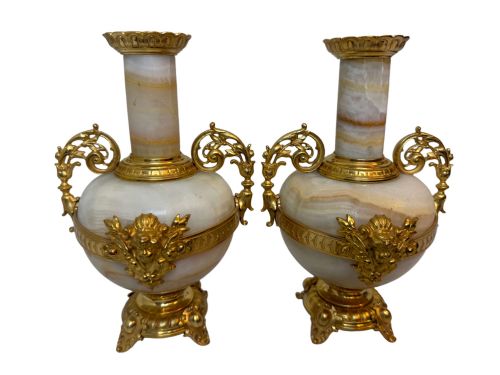
Foundries combined cast bronze and brass with hand-chiseled ormolu mounts, applying mercury gilding or modern electrogilding to achieve a bright, durable metallic finish. Natural stones like white marble, onyx, and sienna marble provided solid, heavy plinths and bodies that anchored the metal elements.
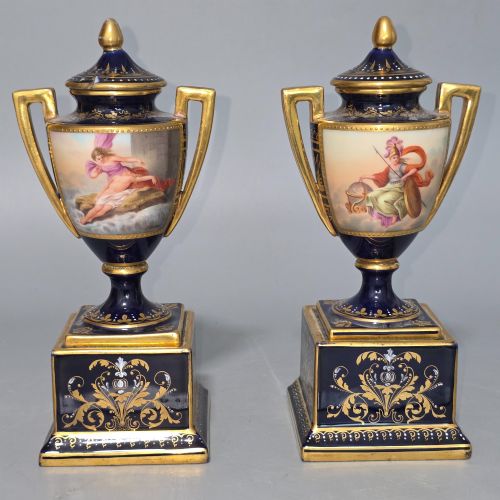
Ceramic components relied on fine porcelain bodies from factories such as Vienna, Sèvres, and Minton, often hand-painted with classical scenes or floral details and finished with glazed surfaces. Stonework was turned on lathes and fitted with finely cast metal collars, handles, and finials.
Makers assembled these garnitures using threaded rods and internal nuts, allowing complex multi-material objects to be dismantled for cleaning or repair. Glass and enamel components appeared on clock dials and protective bezels, completing the composite construction typical of the period.
Antique Classical Urn Garniture Retail Price Guide 2026
Typical asking prices for classical urn garniture among the pieces listed under this phrase on Sellingantiques today, from the lower quarter to the upper quarter. They describe what is for sale here now, not the wider market.
Grand Tour travellers bought alabaster vases in Italy to prove they survived carriage rides across the Alps.
Assessing quality and craftsmanship
Painted porcelain panels demonstrate quality through the delicacy of the brushwork and the richness of the enamel colours fired onto the ceramic body. In clock movements and garniture fittings, precise alignment of components and robust mechanical construction indicate higher standards of workshop production.
F. Koller·A.D Mougin·Thomas Steel·Minton·Sevres
The Antique Classical Urn Garniture Glossary
- Garniture
- A set of matching decorative objects, typically a clock flanked by two urns or vases, designed for display together on a mantelpiece.
- Cassolette
- A dual-purpose decorative vase or urn with a reversible lid that transforms the piece from a solid vessel into a candleholder or perfume burner.
- Ormolu
- Gilded bronze, produced by applying a gold amalgam to a cast bronze base and heating it to drive off the mercury, leaving a rich golden coating.
- Amphora
- A two-handled ancient Greek or Roman storage jar shape frequently reinterpreted by nineteenth-century porcelain and bronze makers.
- Ewer
- A large pitcher or jug with a wide spout and a looped handle, often produced in pairs as decorative cabinet pieces during the nineteenth century.
Antique Classical Urn Garniture: Frequently Asked Questions
How do I style a garniture set?
Centre the main clock or largest urn on the mantelpiece, then place the matching side pieces symmetrically at equal distances.
Ensure the surrounding surface is deep enough to support the heavy marble plinths safely without overhang.
Were these sets made for everyday use?
Nineteenth-century garnitures served primarily as high-status decorative ornaments for formal reception rooms and parlours rather than utilitarian items.
Clock movements were wound regularly to keep time, but the surrounding urns and candelabra remained decorative fixtures.
How do I care for ormolu and marble?
Dust the metal mounts and stone surfaces gently with a soft, dry cloth to prevent the buildup of grime.
Avoid chemical polishes and liquid cleaners, which can strip historic gilding from bronze and stain porous white marble.