


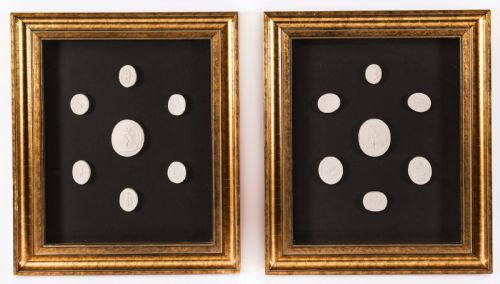


Antique Classical Intaglios
Antique classical intaglios bring ancient mythology and miniature portraiture into the home through carved gems and plaster casts.
Antique Classical Intaglios
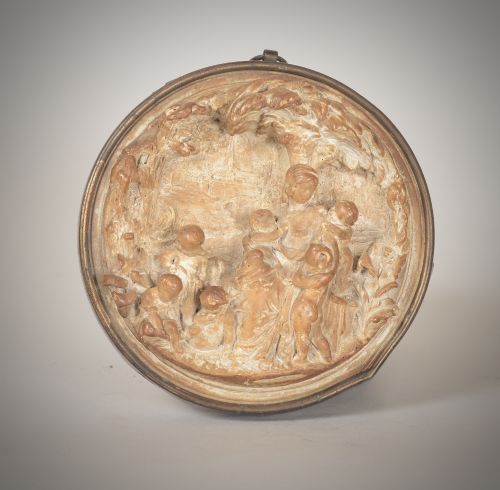
Antique classical intaglios comprise framed plaster casts, carved hardstone rings, and desk seals created during the Georgian, Victorian, and Edwardian eras. These pieces immortalise ancient Greek and Roman deities, emperors, and allegorical figures in miniature relief.
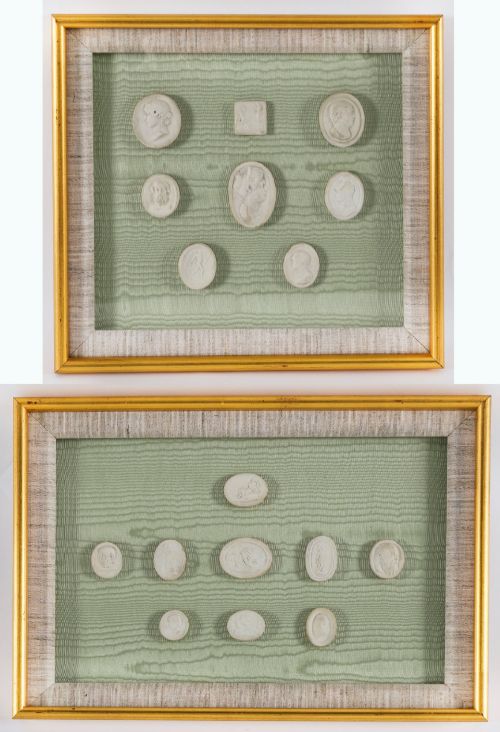
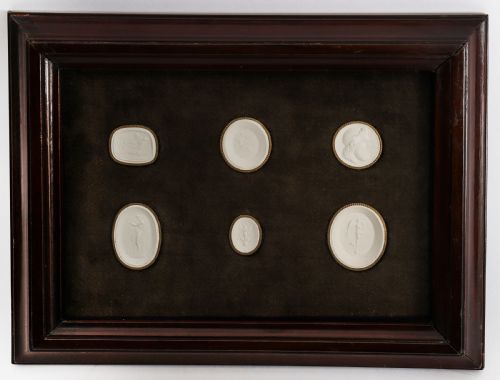
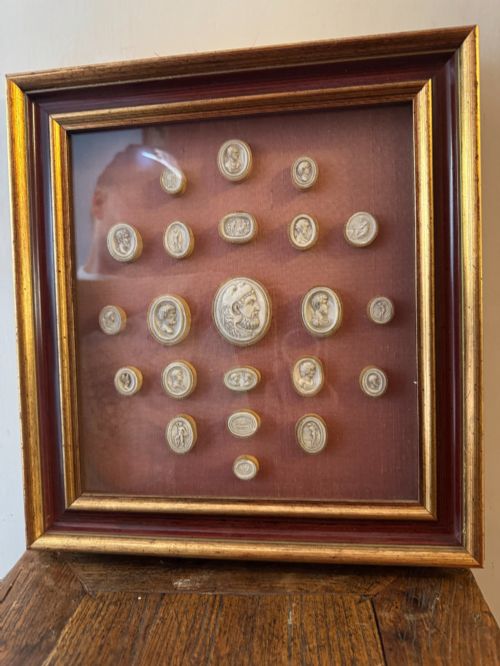
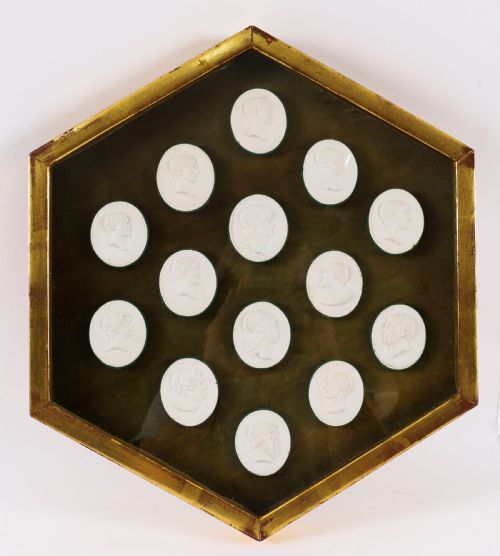
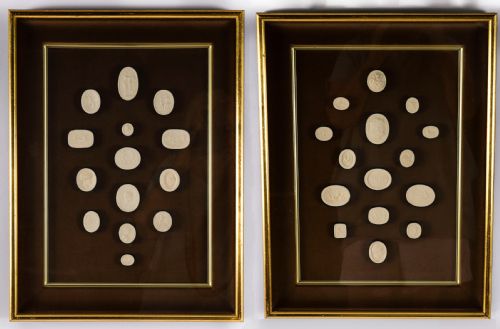
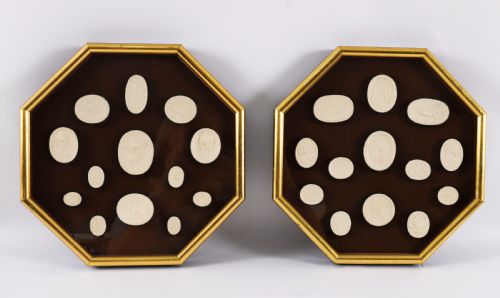
Framed Grand Tour collections and plaster intaglio panels dominate the selection, often arranged in sets within giltwood frames or velvet-lined boxes. Buyers frequently encounter Italian souvenir plaques and framed groupings originating from workshops in Rome and Naples.
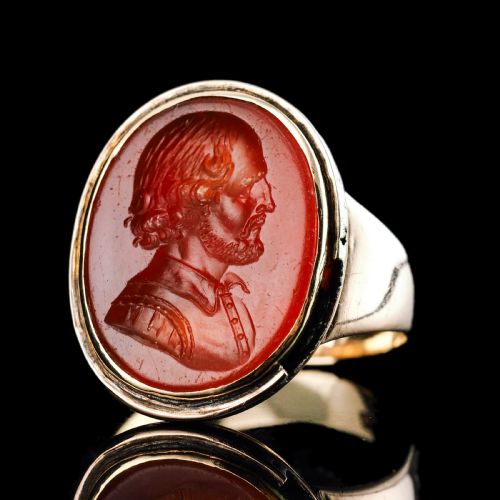
Wearable examples appear as gold rings and fob pendants set with carnelian, agate, and hardstone. These personal signets carry the same classical motifs found in the larger wall art and desk accessories.
How they were made
Plaster casts and gypsum medallions were struck from moulds taken of ancient gems during the Grand Tour, capturing minute details of classical subjects. Workshops mounted these casts against velvet backgrounds inside custom frames of gilt wood.
Goldsmiths set hardstones such as carnelian and agate into 9ct and 18ct yellow gold for rings and fob pendants. Artisans carved these gemstones in intaglio so that the design recessed below the polished surface, functioning practically as a wax seal.
Specialised stone and lava carvers worked in Italy to produce portrait cameos and intaglios on materials like prato verde marble and volcanic rock. These carved elements were integrated into larger inkstands and decorative desk sets.
Materials recorded across the inventory include plaster, carnelian, agate, gold, lava, marble, and giltwood.
What varies in quality
The crispness of the carving and the fidelity of the plaster cast separate ordinary souvenirs from exceptional collector pieces. Workshops known for precision casting, such as those associated with Pietro Bracci or Giovanni Liberotti, produced sharper detail and cleaner edges.
The quality of the mounting and framing elevates the piece, from simple card mounts to elaborate giltwood frames and fitted velvet presentation boxes. Gemstone intaglios derive their distinction from the depth of the stone carving and the purity of the surrounding gold mount.
Pietro Bracci·Giovanni Liberotti
The Antique Classical Intaglios Glossary
- Intaglio
- A gem or design carved into the material so that the impression sits below the surface. This technique allows the object to stamp wax seals.
- Grand Tour
- The traditional travel journey of European sights undertaken by upper-class young men in the eighteenth and nineteenth centuries. Souvenirs included framed plaster casts and carved stones.
- Carnelian
- A brownish-red variety of chalcedony quartz used extensively for signet rings and fob pendants. Its hardness made it suitable for detailed intaglio carving.
- Fob pendant
- A small medallion or seal attached to a pocket watch ribbon or chain. These often featured classical intaglio stones.
- Prato verde
- A green marble used in Italian decorative objects and architectural elements. Nineteenth-century inkstands incorporated this stone alongside carved lava cameos.
Antique Classical Intaglios: Frequently Asked Questions
What is an intaglio?
An intaglio is a design incised into a gemstone, glass, or plaster surface so the motif sits below the plane. This allows the piece to leave a raised impression when pressed into sealing wax.
Historically, these served practical purposes as signets for signing documents in addition to their aesthetic appeal.
How were Grand Tour intaglios used?
Travellers collected plaster casts and carved stones as educational souvenirs of antiquity during their travels through Italy and Greece. They arranged these miniature reliefs in frames or cabinets to display classical knowledge at home.
Collectors assembled them into systematic visual libraries of ancient sculpture and mythology.
How do I care for plaster intaglios?
Plaster wall art and framed casts require protection from moisture, direct sunlight, and airborne dust. Keeping them behind glass in their original frames preserves the delicate gypsum surface.
Avoid liquid cleaners entirely, using only a soft, dry brush for gentle maintenance.
Are intaglio rings wearable?
Gold intaglio rings from the Georgian and Victorian periods were designed for daily wear as signets. Hardstones like carnelian and agate resist normal wear, though antique gold settings benefit from gentle handling.
Checking the security of the stone within its gold claw or bezel setting ensures safe everyday use.