


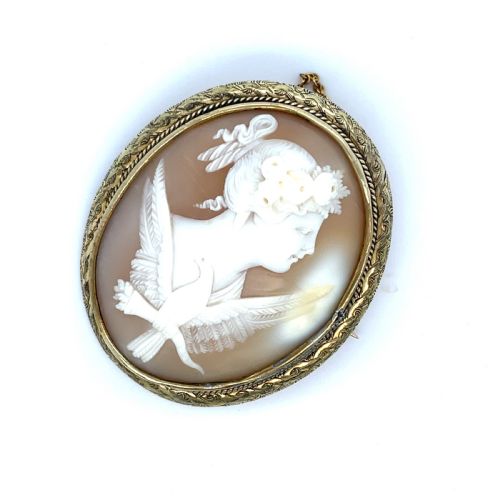

Antique Classical Cameos
Antique classical cameos offer wearable and decorative miniature reliefs carved from shell, hardstone, and lava, capturing subjects from mythology and history.
Antique Classical Cameos
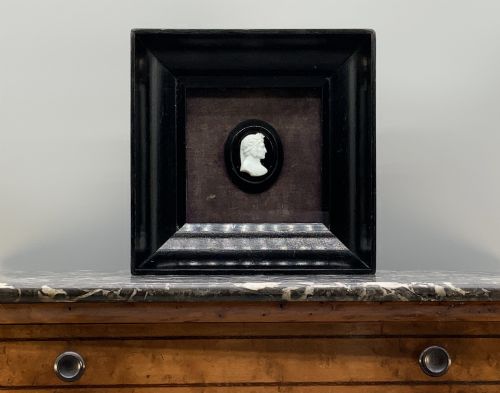
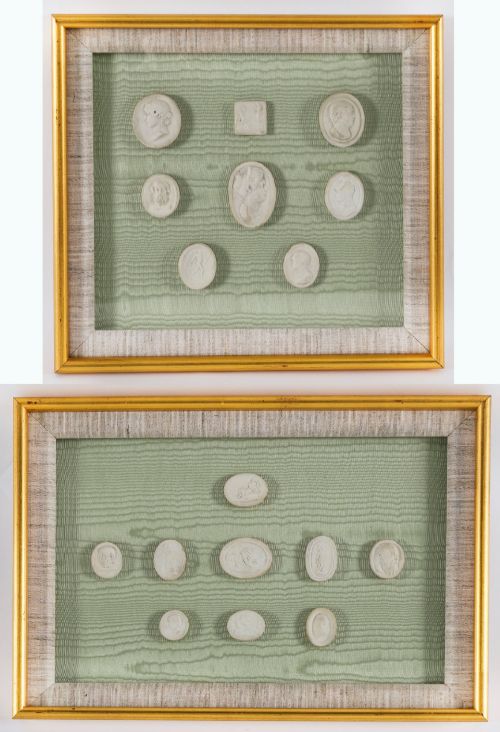
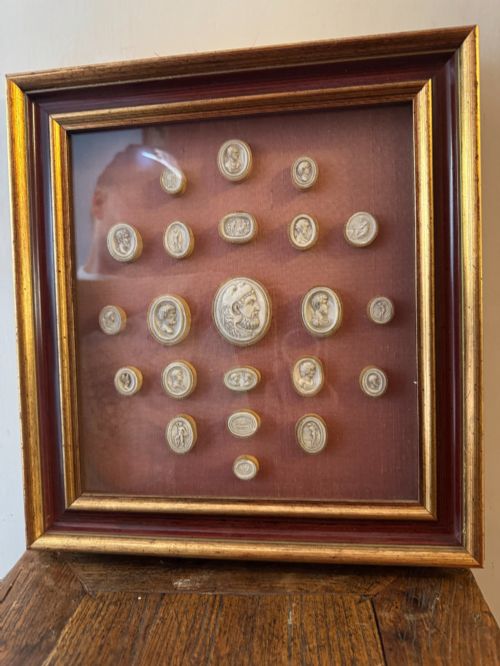
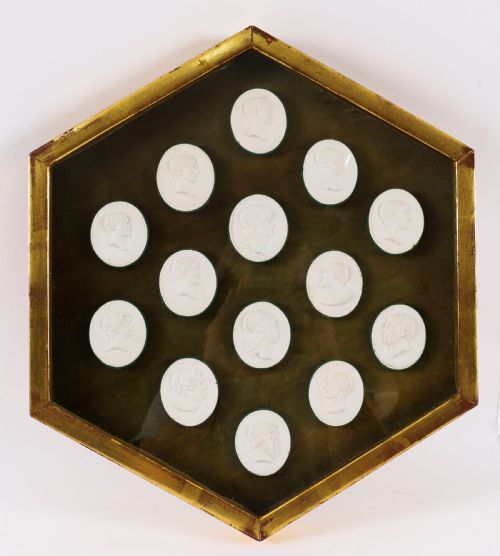
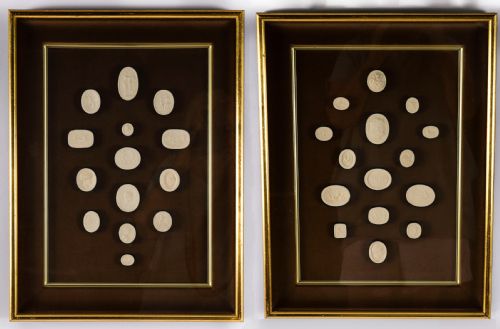
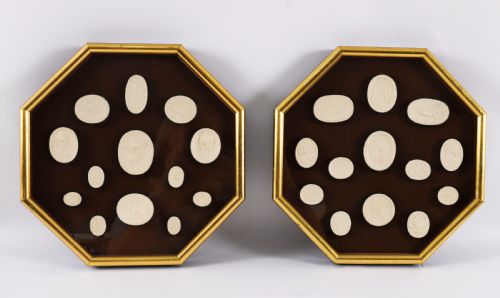
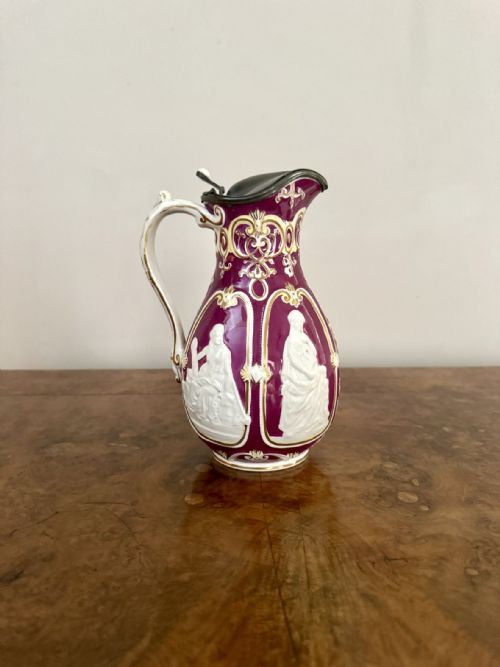
Antique classical cameos encompass carved portrait jewellery, framed wall plaques, and sets of plaster casts gathered during the Grand Tour. When exploring antique classical cameos, collectors frequently encounter Victorian brooch mounts alongside framed collections of Italian plaster intaglios.
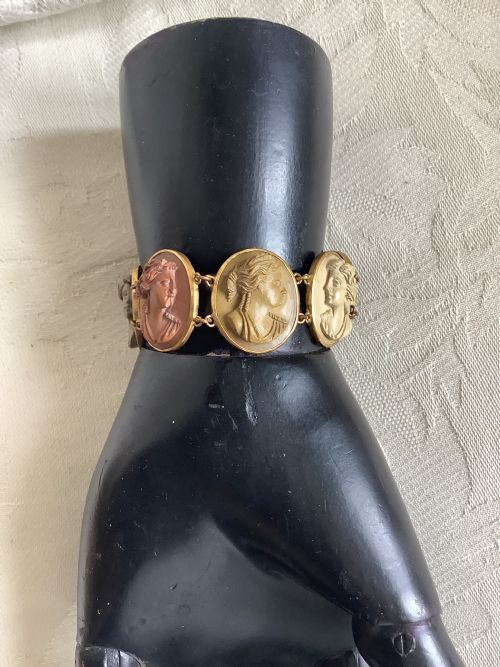
The material palette spans natural shell, carnelian hardstone, volcanic lava stone, and cast gypsum plaster. These pieces channel neoclassical tastes from the Georgian period through to the Edwardian era, often depicting deities, poets, and classical profiles.
Framed wall art and sets of medallions provide insight into 19th-century travel and education, while wearable items like earrings and rings translate classical motifs into everyday Victorian dress.
Materials and carving techniques
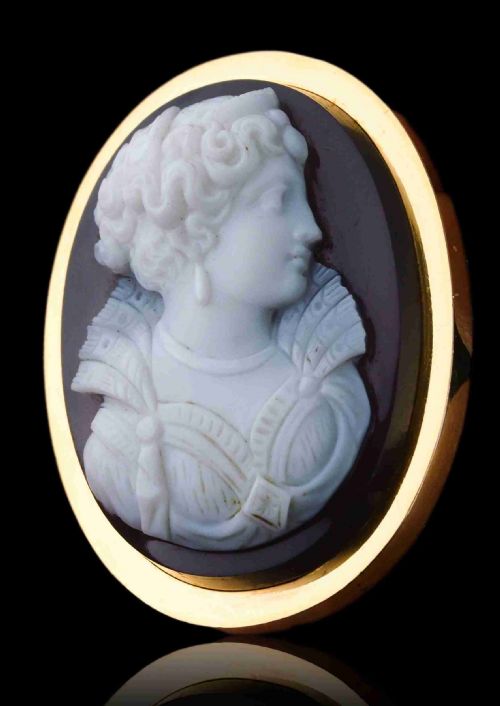
Carvers utilised layered media such as conch shell, agate, and hardstone to achieve contrast between the raised relief and the darker background layer. Artisans selected shells with distinct colour strata to ensure the carved figure stood out sharply.
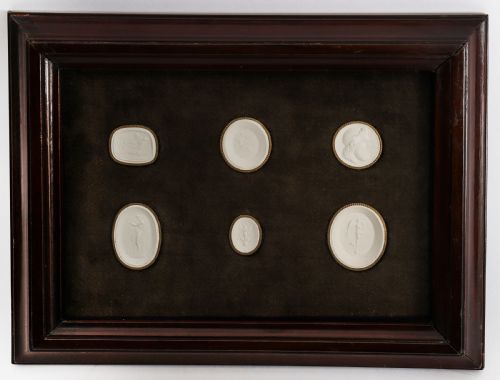
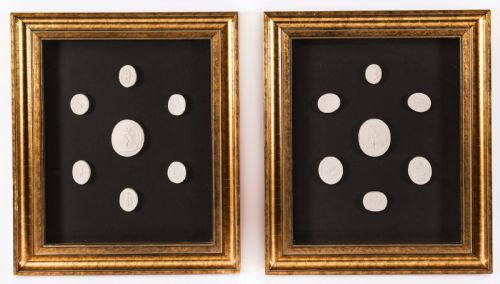
Plaster casts and intaglios were produced in series using gypsum or sulphur, often mounted in velvet-lined frames or preserved in specialised collector boxes. Workshops in Italy employed moulds taken from ancient gems and classical sculpture to supply travellers.
Mounts in 18ct gold, silver, and gilt metals were fabricated by jewellers who enclosed the carved stones in ornate bezels, sometimes supplemented by gold wirework, pearls, or diamond accents.
Tourists returned from Italy with boxes of plaster gods, proving that souvenir magnet culture has ancient roots.
Evaluating craftsmanship and execution
The depth of carving and precision of detail distinguish superior examples from standard production, particularly in the rendering of facial expressions and hair. Master carvers exploited the natural striations of shell and hardstone to create subtle shadows within miniature profiles.
The quality of the metalwork or framing adds context to the piece, with heavier gold mounts and signed studio frames indicating higher workshops. Coarser execution in shell or uniform flatness in plaster casts typically points toward commercial souvenir production rather than bespoke art.
Pietro Bracci·Giovanni Liberotti·Thorvalsen Workshop·Wedgwood
The Antique Classical Cameos Glossary
- Cameo
- A method of carving an object such as a gemstone, conch shell, or piece of lava so that a raised relief image stands out from a contrasting background.
- Intaglio
- A gem or plaster cast engraved with a design depressed below the surface, allowing it to be used as a seal or to display inverted relief.
- Grand Tour
- A cultural journey of Europe undertaken by wealthy young European aristocrats and collectors in the 18th and 19th centuries to study classical art and acquire souvenirs.
- Hardstone
- A semi-precious stone such as agate, carnelian, or onyx utilised for durable cameo and intaglio carving.
- Gypsum
- A soft sulphate mineral used to create plaster casts and medallions popular in framed Grand Tour collections.
Antique Classical Cameos: Frequently Asked Questions
What is a classical cameo?
A classical cameo is a miniature relief carving depicting figures, deities, or profiles drawn from ancient Greek and Roman history and mythology.
These pieces were carved from materials like shell, hardstone, and lava, or cast in plaster as collectible studies.
How were Grand Tour cameos used?
Grand Tour cameos and intaglios were collected by travellers in Italy as educational souvenirs and tangible proof of their classical studies.
Many were arranged in custom wooden frames as wall art, while others were assembled into portable books of plaster casts.
How do I style framed cameos?
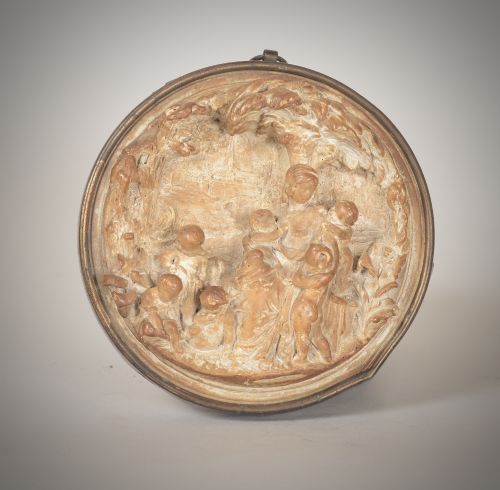
Framed intaglios and wall plaques suit gallery walls in studies or hallways, where their monochromatic plaster or terracotta tones can be appreciated up close.
Pairing grouped frames together allows the intricate detail of the individual medallions to stand out.
How do I date a cameo?
Dating relies on examining the mounting style, the metal purity marks, and the subject matter depicted within the carving.
Victorian pieces often feature heavy gold bezels or distinct pin mechanisms, whereas Georgian iterations display lighter mounts and specific neoclassical revival motifs.