

Antique Circular Top Table
An antique circular top table gathers a room, offering practical warmth and refined proportion across centuries of British and continental design.
Antique Circular Top Table
An antique circular top table encompasses diverse forms designed for dining, display, and study, united by a round surface that softens room layouts. The pieces gathered under this phrase range from modest wine tables and tilt-top lamp tables to substantial centre tables and dining pieces.
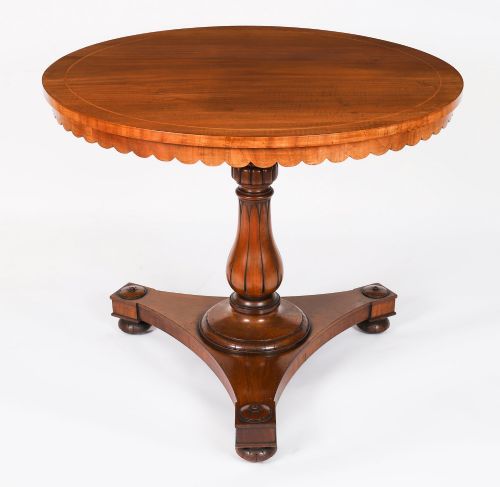
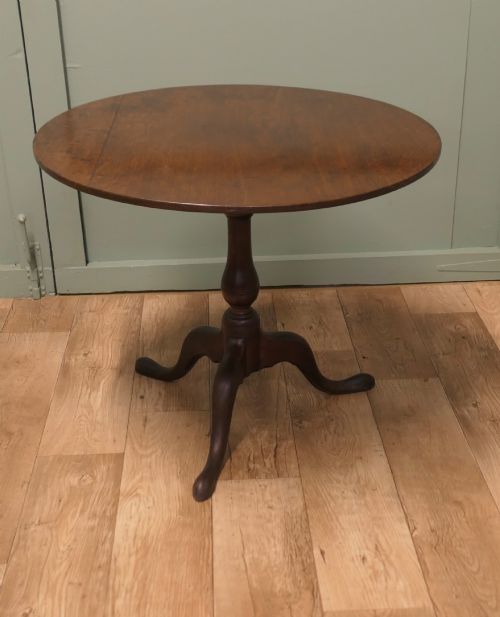
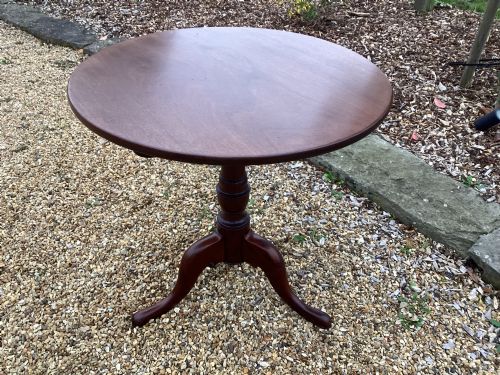
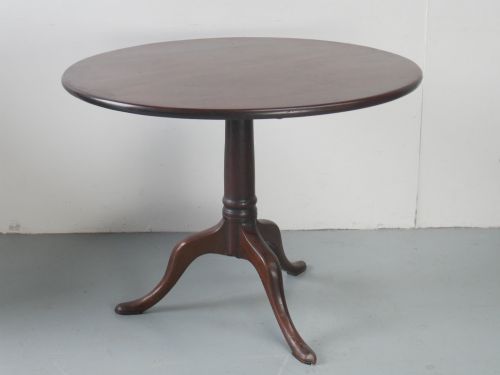
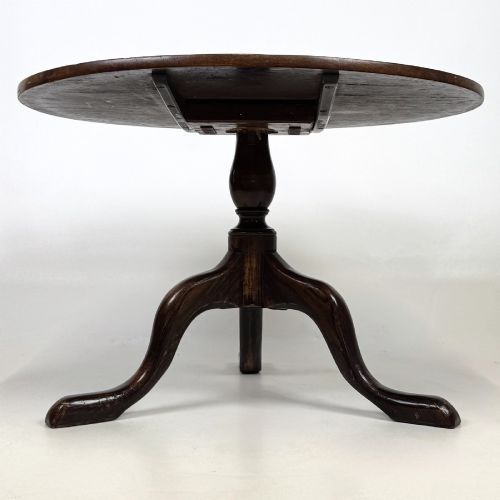
The version most frequently met on this page is the mahogany or rosewood tilt-top table originating in the Georgian and Victorian eras. These versatile items functioned as side or occasional tables when tipped upright against a wall, then lowered for service when required.
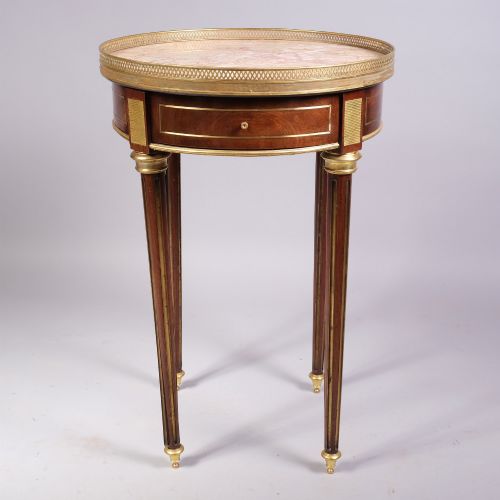
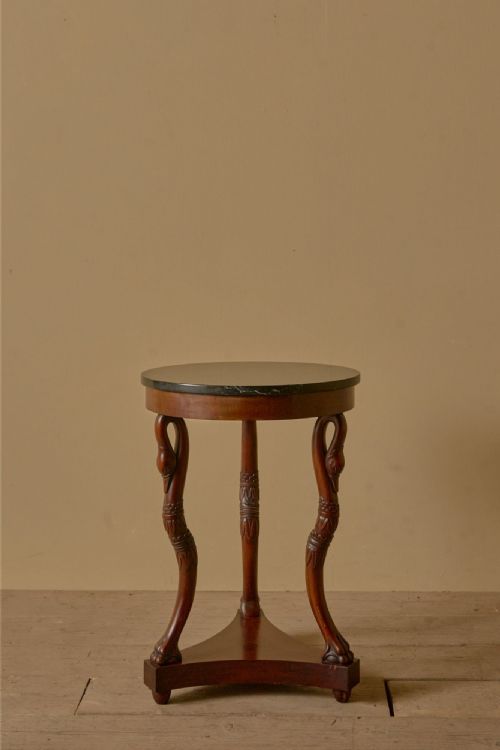
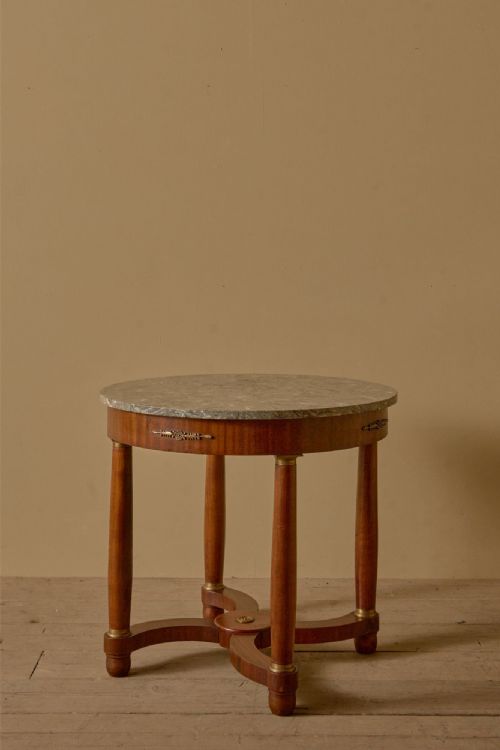
Larger centre tables and library tables also appear regularly, often supported on pillar and tripod bases or heavy carved pedestals. Regional variations include French gueridon and vendange tables alongside Italian specimen marble designs.
Materials and construction
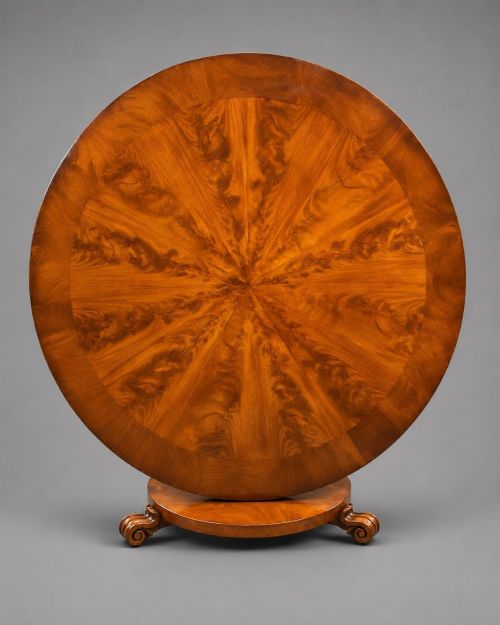
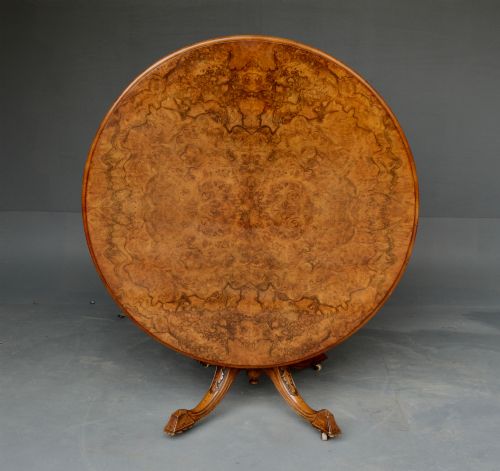
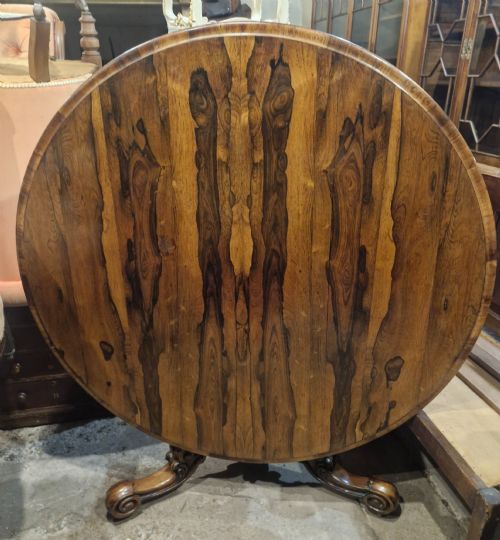
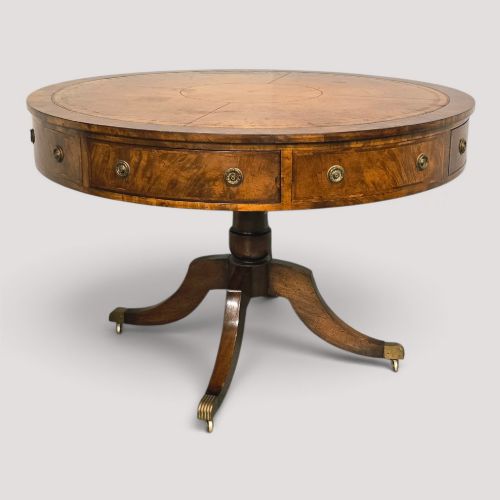
Cabinet makers utilised dense native and exotic timbers such as mahogany, oak, walnut, and rosewood, frequently selecting figured veneers and burr walnut to create visually striking surfaces. Inlaid brass details, leather inserts, and marquetry parquetry further decorated the tops of formal library and occasional tables.
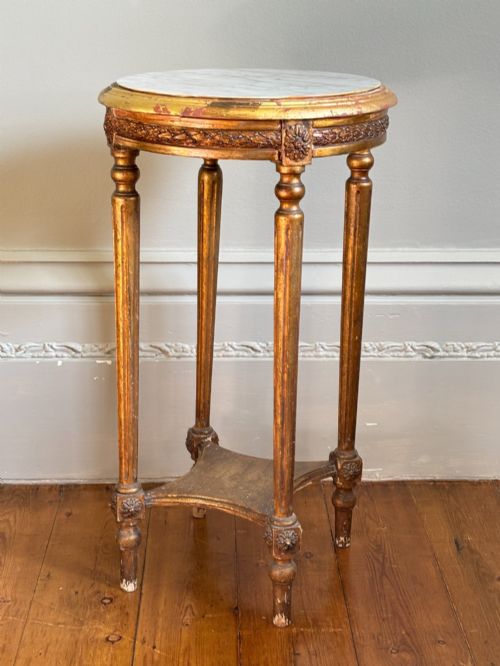
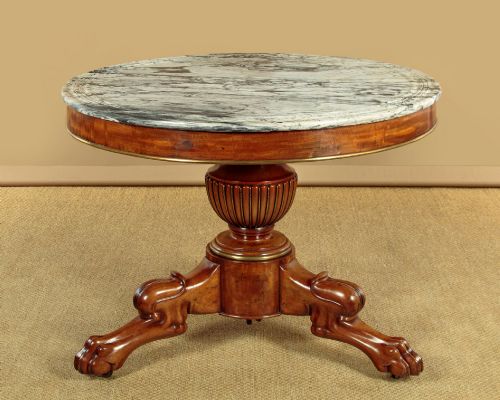
Structural integrity relied on sturdy tripod legs, pillar pedestals, and clever tilt mechanisms incorporating brass latches and pivot blocks. Marble tops, including specimen marble and verde antique, rested upon gilded or carved wooden bases, adding weight and classical dignity.
Antique Circular Top Table Retail Price Guide 2026
Typical asking prices for circular top table among the pieces listed under this phrase on Sellingantiques today, from the lower quarter to the upper quarter. They describe what is for sale here now, not the wider market.
Materials recorded across the inventory include mahogany, rosewood, burr walnut, marble, oak, brass, leather, and satin birch.
Distinctions in quality
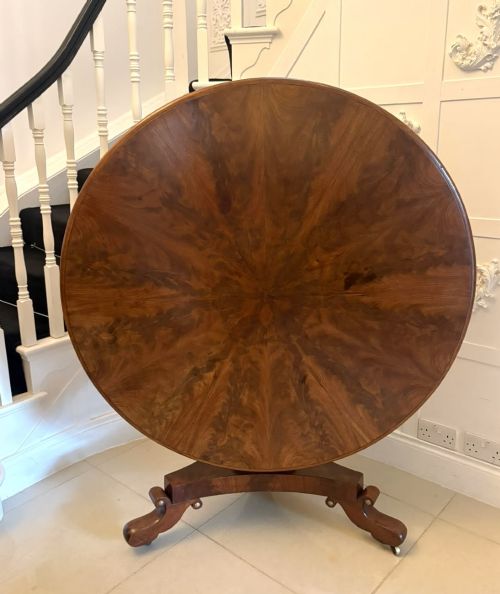
Superior examples separate themselves through the careful selection of timber figure, such as highly flamed mahogany or rich burr walnut, matched symmetrically across the round top. Expert joinery in the tilting mechanism and the carved detail of the pedestal or lion paw feet reveal the hand of a master workshop.
Proportion and stability dictate the standing of a piece within its period, where lesser items may exhibit clumsy pedestal turning or unbalanced top thicknesses. The crispness of marquetry inlay and the integration of brass mounts or leather writing surfaces distinguish standard domestic furniture from exceptional exhibition pieces.
Gillows·Edward Holmes Baldock
The Antique Circular Top Table Glossary
- Tilt top
- A table top mounted on a hinge mechanism that allows the surface to pivot vertically into a space-saving position when not in use. This clever design was especially popular for occasional and breakfast tables.
- Tripod base
- A pedestal support terminating in three legs, typically curved and ending in pad, claw and ball, or paw feet. It provides steady balance on uneven floors.
- Gueridon
- A small French table, often circular, supported by a central column or figures and originating in the seventeenth century. By the nineteenth century, the term applied widely to small decorative centre tables.
- Marquetry
- The art of forming decorative patterns by fitting together small pieces of wood veneer, shell, or ivory. It transforms plain table tops into intricate geometric or pictorial displays.
- Drum table
- A heavy circular library table containing a deep frieze fitted with drawers, resembling the shape of a drum. They often feature inset leather writing surfaces.
Antique Circular Top Table: Frequently Asked Questions
What is a tilt top table used for?
A tilt top table served as a versatile piece of furniture in domestic interiors, operating as a functional surface for tea, dining, or reading when lowered horizontally. When not in use, the mechanism allowed the top to pivot vertically so the piece could stand flat against a perimeter wall.
This space-saving capability made them particularly popular in parlours and drawing rooms throughout the Georgian and Victorian periods. Today, they continue to function as flexible occasional tables in smaller spaces.
How do I identify a Victorian circular table?
Victorian circular tables often feature heavier proportions, darker rosewood or walnut timbers, and elaborate carving on the central pedestals and feet. They frequently incorporate marble tops, intricate marquetry, or substantial platform bases reflecting the decorative tastes of the nineteenth century.
Comparing the timber grain, weight, and undercarriage construction helps distinguish these nineteenth-century examples from lighter eighteenth-century tripod tables.
Where should I place a centre table?
A centre table is traditionally designed to stand free in the middle of a room, offering access and visual interest from all sides rather than sitting against a wall. They make striking focal points in large entrance halls, libraries, or drawing rooms.
Ensure there is adequate clearance around the circumference for movement, allowing the table's pedestal and top proportions to be fully appreciated.
What is the difference between a wine table and a dining table?
A wine table is a small, portable occasional table designed to hold a single glass or bottle, typically standing on a slender tripod base. A dining table is substantially larger and sturdier, engineered to seat multiple people for meals.
While both share a circular top format in many historic examples, their scale and primary load-bearing functions set them apart.