





Antique Church Vessel
These antique church vessel pieces are sacred and secular liturgical items forged in silver, pewter, and copper for centuries of ritual use.
Antique Church Vessel
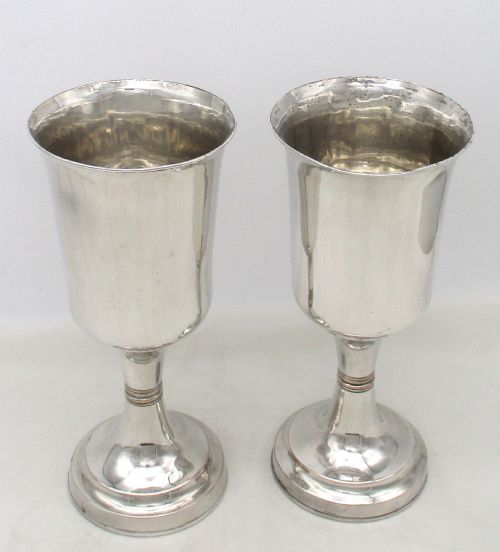
An antique church vessel encompasses items such as chalices, flagons, pyxes, and ciboria designed for sacramental services and religious rituals. The selection spans utilitarian communion flagons in pewter from the eighteenth century to ornate silver gilt boxes and chalices from the nineteenth and twentieth centuries.
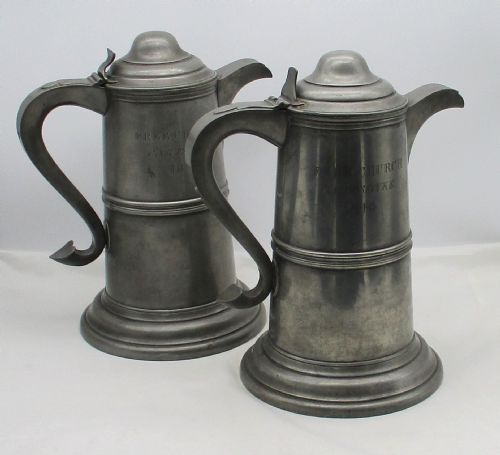
Buyers will most frequently encounter nineteenth-century silver plated chalices and eighteenth-century English and Irish pewter flagons across these listings. Forms range from tall paired goblets to spired flagons and bronze-cased glass bottles originating from diverse European workshops.
Materials and construction
Metals form the core of these objects, utilising sterling silver, silver plate, pewter, copper, and bronze, often enhanced with gilding or engraving. Pewter vessels rely on traditional casting and hammering techniques, whilst nineteenth-century pieces frequently employ Old Sheffield Plate or electroplating.
Early sixteenth-century examples demonstrate intricate hand-engraving upon gilded copper surfaces. Maker marks and capacity stamps, such as OEWS, are frequently punched directly into the metal body during manufacture.
Antique Church Vessel Retail Price Guide 2026
Typical asking prices for church vessel among the pieces listed under this phrase on Sellingantiques today, from the lower quarter to the upper quarter. They describe what is for sale here now, not the wider market.
The listings here span from fifteenth-century Franco-Spanish copper work through eighteenth-century English and Irish pewter to mid-twentieth-century ecclesiastical silver.
Judging quality and craftsmanship
Quality rests in the crispness of chased and engraved details and the integrity of the original surface, whether unpolished pewter or preserved silver gilding. Pieces retaining legible maker stamps and original structural components command greater regard.
Proportion and weight distinguish finer examples, particularly in utilitarian flagons and communion sets where balanced spouts, lids, and handles demonstrate the metalworker's skill.
F. Osbourne & Co London·John Heaney of Dublin·Elkington Mason·Robert Iles of London
The Antique Church Vessel Glossary
- Flagon
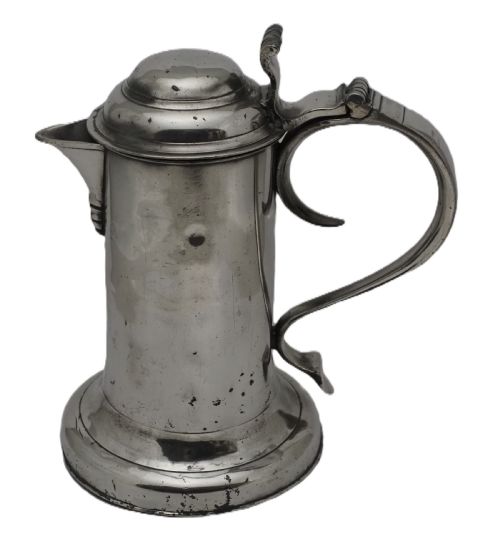
- A large metal vessel with a handle and spout used to hold sacramental wine during communion services. These pieces often feature hinged lids and capacity marks.
- Pyx
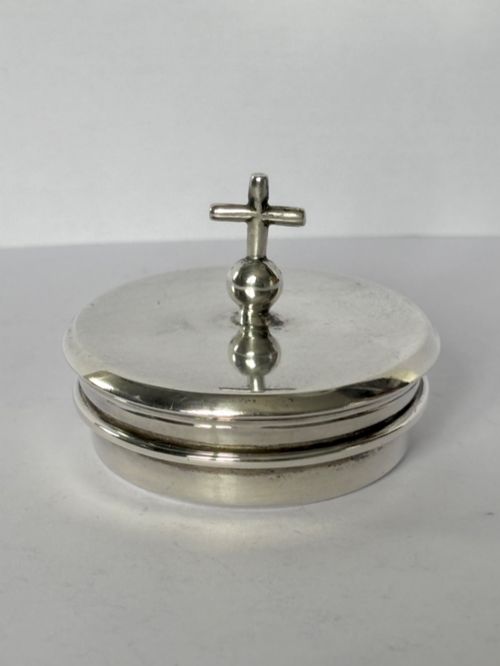
- A small round box used to carry the Eucharist. Examples are frequently fashioned from silver gilt or engraved copper.
- Ciborium
- A covered container used to hold consecrated hosts for distribution. This vessel resembles a chalice but possesses a domed lid.
- Old Sheffield Plate
- A composite material made by fusing a thin layer of silver to a copper base. This technique was widely utilised before the invention of electroplating.
- Pewter
- A malleable metal alloy consisting primarily of tin mixed with copper and lead. It was commonly used for domestic and ecclesiastical flagons throughout the eighteenth century.
Antique Church Vessel: Frequently Asked Questions
What is a church flagon used for?
Church flagons served to hold sacramental wine before it was poured into individual chalices during communion services. They were designed with secure lids and spouts for practical handling at the altar.
These large vessels formed an essential part of parish metalware collections, often commissioned alongside matching chalices and patens.
How do I date an old pewter flagon?
Dating relies on maker touchmarks, capacity stamps, and stylistic evolution in the shape of the body, handle, and spire lid. Eighteenth-century examples often display specific regional touches and capacity verification marks.
Comparing the vessel profile to documented maker output helps narrow down the decade of production.
How should I clean antique church silver?
Antique silver and silver plate require minimal intervention to preserve their historic surfaces and any remaining gilding. Gentle dusting or specialised silver cloths are preferred over harsh abrasive polishes.
Patina and light wear document the age and devotional history of the piece and should be protected.