



Antique Church Cherub
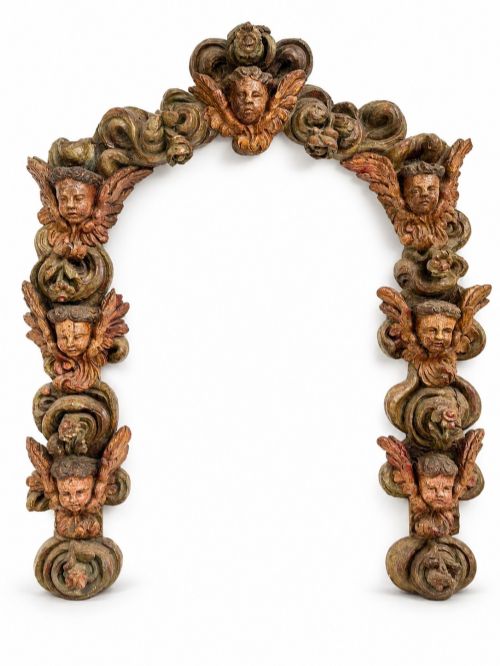
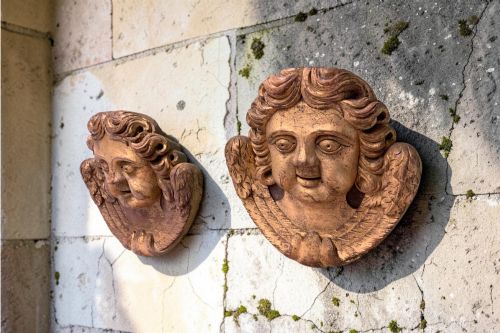
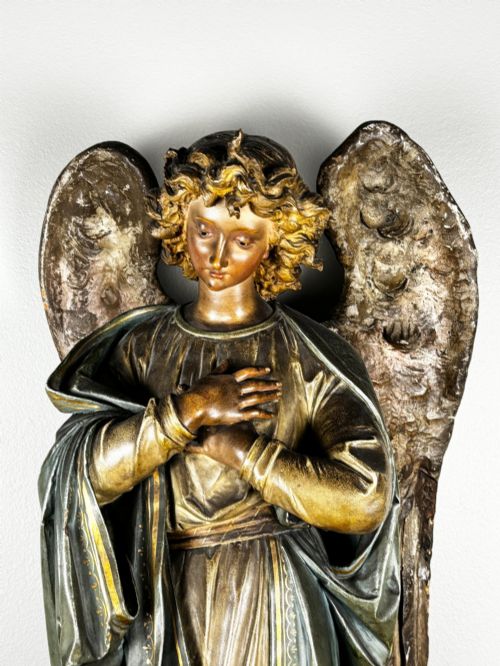
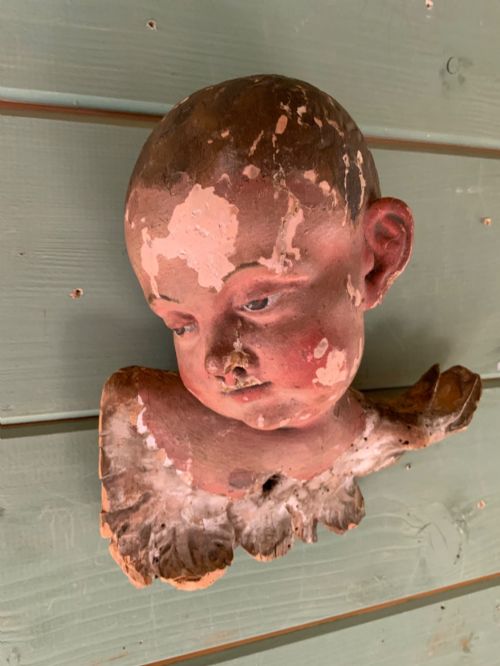
These antique church cherub figures bring devotional character to a room, ranging from small carved putti heads to large Italian polychrome angels.
Antique Church Cherub
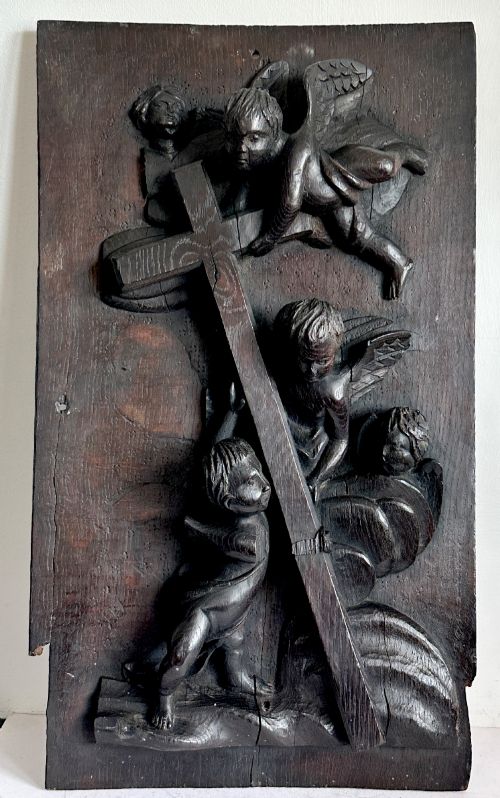
When you search for an antique church cherub, you are looking at sacred wooden sculpture salvaged from European ecclesiastical settings, spanning the seventeenth, eighteenth, and nineteenth centuries. These devotional objects appear as solitary putto heads, wall reliefs, architectural elements, and larger figures that once adorned altars or reading stands.
The most common examples you will encounter on this page are carved wooden panels and sculptural fragments, often originating from French or Italian workshops. Pieces from the eighteenth and nineteenth centuries dominate the selection, frequently displaying traces of original polychrome paint or gold leaf.
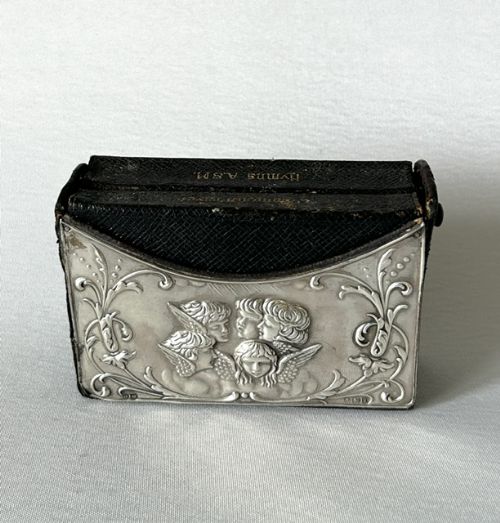
Beyond standalone sculptures, the selection includes related liturgical furnishings such as oak reading stands, pricket sticks, and prayer books. These items share the same ecclesiastical workshop origins, connecting the carved cherub figures to their original function within church interiors.
Materials and construction
Surface decoration involved applying gesso as a base layer before adding polychrome paint or gold leaf to highlight the carved details. Gilding techniques created a reflective metallic finish suited to dim church interiors, while polychrome pigments added lifelike tones to faces and hair.
Antique Church Cherub Retail Price Guide 2026
Typical asking prices for church cherub among the pieces listed under this phrase on Sellingantiques today, from the lower quarter to the upper quarter. They describe what is for sale here now, not the wider market.
Italian and French Baroque styles appear frequently among the sculptural wall reliefs and devotional objects available here.
Assessing quality and execution
The anatomical accuracy and depth of the carving distinguish finer sculptural work from simpler regional production. Master carvers achieved expressive movement and naturalistic proportions in the faces of putti, whereas lesser pieces display rigid symmetry and shallow detail.
The preservation of original surface treatments significantly impacts the integrity of a piece. Examples retaining undisturbed layers of early polychrome paint or gold leaf over gesso hold greater visual depth than heavily stripped or modernly repainted surfaces.
The Antique Church Cherub Glossary
- Putto
- A representation of a human infant, usually winged, appearing frequently in religious art from the Renaissance onwards. They are often conflated with cherubim in ecclesiastical contexts.
- Polychrome
- Decoration executed in multiple colours on the surface of wood or stone. This technique brought realism and visual warmth to sacred sculptures.
- Giltwood
- Timber that has been coated with a thin layer of gold leaf over a prepared gesso ground. It was widely used on church furnishings to catch candle light.
- Pricket stick
- A type of candlestick featuring an upward-facing spike upon which a candle is mounted. They formed part of altar furnishings alongside religious carvings.
- Gesso
- A plaster mixture applied to wood as a smooth base for painting or gilding. It provides a durable ground that holds fine detail.
Antique Church Cherub: Frequently Asked Questions
What is an antique church cherub?
An antique church cherub is a wooden carved sculpture of a winged angelic figure, originating from European religious buildings and altars.
These pieces range from single carved heads to full figures dating from the seventeenth to the nineteenth century.
How were church cherubs used?
These carvings were integrated into larger architectural frameworks, including altarpieces, church panels, reading stands, and wall reliefs.
They served to elevate the sacred atmosphere of ecclesiastical interiors and direct devotion during services.
How do I identify the age of a carved cherub?
Age is assessed through tool marks left by hand chisels, the type of timber used, and the composition of underlying gesso layers.
Earlier pieces often display denser hardwoods like oak or limewood, alongside historical layers of polychrome paint or gold leaf.
How do I care for a wooden religious carving?
Keep wooden sculptures in stable indoor environments away from direct sunlight and sudden humidity changes to protect the wood and gesso.
Dust gently with a dry, soft brush and avoid applying modern polishes or liquids to antique painted surfaces.