

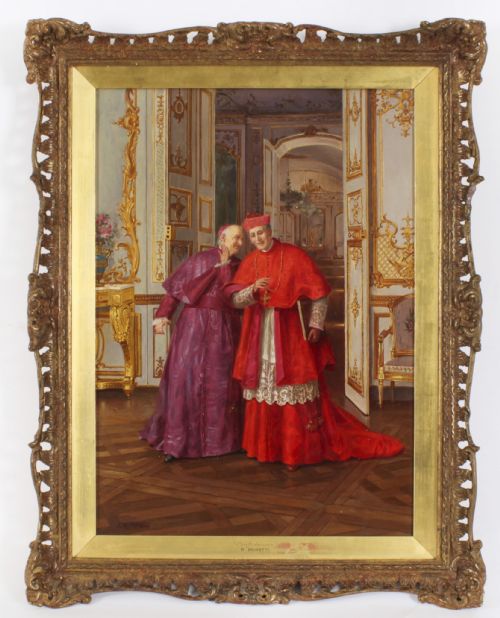


Antique Church Art Picture
An antique church art picture brings architectural heritage and quiet historical narrative into domestic spaces through enduring media.
Antique Church Art Picture
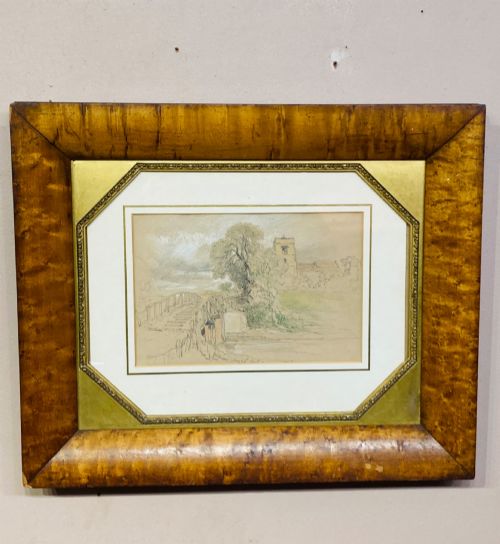
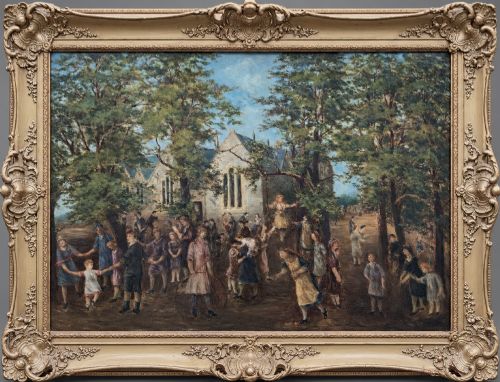
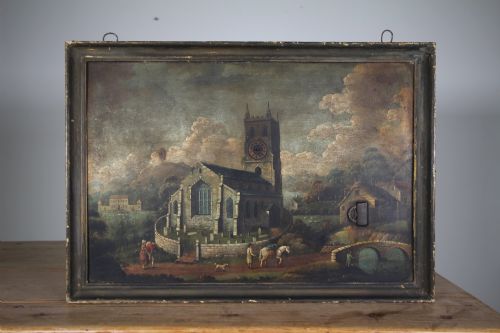
When searching for an antique church art picture, buyers encounter a diverse selection of framed watercolours, oil paintings, and architectural engravings depicting ecclesiastical buildings and scenes.
The pieces represented across this category span several distinct eras, stretching from eighteenth-century architectural plates through nineteenth-century watercolours of rural parishes to early twentieth-century oils.
Subjects range widely from detailed topographical depictions of specific religious foundations like Whitby Abbey and York Cathedral to atmospheric English country scenes where a spire sits quietly in the distance.
Materials and methods of production
Artisans and artists worked primarily with traditional supports including paper, prepared canvas, and wood panels, applying watercolour pigments, oils, and detailed ink or engraving lines.
Many of these works are housed in period frames constructed from gilt wood or timber moulding, often protected behind original glass panes that preserve the fragile surface media beneath.
Antique Church Art Picture Retail Price Guide 2026
Typical asking prices for church art picture among the pieces listed under this phrase on Sellingantiques today, from the lower quarter to the upper quarter. They describe what is for sale here now, not the wider market.
A scything gardener occasionally maintains the lawn before the church gets a look-in.
Distinguishing quality in church art
Quality rests upon the precision of architectural draughtsmanship, the sensitivity of the brushwork in capturing light upon stone, and the overall compositional balance within the frame.
Provenance and attribution to documented artists or recognised regional schools elevate certain examples above standard topographical records, while the preservation of original framing materials adds further weight.
William Hogarth·Renato Moretti·Alfred George Morgan·John Edward Bale·Stephanie Cooper·John Thirtle
The Antique Church Art Picture Glossary
- Watercolour
- A painting method in which the paints are made of pigments suspended in a water-based solution. This technique was frequently utilised by nineteenth-century artists for topographical views.
- Engraving
- A printmaking process where an image is incised into a metal plate, allowing multiple impressions to be pulled. Architectural plates of cathedrals were often produced using this method.
- Diptych
- A painting or artwork divided into two distinct sections or panels, usually hinged or presented as a matched pair. Such formats allow artists to present complementary architectural vistas side by side.
- Gilt wood
- Timber treated with a thin layer of gold leaf or gilt finish, commonly used for decorative period frames. This treatment enhances the visual weight of framed paintings.
Antique Church Art Picture: Frequently Asked Questions
What periods do these church pictures cover?
The available selection spans multiple eras, beginning in the eighteenth century with architectural engravings and extending through the Regency period and nineteenth century into the early twentieth century.
Works reflect prevailing stylistic movements of their respective decades, from academic realism to Norwich School watercolours and English country scenes.
How should I display these framed paintings?
These framed works suit traditional reception rooms, studies, or hallways where adequate wall space allows the composition to be appreciated properly.
Care should be taken to avoid hanging paper-based watercolours and engravings in direct sunlight to prevent fading of the pigments and paper degradation.
Are these works signed by the artists?
Several pieces feature original signatures or attributions to documented painters and printmakers, while others represent the broader output of the English School.
Attributions are typically supported by stylistic markers characteristic of specific periods like the nineteenth century.
What subjects typically appear in these artworks?
Depictions range from specific ecclesiastical foundations, such as York Cathedral, Doncaster church, and Whitby Abbey, to broader rural landscapes featuring distant steeples.
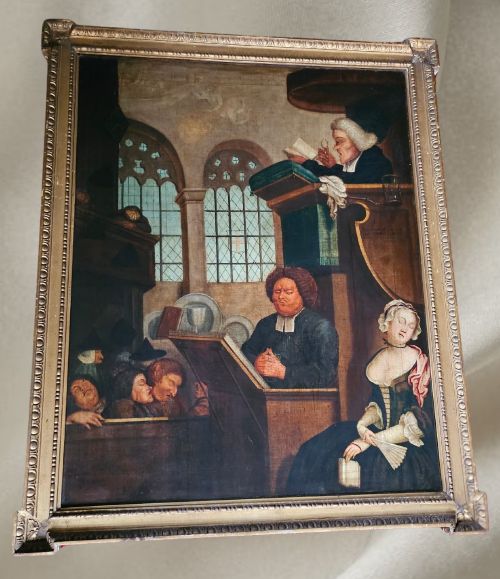
Some compositions incorporate genre elements or figures, such as gardeners or congregations, alongside the architectural structures.