



Antique Chinoiserie Chairs
Antique chinoiserie chairs bring hand-painted motifs and lacquer finishes from East Asian traditions into Western interiors.
Antique Chinoiserie Chairs
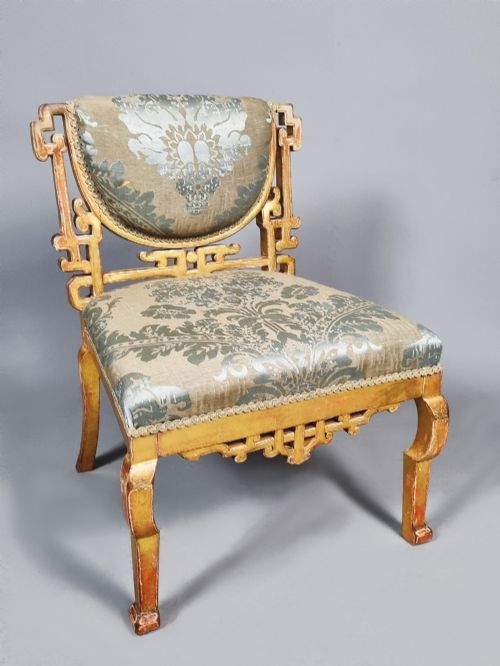
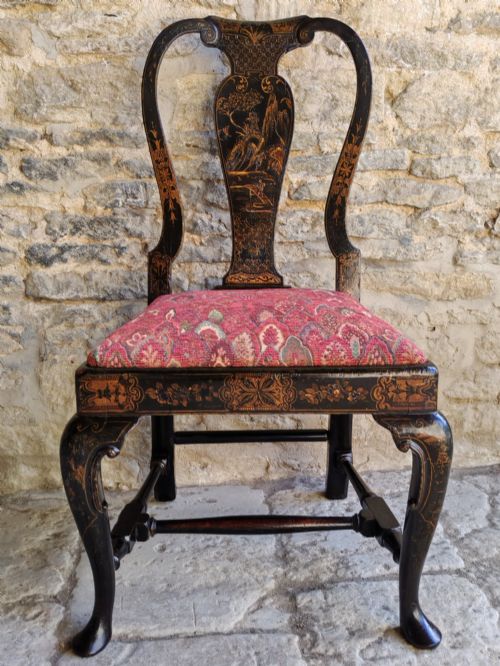
When you search for antique chinoiserie chairs, you encounter seating built across several centuries that adopts decorative schemes inspired by Chinese and Japanese artistry. These pieces range from formal mahogany frames carved in the eighteenth century to painted bamboo and faux bamboo designs produced during the Regency and Victorian eras.
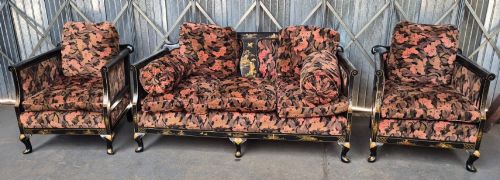
Side chairs, armchairs, and library chairs form the core of what appears here, alongside rarer dining suites, hall benches, and occasional matching bedroom chairs. The aesthetic persists through Edwardian and later revivals, meaning buyers meet both eighteenth-century originals and nineteenth- or twentieth-century interpretations.
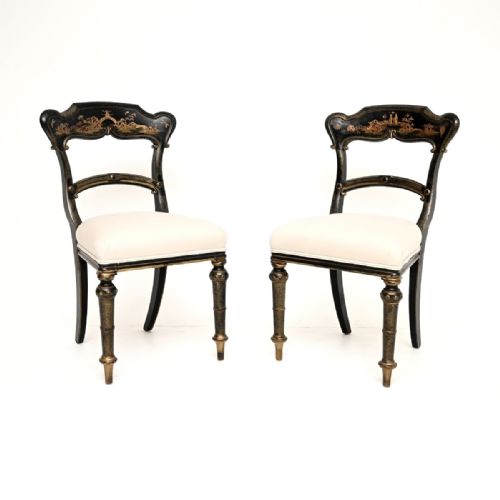
The styles shift according to the prevailing taste of each period, moving from Georgian Chinese Chippendale interpretations to dark lacquered Victorian surfaces and lighter Edwardian suites. This variety allows collectors to select pieces that fit formal dining rooms or casual garden-room settings alike.
What varies in quality
The integrity of the original surface decoration dictates much of the distinction between ordinary and exceptional examples, particularly where hand-applied lacquer and gilt details survive intact without excessive restoration. Pieces that retain their early or original paint layers command greater interest among purists than those subjected to later repainting.
Structural refinement in the carving, especially the crispness of openwork splats and the precision of faux bamboo turnings, separates standard workshop output from master cabinetmaker productions. The harmonious survival of secondary elements, such as original cane seats or matching frames within a set, further elevates a piece.
Listings feature woods spanning mahogany, walnut, satinwood, and cane, alongside painted and lacquered finishes.
Waugh & Son·Thomas Chippendale
The Antique Chinoiserie Chairs Glossary
- Chinoiserie
- European decorative style reflecting Chinese artistic influences, popular across multiple centuries. It appears on furniture through painted scenes, lacquer, and motifs such as pagodas.
- Japanned
- European lacquered finish intended to imitate Japanese metal and wood lacquerware, often built up in dark tones with gold decoration. Artisans applied successive coats of varnish to achieve a glossy, hardened surface.
- Cockpen
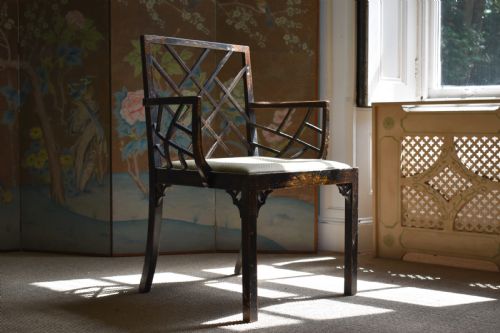
- Style of Chinese-inspired lattice armchair featuring an open geometric grid pattern in the back. This form gained popularity during the eighteenth century and reappeared in later revival periods.
- Bergere
- Upholstered armchair with enclosed sides, frequently constructed with cane panels. The style provides a deep seat and often incorporates painted or lacquered frames.
- Faux bamboo
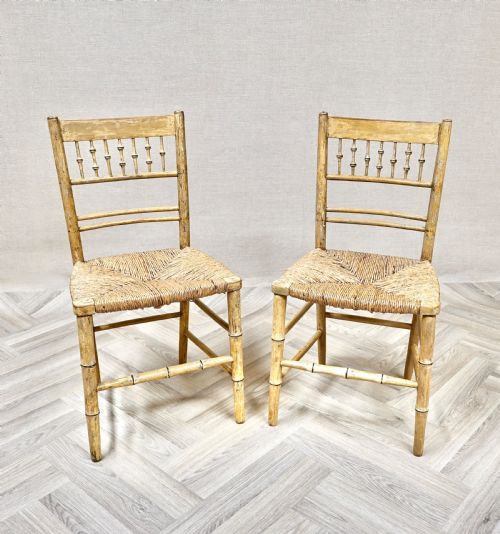
- Wood turned and carved to resemble natural bamboo stems, utilised extensively during the Regency and Victorian periods. Craftsmen painted or ebonised these frames to complete the illusion.
Antique Chinoiserie Chairs: Frequently Asked Questions
What periods do these chairs cover?
The selection spans from the early eighteenth century through the Regency and Victorian eras into the Edwardian period and the 1930s. Each era brought its own interpretation of East Asian design.
Early pieces often feature carved mahogany, while later nineteenth- and twentieth-century examples frequently employ painted bamboo or lacquer finishes.
How do I identify a faux bamboo chair?
Faux bamboo furniture is made from standard hardwoods like beech or mahogany that have been turned on a lathe to mimic the segmented nodes of natural bamboo. Craftsmen then painted, japanned, or ebonised the wood.
This technique allowed makers to achieve an exotic look using sturdy domestic timbers.
Were these chairs used for dining?
While many surviving pieces are single side chairs, armchairs, or library seats, dining sets and hall chairs were also produced in chinoiserie styles. Wealthy households utilised them in formal reception spaces.
Today, individual armchairs often serve as accent seating, while larger matching sets function around dining tables.
What is Chinese Chippendale?
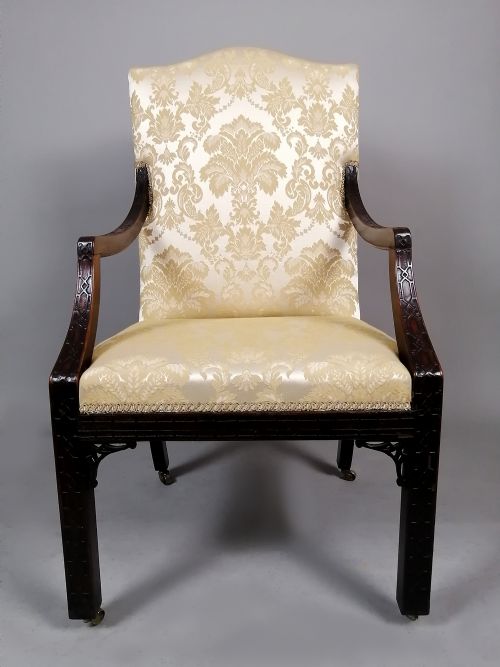
Chinese Chippendale refers to the eighteenth-century furniture style incorporating straight legs, pierced fretwork brackets, and intricate ladder or lattice backs derived from Chinese architecture. It draws inspiration from pattern books published during the period.
Original pieces from this movement are prized for their detailed hand-carving and architectural proportions.