


Antique Chinese Paperweights
These antique chinese paperweights bring scholar's desks alive through centuries of bronze casting and jade carving.
Antique Chinese Paperweights
When you search for antique chinese paperweights, you encounter desk accessories, scholar's seals, and decorative carvings created across multiple dynasties. The pieces most likely to meet you on this page span the Ming and Qing dynasties through to the Victorian era.
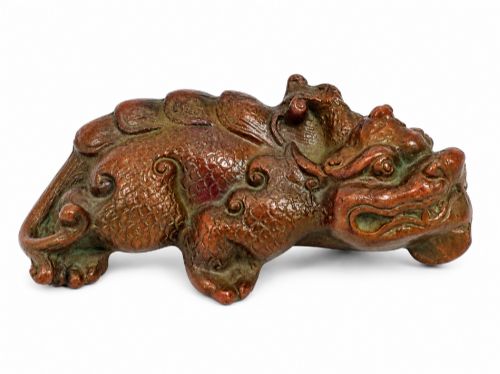
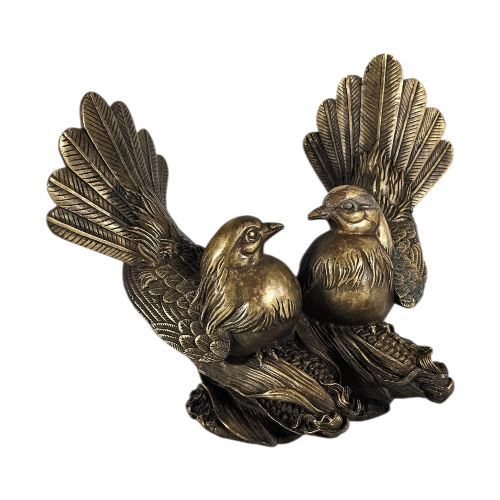
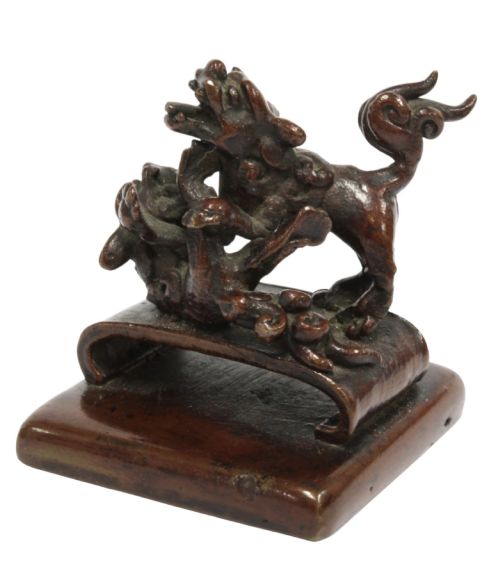
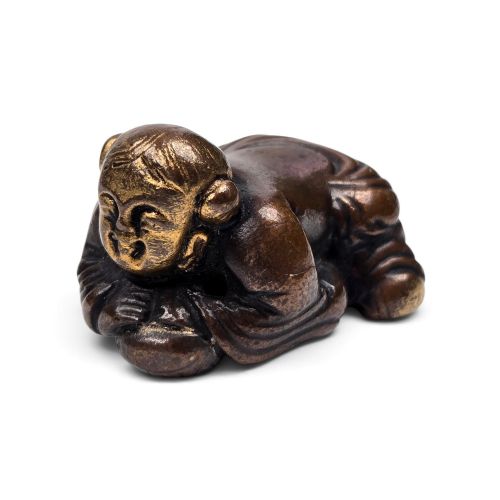
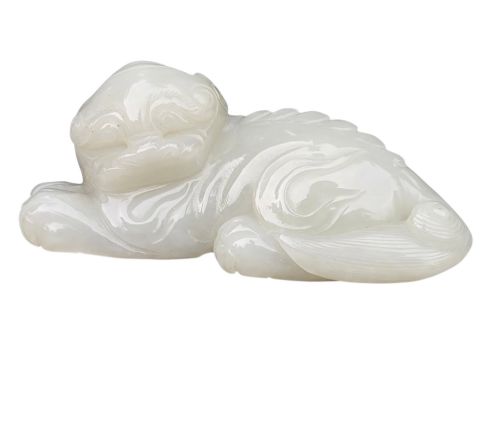
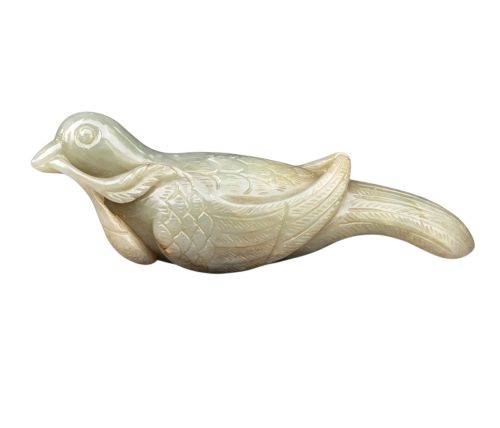
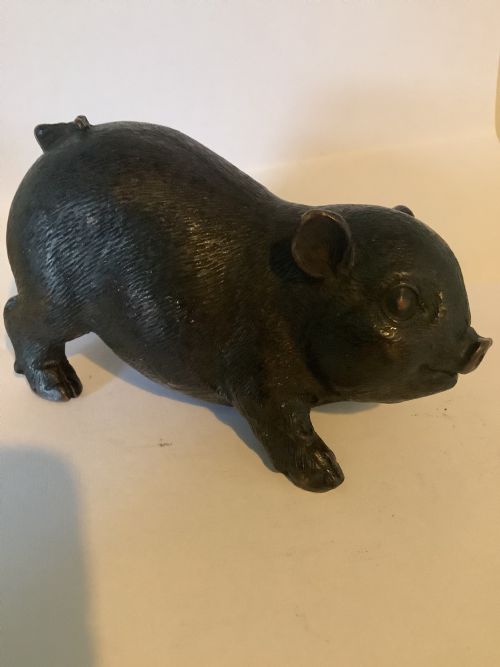
Makers shaped bronze, nephrite jade, soapstone, and hard stone into sculptural forms ranging from reclining boys and mythical beasts to doves, horses, and water birds. These objects served practical roles as zhenzhi and scroll weights while functioning as refined scholar's art.
Materials and Methods
The bronze pieces demonstrate solid-cast techniques, occasionally incorporating selective fire-gilding to highlight details on figural scholar's desk paperweights. Artisans utilised traditional lost-wax casting methods to achieve complex shapes such as wrestling shishi and pigeon pairs.
Carvers worked tough materials including white jade, celadon jade, nephrite, and soapstone using abrasive grit and rotational tools. This meticulous reduction process allowed them to shape intricate aquatic motifs, recumbent beasts, and corpulent figures from dense stone.
Several pieces depict animals deep in contemplation, including a corpulent Buddha carved from soapstone and a pair of doves.
Distinctions in Quality
Material selection dictates the upper tier of the range, with unblemished white and celadon jade commanding greater regard than common soapstone or serpentine. The harmony between the natural contours of the stone and the sculpted subject reveals the maker's mastery.
The Antique Chinese Paperweights Glossary
- Zhenzhi
- A traditional Chinese paperweight used on the scholar's desk to hold paper flat during calligraphy or painting. These objects often took figural forms such as boys or animals.
- Shishi
- A traditional Chinese stone lion or temple guard dog, frequently depicted in pairs protecting a space. Artisans carved them in jade and cast them in bronze for desk use.
- Nephrite
- One of the two distinct mineral species recognised as jade, prized for its toughness and fibrous micro-structure. Chinese carvers utilised it extensively for intricate scholar's objects.
- Celadon
- A term for ceramics and jade carvings exhibiting a pale green translucent glaze or stone colour. This shade was highly valued by imperial patrons and scholars alike.
- Soapstone
- A softer metamorphic rock composed primarily of talc, easily worked with hand tools. It permitted detailed carving for desk seals and figural sculptures.
Antique Chinese Paperweights: Frequently Asked Questions
What did scholars use these weights for?
Scholars utilised these heavy objects to anchor paper and silk scrolls firmly to the desk while practising calligraphy or painting. They kept materials steady on the table, preventing movement during ink work.
Beyond simple utility, these pieces functioned as contemplative desk ornaments that reflected the refined tastes of the literati. Their subjects often carried symbolic meanings associated with wisdom, longevity, and balance.
How do I identify a Qing dynasty piece?
Qing dynasty pieces often display intricate surface detailing, deep undercut carving in jade, and specific stylistic conventions associated with imperial workshops. Materials like celadon and white jade frequently appear in these later imperial-style works.
Comparing the handling of the stone or bronze against dated examples helps establish the period. Look for the characteristic tool marks and patination appropriate to the nineteenth century and earlier.
What materials are most common here?
Bronze and various forms of jade, including nephrite and white jade, dominate the selection of scholarly desk weights. Artisans also worked soapstone, serpentine, and hardwood into functional wrist rests and scroll weights.
Each material required different workshops and carving techniques, influencing the final appearance and weight of the object. Bronze pieces often feature cast marks or fire-gilding.
How should I clean my stone carving?
Dust jade and soapstone surfaces gently with a soft, dry brush to remove accumulated particles without scratching the material. Avoid soaking softer stones like soapstone in water or chemical cleaning solutions.
Natural oils from handling over generations often enhance the patina of these stones. Minimal intervention preserves both the surface polish and the historical integrity of the carving.