



Antique Chiffonniere Table
An antique chiffonniere table brings French elegance to a room, offering refined surface space and enclosed storage crafted in rich timbers.
Antique Chiffonniere Table
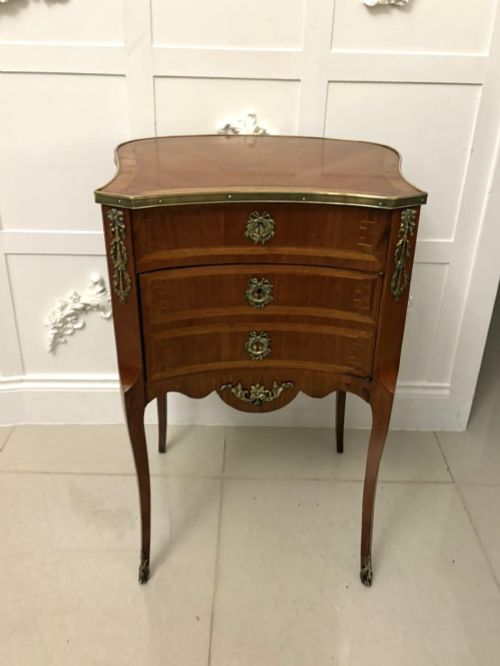
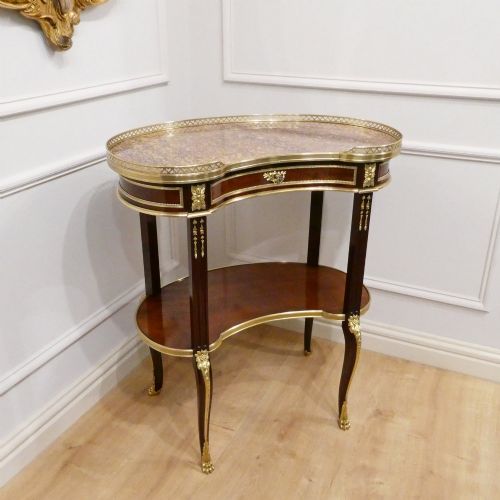
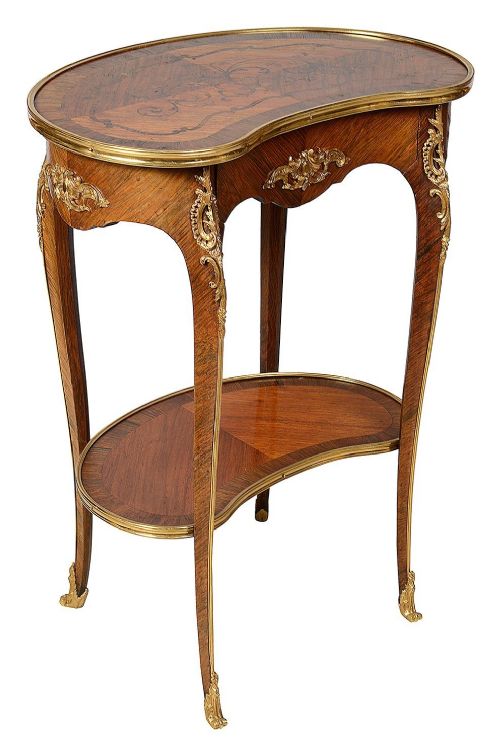
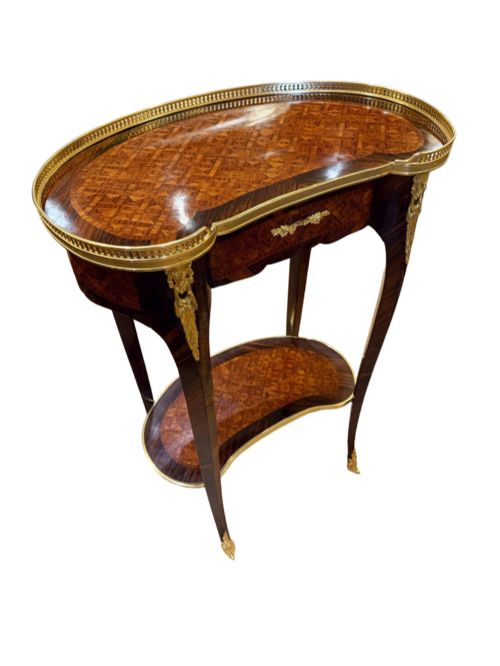
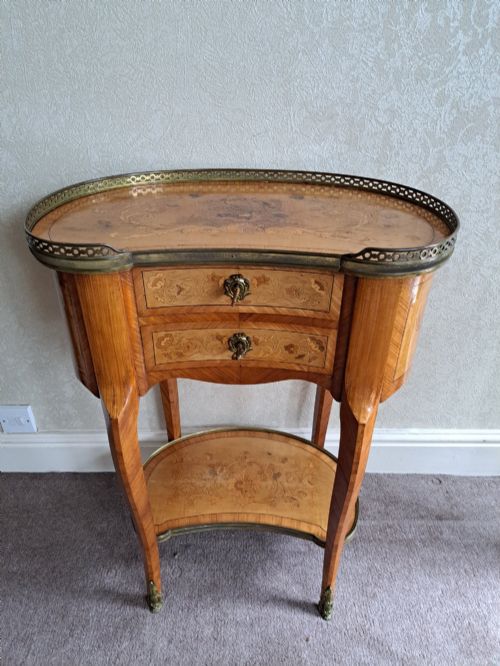
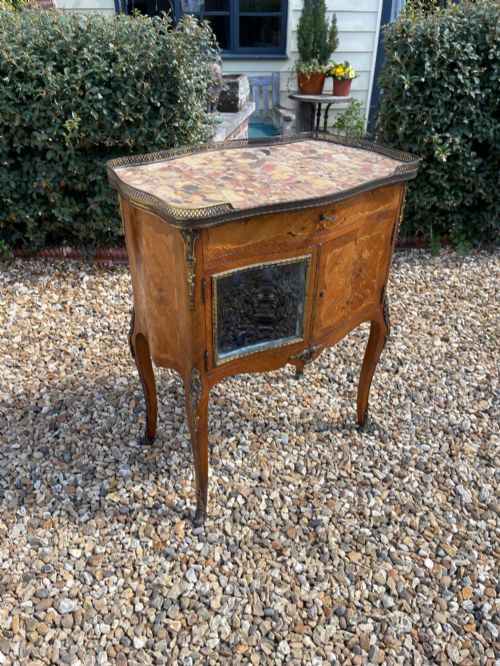
Buyers seeking an antique chiffonniere table examine side cabinets, commodes, and side tables originating from continental workshops during the nineteenth century. These forms vary from kidney-shaped occasional tables to substantial cabinets on stands designed for display and modest storage.
The pieces appearing on this page span the Victorian era up to the early twentieth century, with a strong representation of nineteenth-century French cabinet-making. Walnut, mahogany, and kingwood predominate among the forms, often paired with decorative mounts.
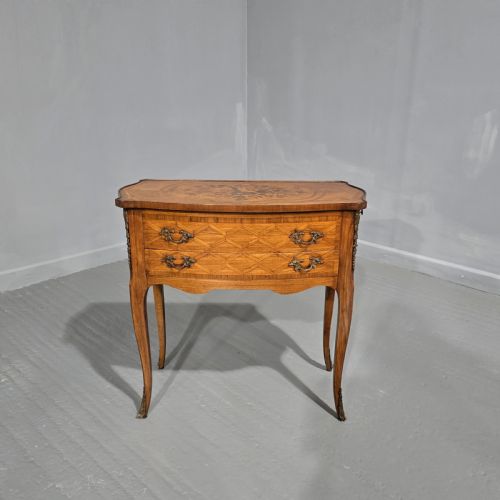
Louis XV and Louis XVI revival styles dominate the selection, bringing serpentine fronts, inlaid veneers, and classical proportions into domestic settings. These items function primarily as decorative side pieces in reception rooms and hallways.
Materials and construction methods
Cabinet-makers utilised dense hardwoods such as mahogany, walnut, and kingwood as the structural base for intricate marquetry and parquetry surface patterns. Artisans cut contrasting veneers by hand to compose floral motifs and geometric designs across tabletops and cabinet doors.
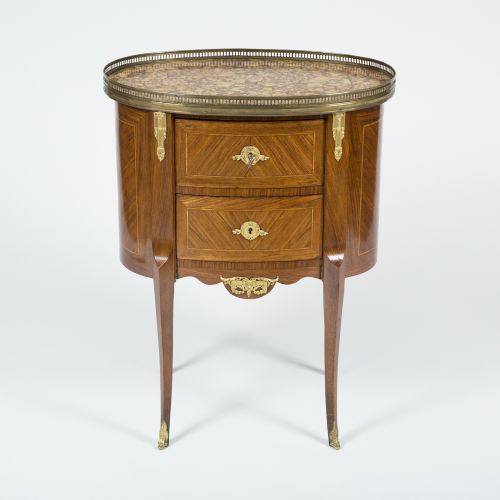
Gilt bronze and ormolu mounts punctuate the corners, aprons, and legs, providing structural protection alongside decorative flourishes. Marble inserts, including breche d'alep, top select commodes and cabinets to offer a durable, polished surface resistant to daily wear.
The inventory records French Louis XV and Louis XVI revival styles alongside kidney-shaped forms and marquetry side cabinets.
Distinguishing quality in craftsmanship
Quality rests upon the precision of the veneer work and the integration of the bronze or ormolu mounts into the wooden carcase. Finer examples display seamless marquetry patterns that flow naturally across opening doors and curved surfaces without interruption.
The choice of secondary timbers and the weight of the cast metal mounts separate standard production from superior workshop output. Well-executed pieces balance proportions carefully, ensuring that curved legs and marble tops align harmoniously with the primary cabinet body.
Maison Millet
The Antique Chiffonniere Table Glossary
- Marquetry
- The art of applying decorative pieces of veneer to a structure to form intricate pictures or designs. Cabinet-makers use various tinted woods to achieve tonal depth.
- Ormolu
- Gilt bronze ornamentation applied to furniture mounts and feet. This technique provides a bright, durable metallic contrast against dark timbers.
- Parquetry
- Geometric wood inlay forming patterns such as cubes or triangles across a tabletop. It demonstrates the precision of the maker's saw work.
- Breche d'alep
- A type of quarried marble featuring brecciated patterns of brown, cream, and grey. It frequently forms the heavy polished tops of commodes and side cabinets.
Antique Chiffonniere Table: Frequently Asked Questions
What is an antique chiffonniere table?
An antique chiffonniere table is a refined nineteenth-century French cabinet or side table used for display and storage in formal rooms. These pieces often feature decorative wood veneers and metal mounts.
They serve as practical occasional furniture that introduces decorative presence to hallways and sitting rooms without occupying excessive floor space.
How do I care for marble tabletops?
Marble tops require gentle cleaning with a damp cloth and mild soap to protect the polished surface from staining. Avoid acidic liquids and harsh chemical cleaners.
Using coasters and mats prevents scratching and etching on softer decorative stones like breche d'alep.
Where should I place a side cabinet?
These cabinets suit reception rooms, bedrooms, or entrance halls where surface space and subtle enclosed storage are useful. Freestanding versions look effective positioned against prominent walls.
Ensure the room maintains stable humidity levels to protect delicate marquetry veneers and wooden carcases from movement.