



Antique Chest with Brass
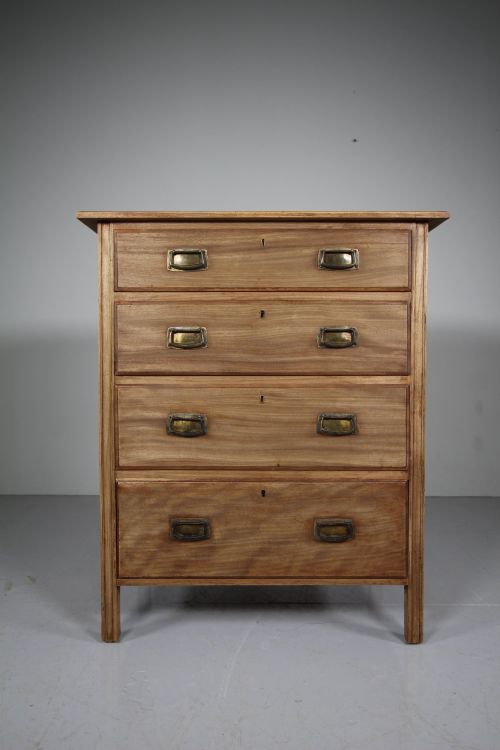
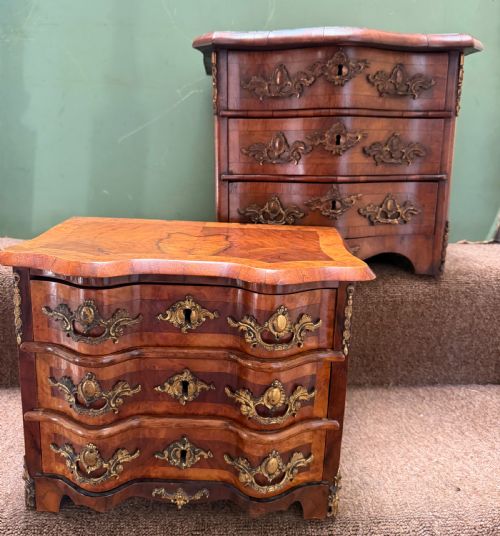
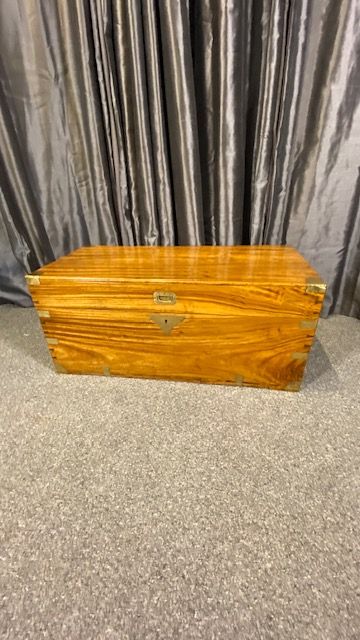
An antique chest with brass combines substantial storage with utilitarian or decorative metal mounts.
Antique Chest with Brass
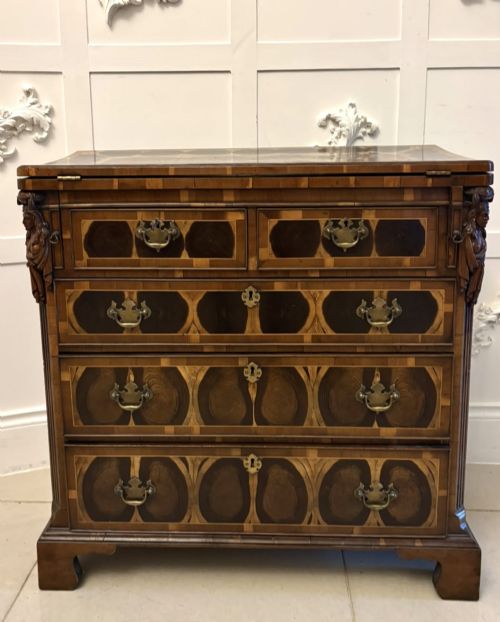
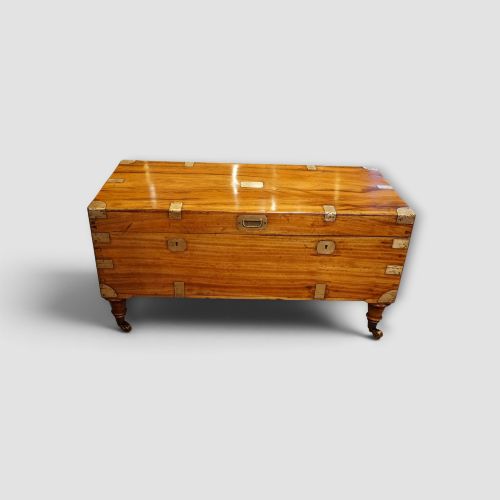
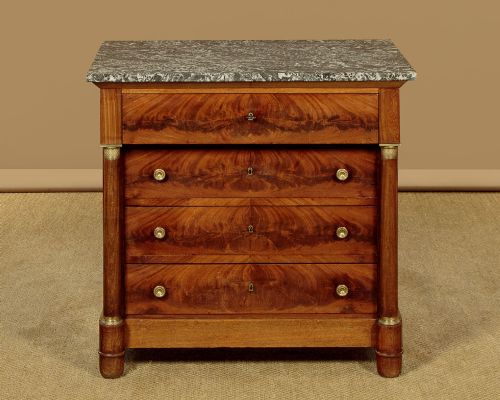
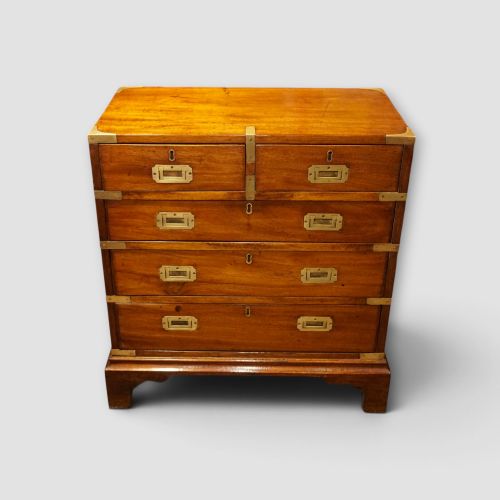
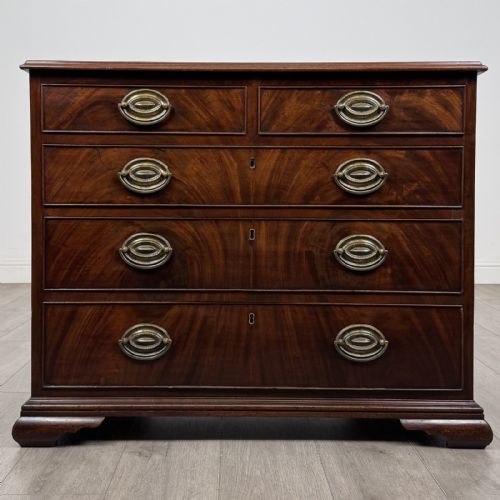
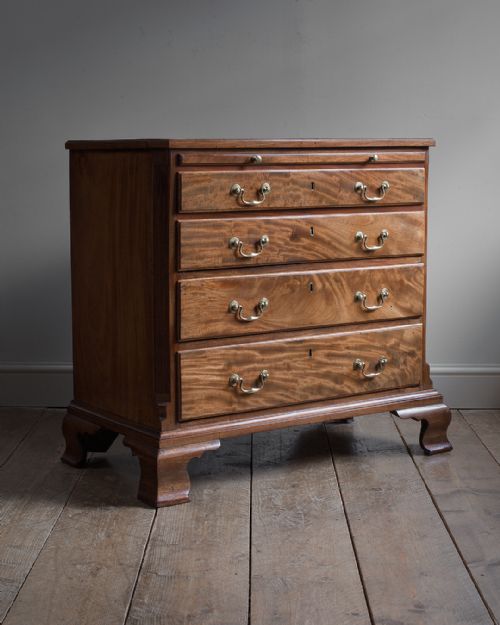
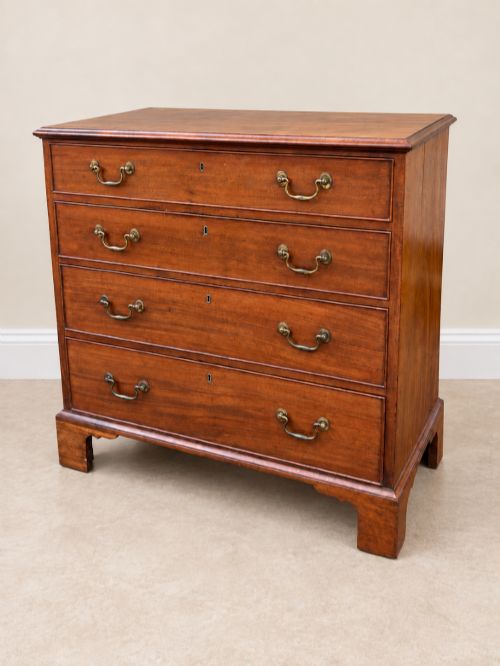
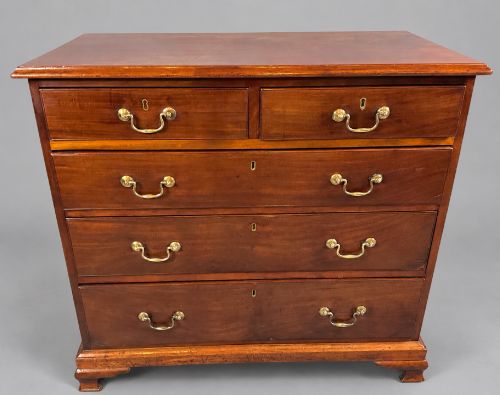
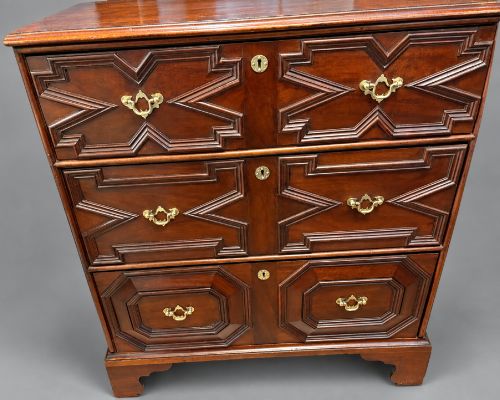
An antique chest with brass encompasses various forms designed for storage and travel, originating from the seventeenth to the early twentieth century. Buyers seeking these pieces encounter items ranging from utilitarian campaign trunks to formal Georgian mahogany chests of drawers.
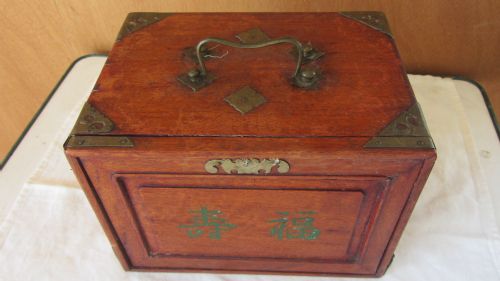
The selection on this page leans heavily towards Georgian and Victorian examples constructed in timber and fitted with metal handles, escutcheons, or corner straps. These objects served domestic, military, and mercantile roles, utilising metal reinforcement for durability or ornamental contrast against dark wood.
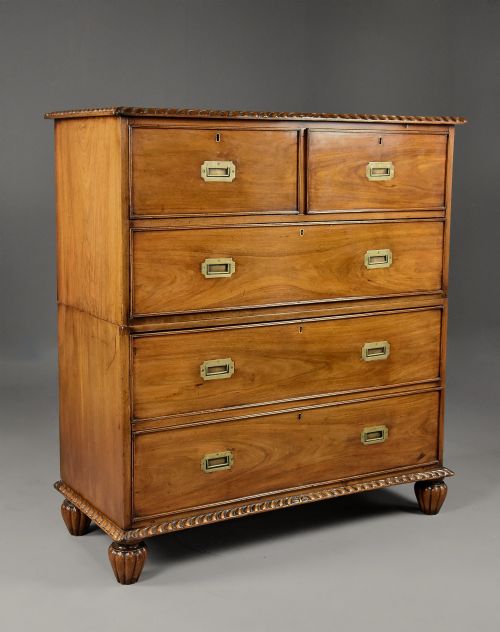
Forms include mule chests, blanket trunks, military campaign chests, and tall chests on chests, alongside smaller writing bureaux and apothecary boxes. Each variant demonstrates how metal hardware was integrated into daily storage solutions across different periods.
Materials and construction methods
Cabinet makers built these pieces using dense hardwoods such as mahogany, oak, walnut, rosewood, and camphor wood, often selected for their strength and figured grain. Timber panels were joined using traditional dovetail joints for drawer construction and secure frame assemblies.
Metal elements were cast, beaten, or pierced to form drop handles, drop bail pulls, key escutcheons, and structural corner brackets. These metal fittings were secured to the timber using hand-cut screws or pins, reinforcing vulnerable edges and joints on items destined for travel or heavy use.
Antique Chest with Brass Retail Price Guide 2026
Typical asking prices for chest with brass among the pieces listed under this phrase on Sellingantiques today, from the lower quarter to the upper quarter. They describe what is for sale here now, not the wider market.
Object forms span chests of drawers, mule chests, campaign boxes, apothecary chests, and writing bureaux.
Quality variations in brass-mounted chests
The grade of an antique chest with brass depends largely on the integrity of its timber and the retention of its original hardware. Finer pieces maintain matching wood grains across drawer fronts, intact original metal fixtures, and secondary timbers such as oak drawer linings.
The Antique Chest with Brass Glossary
- Campaign chest
- A portable chest built in two or more sections with recessed metal handles and corner brackets, designed for easy transport by military officers.
- Brushing slide
- A pull-out shelf integrated above the top drawers of a chest, historically used for grooming or writing correspondence.
- Mule chest
- A storage chest featuring one or more bottom drawers beneath a hinged lift-up top, popular during the seventeenth and eighteenth centuries.
- Escutcheon
- A decorative plate surrounding a keyhole that protects the surrounding wood from wear caused by the key.
- Crossbanding
- A narrow strip of veneer laid around the border of a drawer front or top surface with the grain running perpendicular to the main panel.
Antique Chest with Brass: Frequently Asked Questions
How do I date an antique chest?
Dating relies on examining construction techniques, timber choices, and hardware styles. Hand-cut dovetails and original brass drop handles typically indicate earlier periods.
Secondary woods inside drawers and the presence of tool marks provide further clues to the manufacturing decade.
Were campaign chests made for the military?
Yes, military officers required durable storage that could withstand frequent transport on campaigns. These chests featured flush-fitting brass hardware to prevent snagging during transit.
They usually separate into distinct modular sections for easier carrying.
What is a mule chest used for?
A mule chest combines the deep storage capacity of a traditional blanket chest with the accessible drawer space of a chest of drawers. The bottom drawer allowed users to retrieve items without lifting the top lid.
They served as versatile bedroom and hallway furniture in Georgian homes.
How do I care for camphor wood?
Camphor wood requires stable indoor humidity away from direct heat sources to prevent the natural oils from drying out. Dust the surface regularly with a soft, dry cloth.
Avoid using harsh chemical polishes that can damage the timber finish.