

Antique Chest Lock
An antique chest lock secures historical boxes, coffers and cabinets fashioned across centuries of British and European woodworking.
Antique Chest Lock
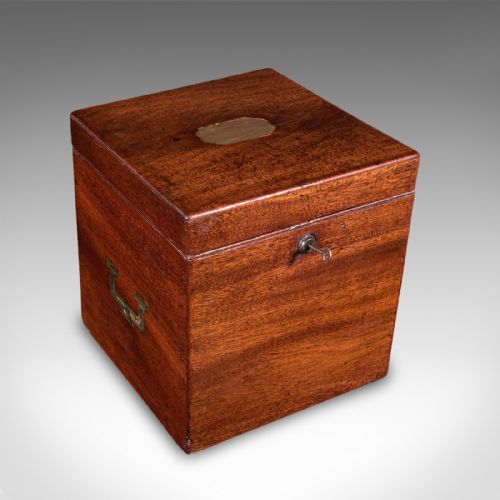
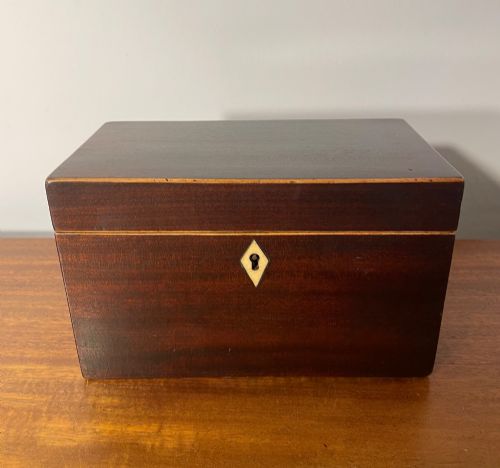
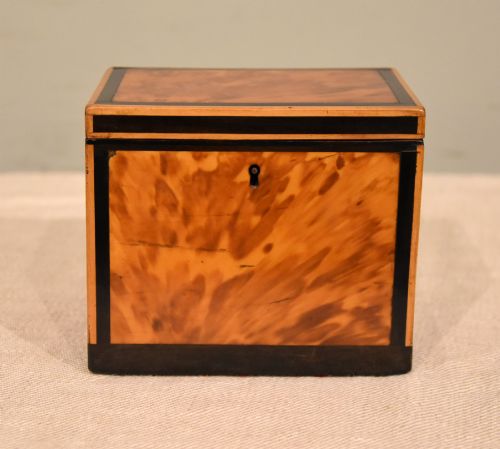
When you search for an antique chest lock, you encounter mechanisms and fitted hardware salvaged from or integrated into period storage pieces such as Victorian Wellington chests, Georgian tea caddies, and seventeenth-century oak coffers. The selection spans utilitarian iron devices for heavy travel trunks alongside complex brass and steel mechanisms fitted to delicate jewellery boxes and secretaire cabinets.
The hardware appears mounted to diverse containers shaped from mahogany, oak, walnut, and leather, reflecting the specific security needs of each era from the 1600s onward. Most examples survive either still housed within their original cabinetry or preserved alongside vintage boxes, travelling trunks, and apothecary chests.
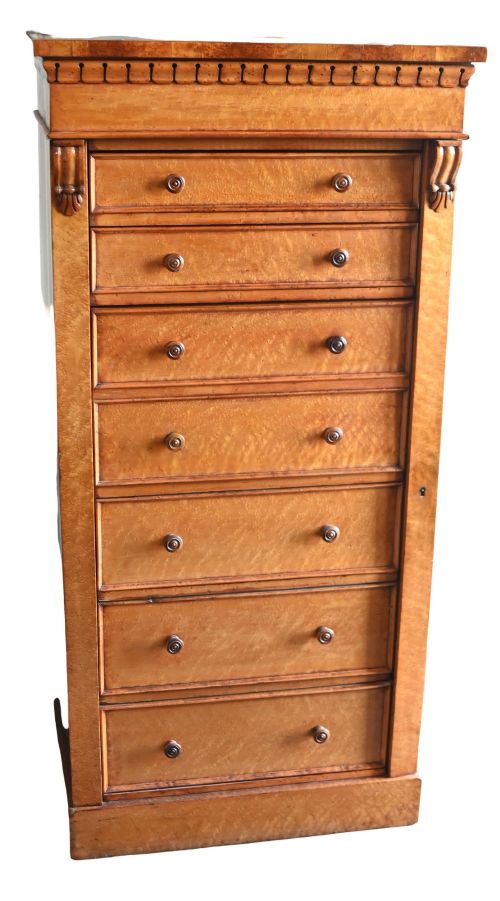
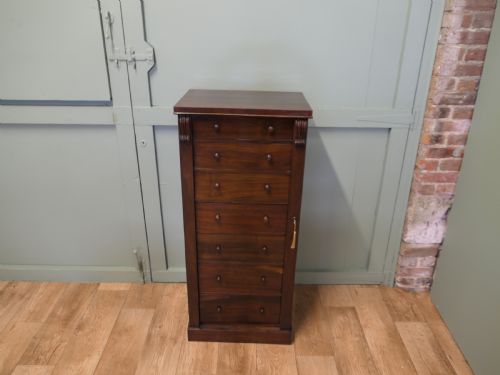
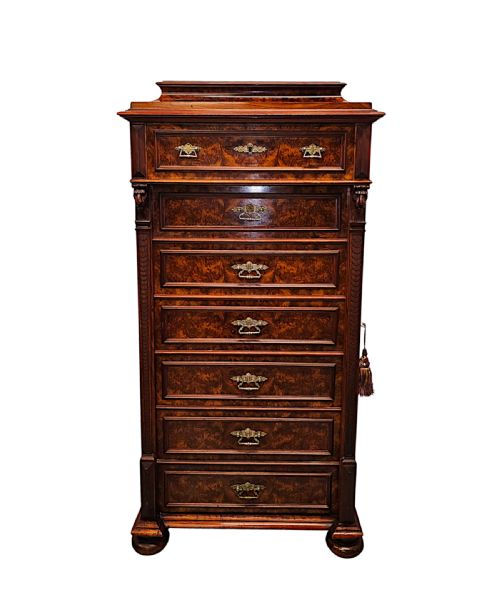
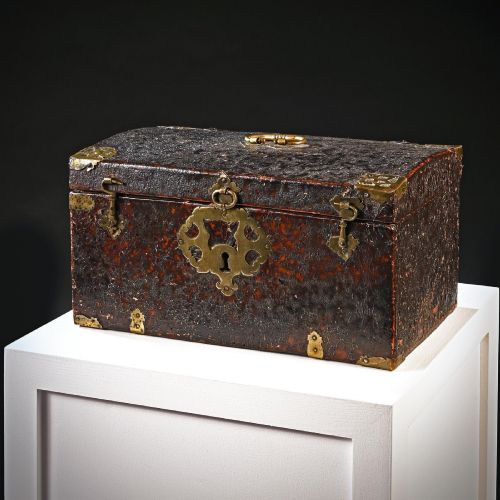
Buyers frequently find these locking systems embedded in nineteenth-century Wellington chests featuring characteristic vertical locking staves, or within seventeenth-century table boxes boasting intricate internal steel wards. Each piece demonstrates the mechanical ingenuity applied to safeguarding valuables long before modern security standards emerged.
Materials and construction methods
Makers utilised durable metals like brass, iron, and steel to forge durable internal mechanisms and decorative escutcheons, pairing them directly with dense timbers such as mahogany, oak, walnut, and elm. Blacksmiths and locksmiths shaped complex internal levers and spring-loaded bolts by hand, ensuring each mechanism matched the precise recess carved into the wooden housing.
Finishing techniques involved precision hand-fitting of faceplates and keyplates using small brass screws or iron pins, securing the heavy locks flush against the timber surface of chests and coffers. Mechanisms often incorporated intricate brass or steel spring arrangements designed to engage smoothly with corresponding staple plates fixed to the lid or upper drawer frame.
Listings feature mechanisms housed within mahogany, oak, walnut, and leather containers spanning the seventeenth to the twentieth century.
Assessing quality and execution
Quality in these security items rests on the complexity of the internal mechanism, distinguishing simple surface latches from intricate multi-lever locks with original matching keys. Superior examples exhibit finely cast or hand-chased brass plates, crisp lettering, and robust steel working parts that operate with smooth precision.
The integration of the hardware into the surrounding cabinet work further separates standard utility pieces from fine examples, particularly where escutcheons are meticulously flush-fitted into figured mahogany, burr walnut, or tortoiseshell. Surviving mechanisms retaining their original operational keys and matching strike plates command greater interest among collectors of period hardware.
Gillows·J Shoolbred·Arnold and Lewis·Jones Bros
The Antique Chest Lock Glossary
- Escutcheon
- A protective brass or iron plate surrounding the keyhole, designed to prevent wear on the surrounding wood from repeated use of the key.
- Wellington chest
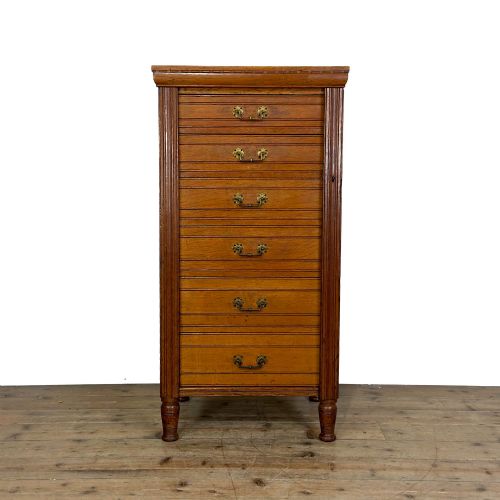
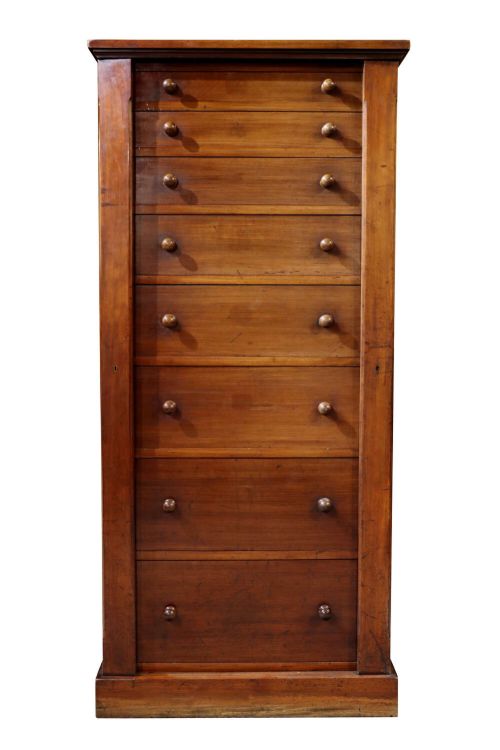
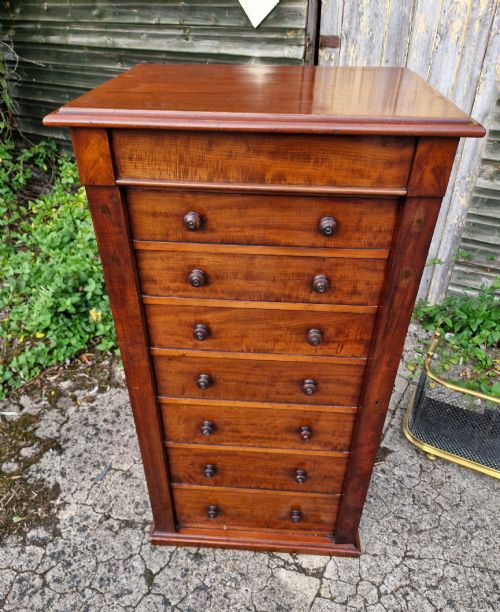
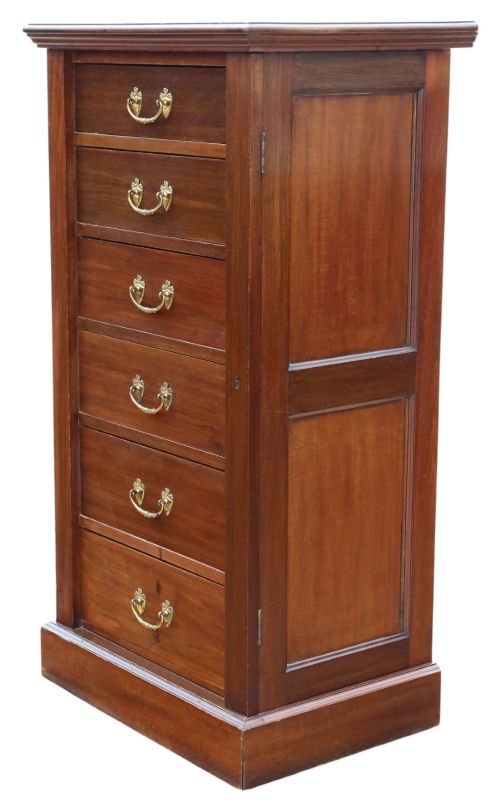
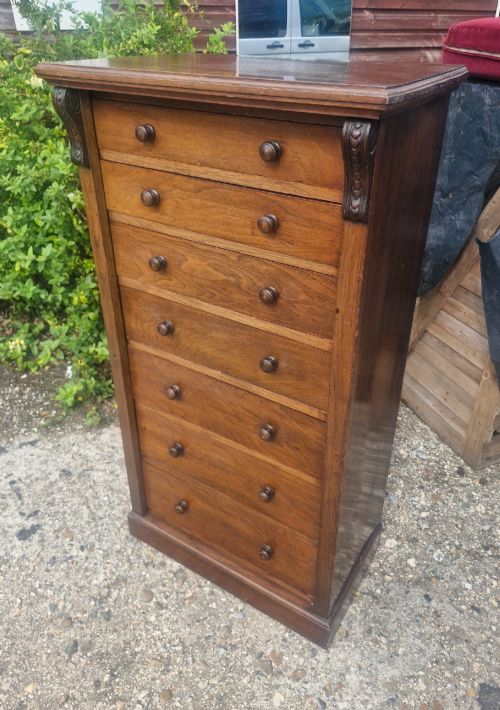
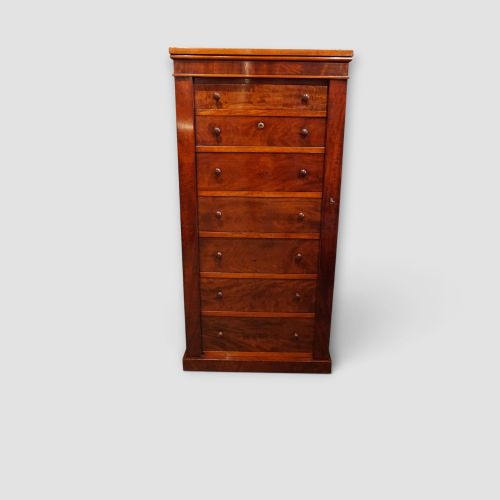
- A tall, narrow chest of drawers featuring a hinged locking stile on one side that secures all drawers simultaneously when locked.
- Coffer
- A heavy wooden storage chest, typically constructed from oak or elm, often reinforced with iron straps and fitted with a primitive security mechanism.
- Secretaire
- A cabinet or chest incorporating a pull-down writing flap that conceals small interior drawers and pigeonholes, secured by a central lock.
- Tantalus
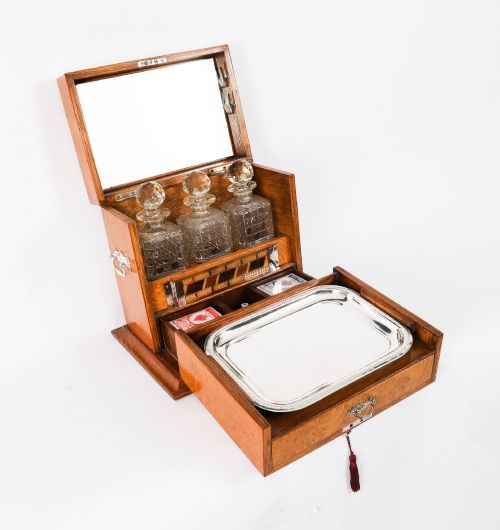
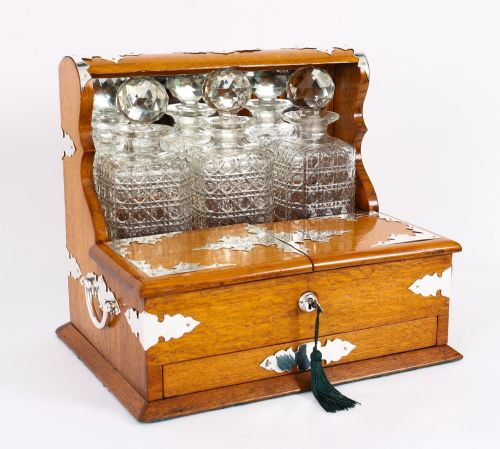
- A decorative locking beverage cabinet featuring a metal framework that secures decanter stoppers in place, preventing access without a key.
Antique Chest Lock: Frequently Asked Questions
What is an antique chest lock?
An antique chest lock is a mechanical security device constructed from brass, iron, or steel designed to secure period boxes, trunks, and cabinets. These items range from simple surface-mounted latches on seventeenth-century oak coffers to intricate internal mechanisms housed within nineteenth-century Wellington chests and tea caddies.
Collectors and restorers prize these mechanisms for their hand-forged components and historical association with fine cabinetry. Many survive as part of complete antique storage furniture rather than as loose hardware.
How do I date an antique chest lock?
Dating these mechanisms requires examining the manufacturing techniques, metal composition, and the style of the accompanying woodwork or escutcheon plate. Hand-forged iron components and simple bolt designs typically point towards seventeenth-century or eighteenth-century origin, while mass-produced brass lever mechanisms generally align with the Victorian era.
The presence of characteristic cabinet styles, such as a locking side-stile on a Wellington chest or the dovetailing on an oak box, provides further contextual clues for determining the age of the piece.
How were these locks used originally?
These security devices served to protect valuable personal possessions, documents, currency, and household stores from theft during an era without modern banking security. Owners utilised them on travelling trunks, apothecary boxes, and table cabinets to ensure sensitive items remained undisturbed.
In domestic settings, securing a tea caddy, coffer, or secretaire chest prevented unauthorized access to expensive commodities and private correspondence by household staff or visitors.
Can I get a replacement key for an antique lock?
Finding or cutting a replacement key depends on the complexity of the internal wards and whether the mechanism relies on simple levers or intricate shaped plates. Professional locksmiths experienced in antique restoration can often hand-file a blank key to navigate the internal obstructions of seventeenth or eighteenth-century iron locks.
For many Victorian and Edwardian brass mechanisms, finding a functional replacement requires matching the barrel diameter, bit projection, and overall length to the original specifications.