






Antique Chandelier Sconces
Antique chandelier sconces bring brilliant illumination and classical French elegance to interior spaces through crystal drops and gilded metal work.
Antique Chandelier Sconces
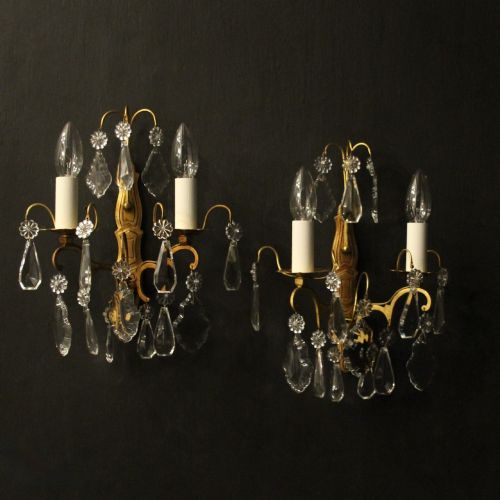
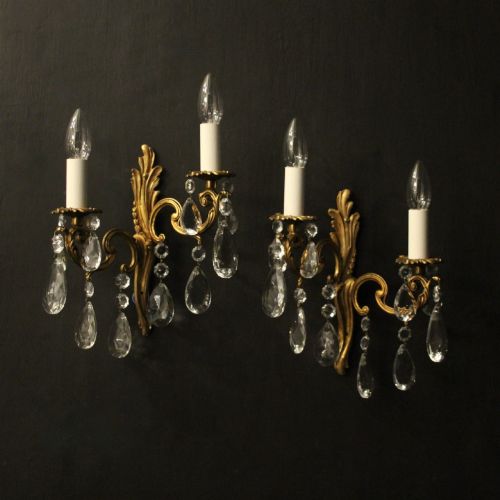
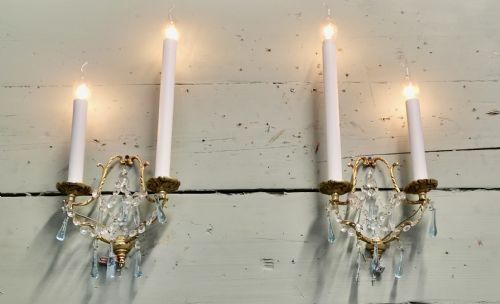
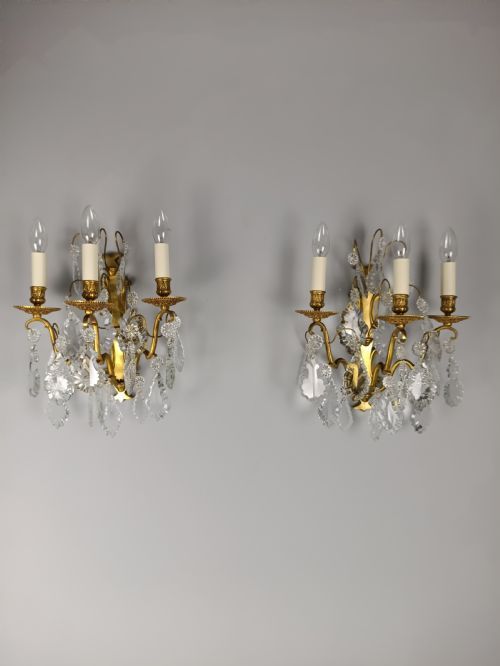
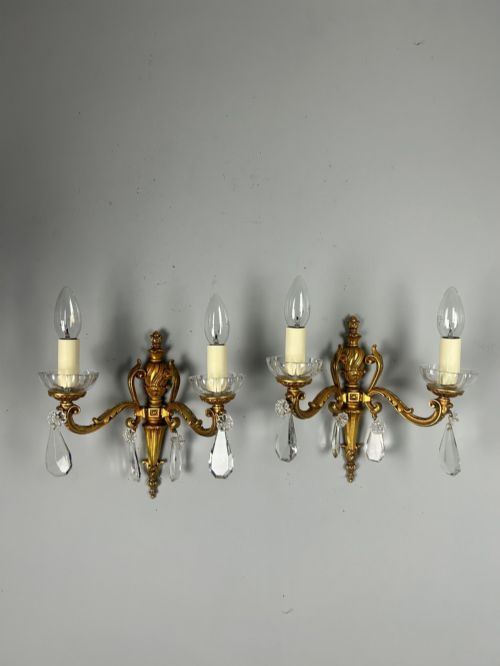
When you search for antique chandelier sconces, you are looking at wall-mounted lighting fixtures that borrow the decorative vocabulary and glass components of larger hanging chandeliers. These pieces typically take the form of twin, triple, or multi-arm wall lights designed to project candlelight or electric light across a room.
The versions most frequently found on this page are French wall lights and sconces originating from the nineteenth and early twentieth centuries. They often feature gilded brass or bronze frames ornamented with crystal drops, faceted beads, and occasionally porcelain flowers.
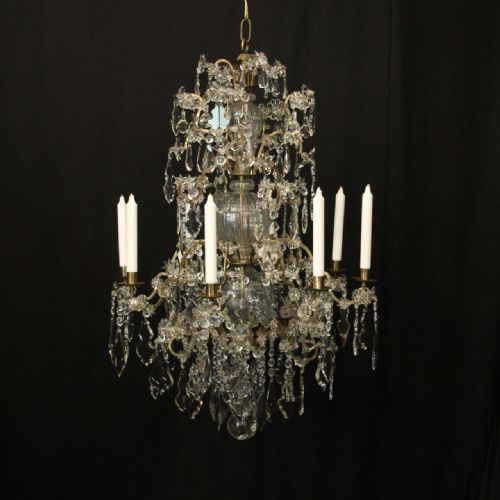
Beyond standard wall lights, the selection includes wall-mounted crystal chandeliers and individual components such as gilded capitals and chandelier arms. Their designs span French Rococo, Baroque, Neoclassical, and Louis XV revival styles, alongside wrought iron and Bohemian glass examples.
How they were made
Makers constructed the structural frames of these wall lights using cast bronze, brass, or wrought iron, which provided a sturdy armature for the branching arms. Metalwork was frequently gilded to create a rich surface finish that reflected ambient light.
Glass and crystal elements were hand-cut and shaped to form faceted drops, pendants, and decorative capitals. These components were then wired or pinned onto the metal frames using small brass or metal connectors.
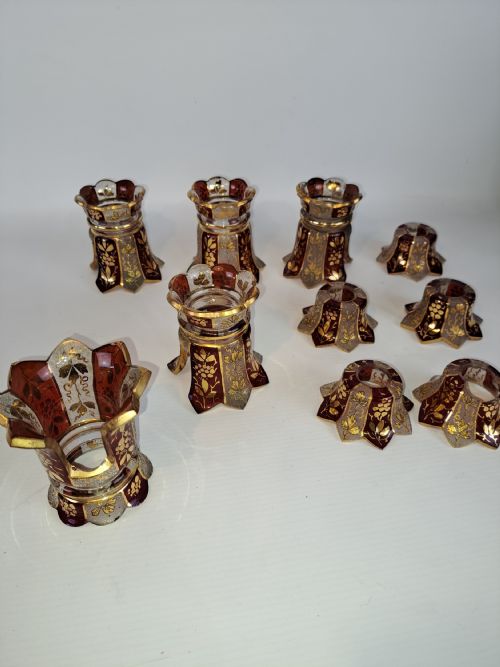
Specialised workshops also incorporated porcelain floral elements and etched ruby glass into specific regional pieces, combining different decorative arts within a single lighting fixture.
Object forms on this page include twin-arm wall lights, multi-light chandeliers, individual chandelier arms, and etched glass capitals.
What varies in quality
The distinction between standard and superior examples rests upon the depth of the metal casting and the precision of the surface gilding. Finely chased bronze or brass mounts display crisp botanical and scroll motifs rather than soft, blurred edges.
Crystal quality forms another primary differentiator, where high-grade glass exhibits sharper facets and greater clarity to refract light effectively. The presence of complete original prismatic drops and matching arm components elevates the integrity of the piece.
The Antique Chandelier Sconces Glossary
- Gilt bronze
- Metal alloy cast into decorative shapes and coated with a thin layer of gold or gold-coloured finish. This technique provides a durable and reflective surface characteristic of formal European lighting.
- Crystal
- High-clarity glass containing lead oxide, which increases the weight and refractive index of the material. It is cut into pendants and drops to disperse light across a room.
- Wall sconce
- A bracket fixture fixed to a wall for holding candles or electric lamps. In antique pieces, these often feature multiple branching arms.
- Baroque style
- An ornate design period characterised by dramatic curves, dense ornamentation, and exuberant movement. Pieces from this aesthetic emphasise grand theatricality.
- Capitals
- The topmost decorative member of a column or architectural support. In these listings, they appear as cut and etched glass or crystal elements forming part of a chandelier structure.
Antique Chandelier Sconces: Frequently Asked Questions
How are antique sconces mounted?
These fixtures are attached directly to wall surfaces using standard backplates and structural fixing points. Many modern installations require adaptation by a qualified electrician to ensure secure mounting and safe power delivery.
Heavier examples constructed from cast bronze or fitted with numerous crystal drops need solid wall anchors to support their weight safely over time.
Can these wall lights use electricity?
Many surviving examples have been rewired for modern electrical use while retaining their original candle-form drip pans and metal arms. This allows them to function safely as wall-mounted lamps in contemporary interiors.
Some pieces retain components configured for candles, offering flexibility depending on whether the buyer prefers ambient electrical illumination or traditional candlelight.
What rooms suit wall sconces?
Twin and triple arm wall lights fit well in hallways, living rooms, and dining spaces where secondary ambient lighting is required. Their reflective crystal and gilded surfaces complement traditional architectural settings.
Placing pairs on either side of mirrors, fireplaces, or architectural doorways creates a balanced and symmetrical lighting scheme.
How do I identify French styles?
French lighting designs often display specific regional characteristics such as Rococo asymmetry, Neoclassical geometric restraint, or Baroque scrolling foliage. The integration of fire-gilt bronze and cut crystal is a common indicator of French manufacture.
Examining the casting quality and the style of the mounting brackets helps distinguish between eighteenth-century originals and later nineteenth-century revival pieces.