
Antique Chair and Stool
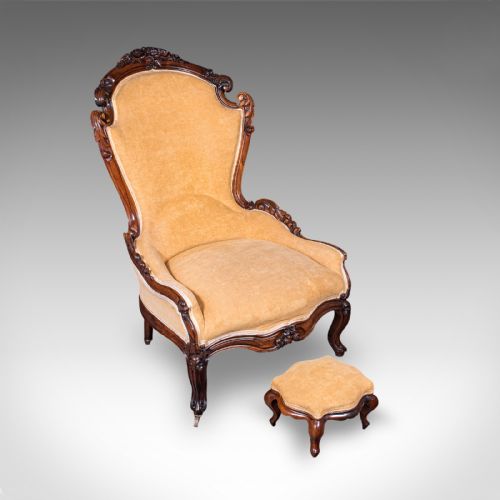
An antique chair and stool pairing brings together matching seating designed for salons, music rooms and parlours across the nineteenth and early twentieth centuries.
Antique Chair and Stool
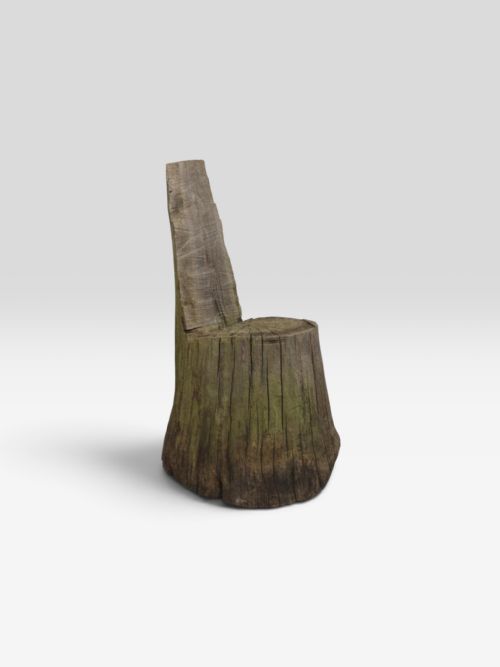
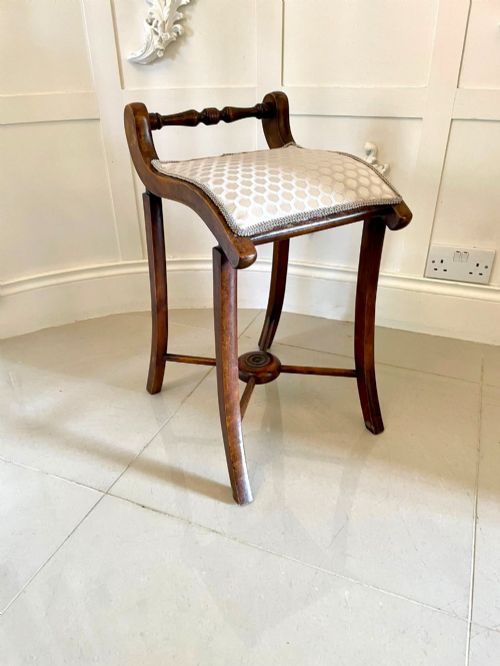
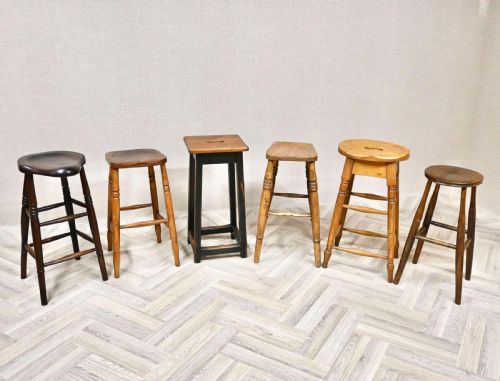
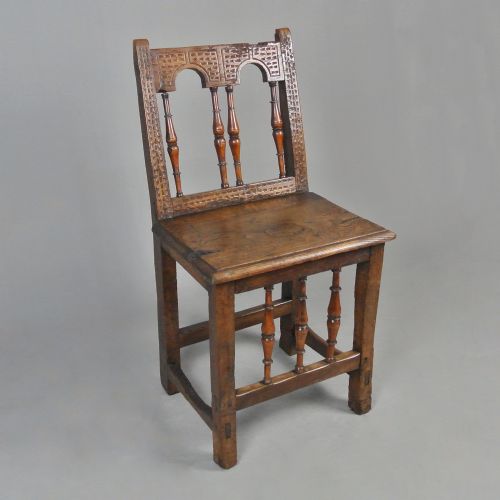
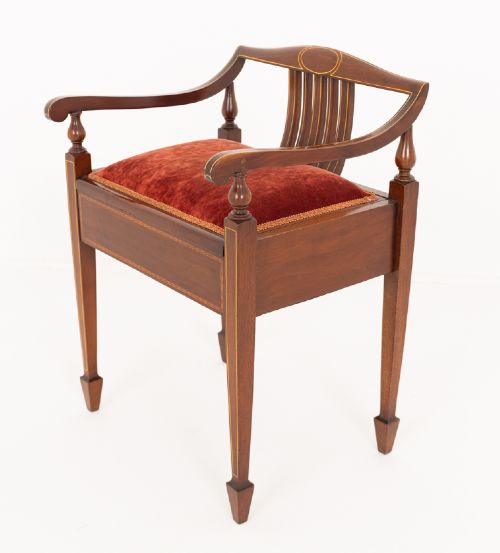
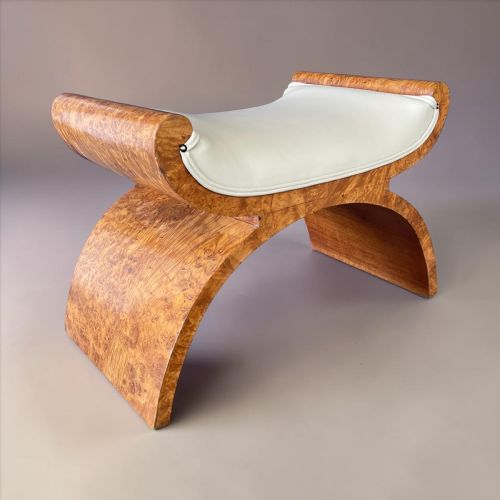
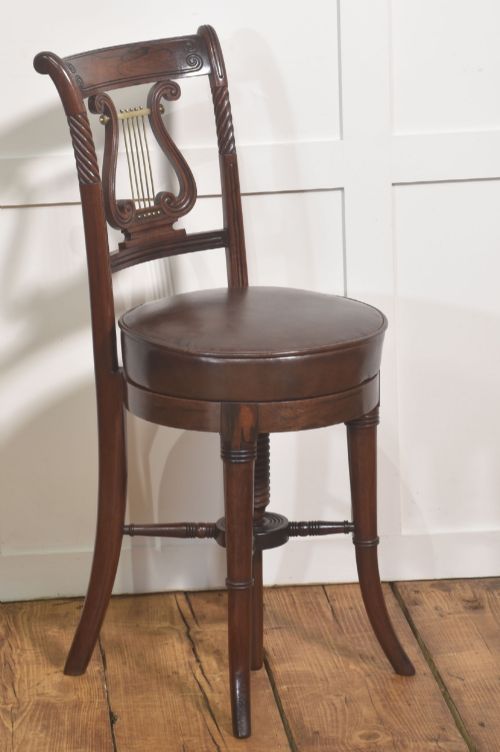
When you search for an antique chair and stool, you encounter seated combinations that range from Victorian parlour suites and salon sets to revolving music chairs paired with matching footstools. The most common manifestations on this page are adjustable piano stools, music chairs, and dressing table stools paired with corresponding armchairs or side chairs.
The pieces cross multiple periods, drawing on Victorian, Regency, Edwardian, and Art Deco design, often uniting a primary seat with a secondary footrest or matching stool. Form follows function closely, serving specific domestic spaces like music rooms, dressing boudoirs, and libraries.
Origins span English, French, and Scottish workshops, utilising timber frames and upholstered elements that have survived together through generations. Buyers look for sets that retain their original harmony in timber tone, upholstery style, and period proportion.
Materials and construction methods
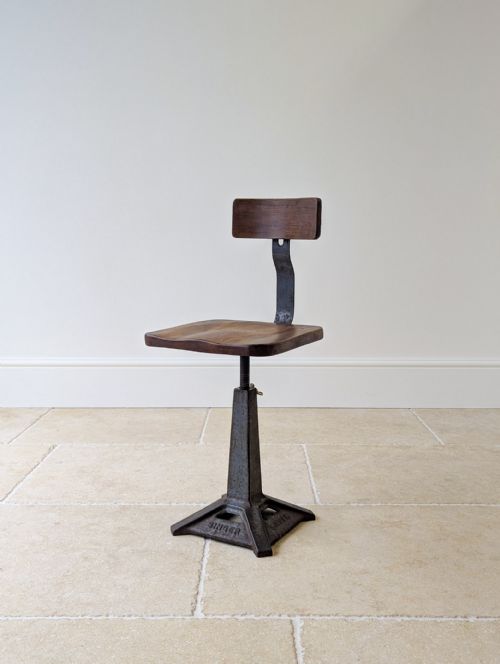
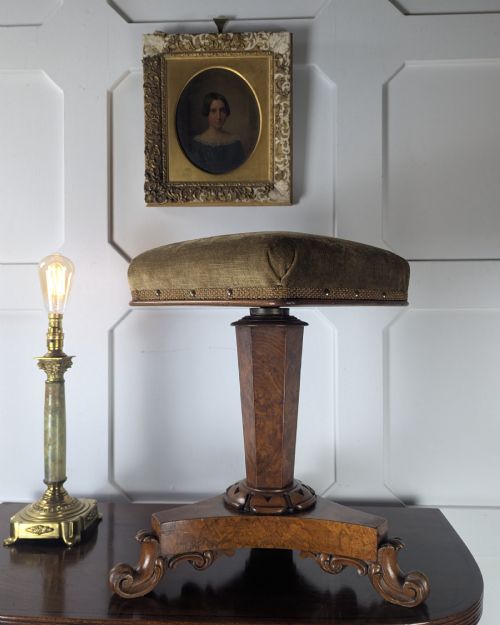
Cabinetmakers built the foundational frames of these chairs and stools from dense hardwoods like mahogany, walnut, rosewood, and oak, alongside occasional use of cast iron and elm in industrial or machinist pieces. Turning, carving, and joinery define the structural work, with pieces like piano stools incorporating intricate rise-and-fall wooden screws and swivel mechanisms.
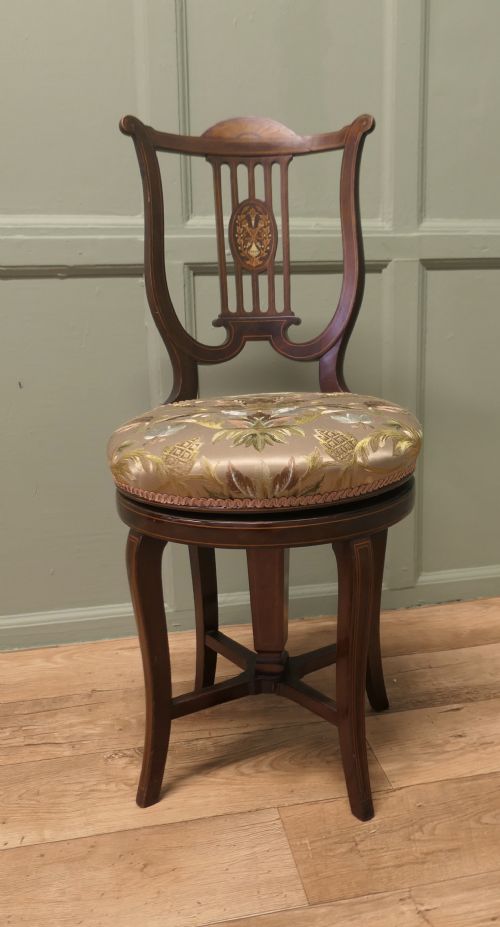
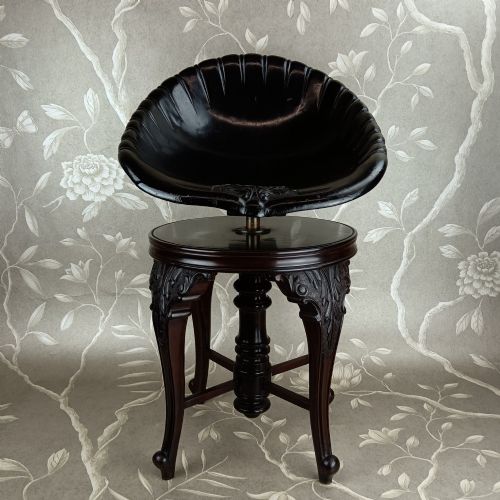
Upholstery techniques involved traditional stuffing finished with velvet, leather, needlepoint, or patterned fabric, often secured with brass studs or decorative trim. Papier-mâché and ebonised finishes also appear, demonstrating the diverse decorative treatments applied to nineteenth-century parlour furniture.
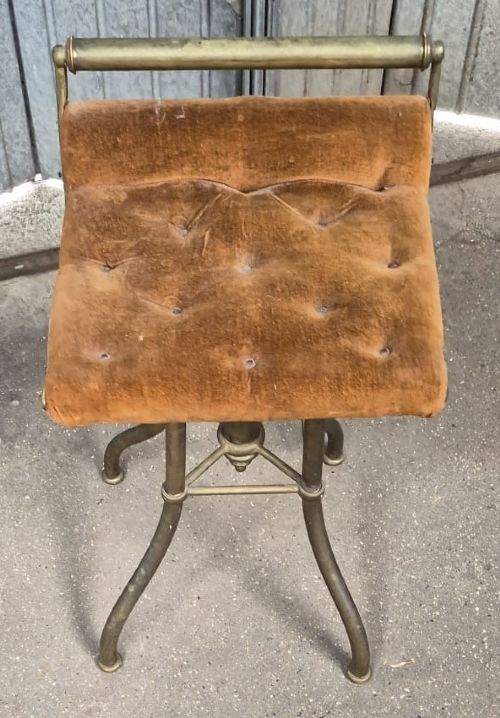
A solitary machinist's stool sits comfortably among the plush Victorian parlour seats, proving that early industrialists also appreciated a good swivel.
Distinctions in quality and execution
The standard of an antique chair and stool depends largely on the integrity of the timber framing, the precision of carved details such as cabriole legs or lyre backs, and the smoothness of any mechanical adjustment. Superior examples maintain original swivel or height-adjustment mechanisms that operate without friction or replacement parts.
Cohesion between the chair and its matching stool dictates visual success, where matching wood grains, uniform patination, and complementary upholstery elevate a pairing above assembled sets. Maker attribution, evident in pieces from workshops such as Jennens and Bettridge or Howard and Sons, adds a distinct layer of quality and historical interest.
Jennens and Bettridge·Harry and Lou Epstein·Howard and sons
The Antique Chair and Stool Glossary
- Piano stool
- A seat designed specifically for keyboard players, frequently featuring a revolving top or an adjustable screw mechanism to alter the height.
- Back stool
- An early form of chair without arms, constructed with a solid wooden back frame joined to the seat.
- Duchesse brisée
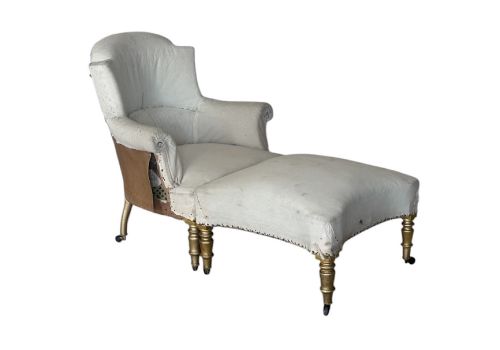
- A French term for a two-part or three-part lounge combination consisting of an armchair and a matching long stool or footstool.
- Metamorphic
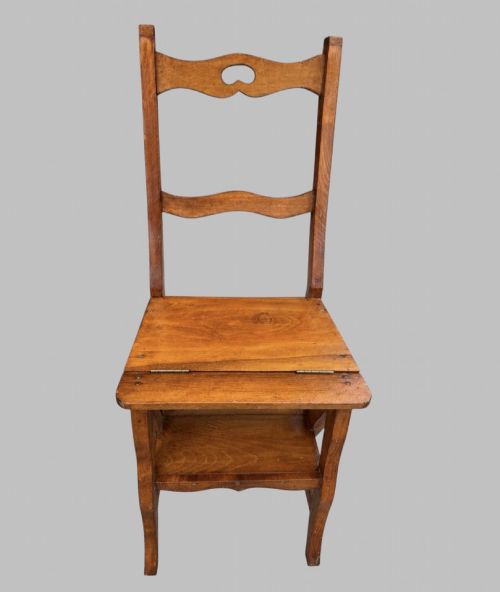
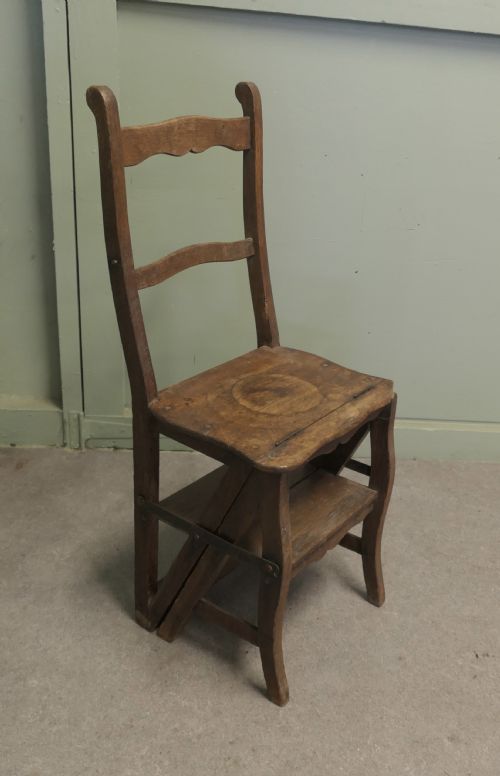
- Describing furniture designed to transform its function, such as a library chair that folds out into a set of steps.
- Rise and fall
- A mechanical action utilising a threaded screw column to raise or lower the seating platform smoothly.
Antique Chair and Stool: Frequently Asked Questions
What is a piano stool?
A piano stool is a specialised seat designed for musicians, often built with a swivel top or a central wooden screw mechanism for height adjustment.
These pieces frequently appear in walnut or mahogany, matching the aesthetic of period keyboard instruments in Victorian and Regency parlours.
How do metamorphic chairs work?
Metamorphic chairs are clever pieces engineered to convert into alternative furniture forms, such as library steps or stepladders.
Cabinetmakers utilised concealed hinges and pivoting joints so the seat structure could unfold safely for accessing high bookshelves.
Where were music stools used?
Music stools belonged in the drawing rooms, parlours, and music salons of nineteenth-century homes where families gathered for evening entertainment.
They accommodated harpists, cellists, and pianists, offering stability and adjustable seating heights tailored to specific instruments.
How do I identify a Victorian stool?
Victorian stools typically display dense timbers like rosewood or walnut, combined with buttoned upholstery, needlepoint, or velvet covers.
Many incorporate turned legs, carved cabriole supports, or intricate rise-and-fall mechanisms typical of nineteenth-century domestic manufacturing.