



Antique Ceramic Sugar Bowl
An antique ceramic sugar bowl brings table service from the eighteenth and nineteenth centuries into daily use.
Antique Ceramic Sugar Bowl
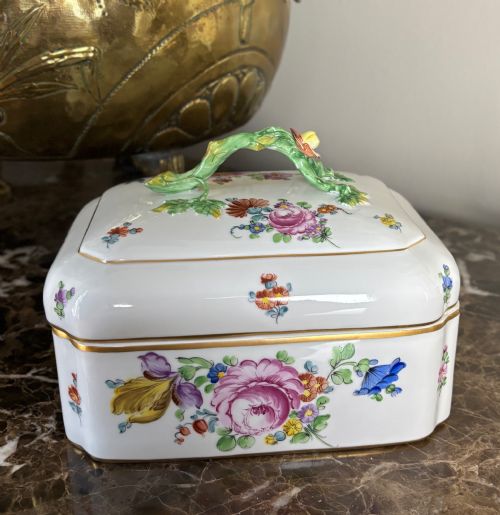
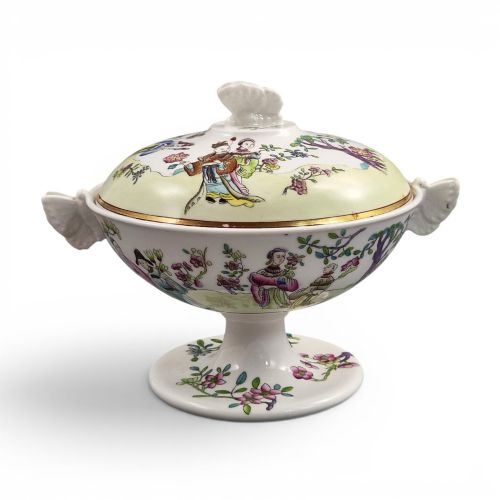
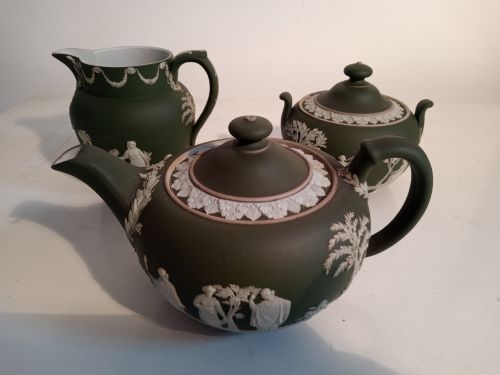
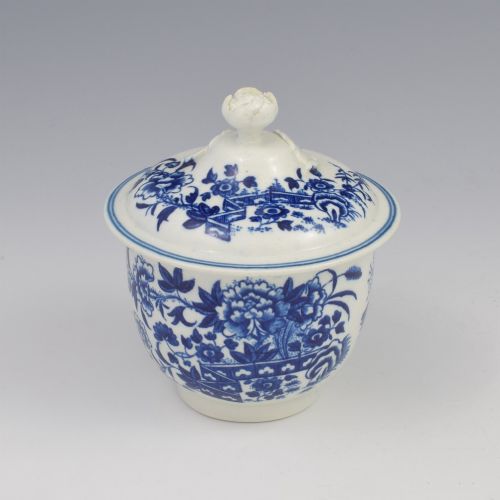
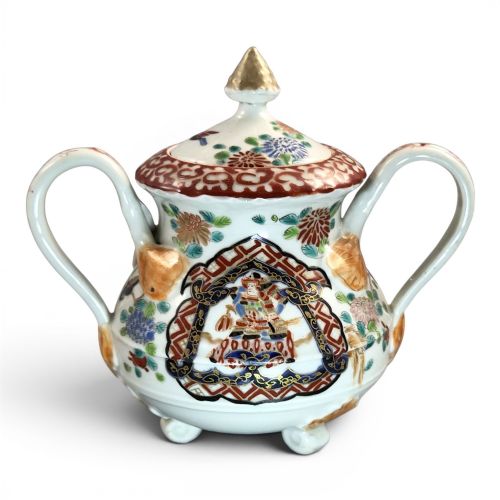
An antique ceramic sugar bowl appears in various forms on this page, including covered sucriers, pedestal vessels, and sugar boxes dating from the eighteenth century to the early twentieth century.
Makers shaped these pieces within Georgian, Regency, Victorian, and Meiji aesthetics, ranging from English porcelain to Japanese earthenware and continental pottery.
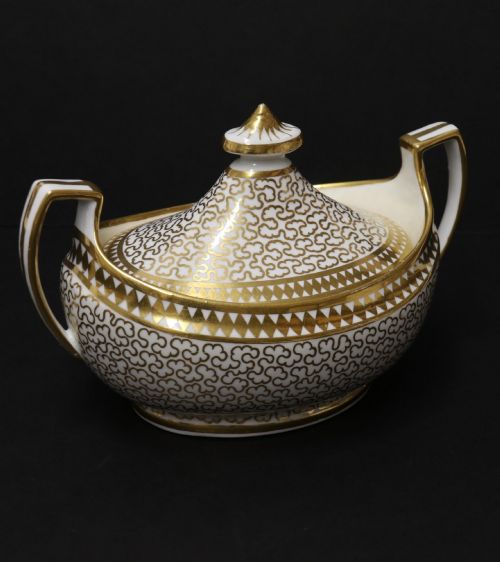
The version most commonly met on this page is the handled porcelain sucrier or covered sugar box from the Regency and Victorian periods, often decorated with hand-painted patterns or gilding.
Materials and decoration
Potters utilised standard bodies such as earthenware, stoneware, and fine porcelain, alongside specialised mixes like felspar porcelain developed in English factories.
Decoration relied on hand-applied enamel, gold leaf, and intricate gilding, combined with underglaze blue painting or transfer printing to create distinct regional patterns.
Listings span multiple eras, including Georgian, Regency, Victorian, and Meiji periods, utilising porcelain, stoneware, and earthenware.
Standards of craftsmanship
Quality separates pieces by the precision of the potter's wheel and the crispness of the moulded details, where finer examples display thin walls and exact lids.
The standard of hand-painted enamel work and the application of gilding distinguish standard production items from master-painted porcelain works.
Wedgwood·Royal Crown Derby·Doulton·Richard Ginori·Royal Worcester
The Antique Ceramic Sugar Bowl Glossary
- Sucrier
- A sugar basin or bowl with a matching cover, designed specifically for table service during the tea-drinking rituals of the eighteenth and nineteenth centuries.
- Felspar porcelain
- An innovative ceramic body introduced by English potteries to increase the durability and whiteness of fine tableware.
- Imari
- A style of Japanese porcelain decorated in underglaze blue, iron red, and gold, named after the port of shipment and widely imitated in Europe.
- Bonbonniere
- A small ornamental container or box intended to hold sweets or sugar lumps, often featuring painted porcelain scenes.
- Chinoiserie
- European decorative motifs inspired by Chinese art, frequently applied to porcelain sugar bowls during the Georgian period.
Antique Ceramic Sugar Bowl: Frequently Asked Questions
What is a sucrier?
A sucrier is simply the traditional term for a sugar bowl with a matching lid. These vessels held loose sugar for tea service.
They appear across eighteenth and nineteenth-century ceramic traditions in various regional styles and glaze treatments.
How do I date an antique sugar bowl?
Dating relies on identifying the maker's mark stamped or painted on the base, alongside stylistic clues like paste colour and glaze type.
Changes in handle design and decorative technique also help narrow down the period of manufacture.
Are these bowls safe for sugar?
These ceramic vessels function well for storing and serving dry sugar cubes or loose sugar today. Modern users often wash them by hand to protect historic gilding.
Gentle care preserves the fragile enamels applied centuries ago.
What distinguishes Japanese pieces here?
Japanese sugar bowls on this page originate from the Meiji period and showcase distinct regional studio marks and techniques. Examples feature Satsuma earthenware or detailed Imari patterns.
These pieces reflect nineteenth-century trade and cross-cultural artistic exchange.