



Antique Ceramic Serving Set
These antique ceramic serving set pieces offer coordinated elegance for the table, bringing period craftsmanship directly into modern dining spaces.
Antique Ceramic Serving Set
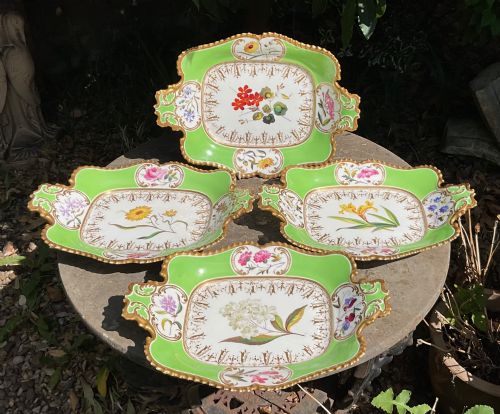
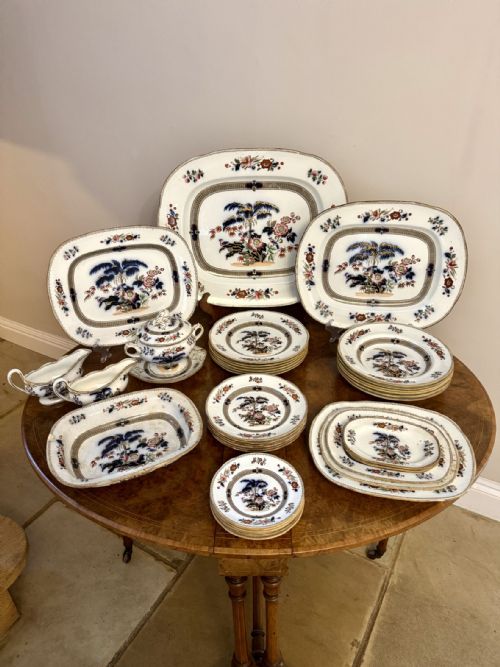
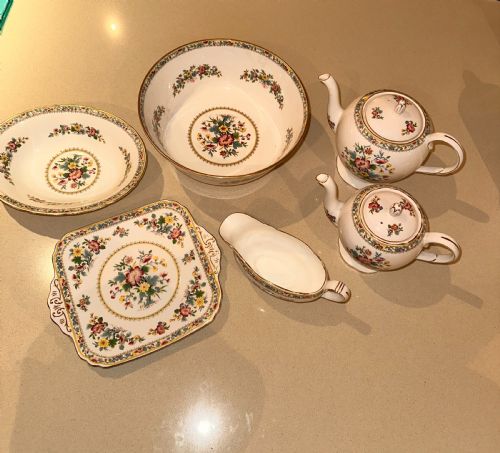
An antique ceramic serving set comprises coordinated dishes, bowls, platters and tureens designed to present food together in a unified style. When searching for an antique ceramic serving set, buyers encounter substantial multi-piece dinners, specialised dessert services and standalone salad bowls with matching servers.
The pieces span several centuries of production, originating from English potteries and continental European manufactories alike. Prominent examples range from Regency porcelain dishes and Georgian supper sets to large Victorian earthenware dinner services and Edwardian Limoges sets.
Form follows function across these collections, encompassing deep tureens with covers, flat platters for meats, shallow plates for desserts and specialised bowls for salads. Many assemblies survive as partial sets or individual matched groupings rather than their original full complement.
How they were made
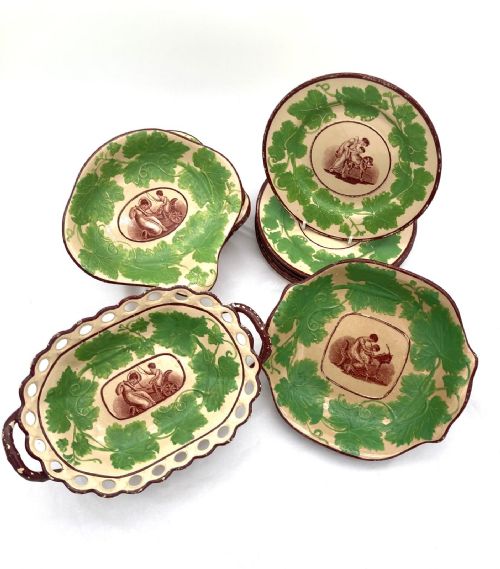
Potters shaped these vessels using earthenware, ironstone, stoneware and fine porcelain, firing the clay bodies to various temperatures before decoration. Artisans then applied colourful glazes, hand-painted motifs, transfer-printed patterns or rich enamel highlights.
Many high-grade pieces incorporate applied gold leaf or gilt details to accentuate moulded rims and handles. Certain salad bowls integrate polished oak bodies mounted with silver plate rims and accompanied by matching silver plate servers.
The documented periods range from Georgian and Regency eras through the Victorian, Edwardian and early 20th-century decades.
What varies in quality
Quality separates through the precision of the ceramic body, the complexity of the moulding and the execution of the decoration. Superior sets feature crisp, hand-painted details or intricate transfer printing like the London Bridge and Peacock patterns, alongside fine translucent porcelain bodies.
The skill of the decorator dictates value, visible in careful enamel placement and rich gilding that endures on heavy-use items. Completeness of form and the presence of original components, such as matching servers or specialised revolving trays, further distinguish finer examples.
Chamberlains Worcester·Wedgwood·John Ridgway·Rockingham Pottery·Booths·Müller Volkstedt MV Co·Doulton Lambeth·Royal Doulton·Coalport
The Antique Ceramic Serving Set Glossary
- Earthenware
- A porous pottery body fired at lower temperatures, requiring an impermeable glaze to hold liquids. It forms the foundation of many robust Victorian and Edwardian services.
- Ironstone
- A durable, heavy type of earthenware patented in the nineteenth century to imitate Chinese porcelain. It resists chipping and served widely for practical dining wares.
- Porcelain
- A fine, hard, translucent ceramic composed of kaolin and petuntse fired at high heat. It represents the most refined tier of historical tableware production.
- Supper set
- A specialised collection of covered tureens, often arranged on a rotating lazy susan or fitted tray. These allowed diners to serve multiple dishes without servants present.
- Transfer printing
- A mechanical decorating technique using an engraved copper plate to transfer an ink design onto paper and then onto the ceramic surface. This allowed detailed repeatable patterns like topographical views.
- Majolica
- A colourful, lead-glazed earthenware characterised by vibrant opaque metallic oxides. It enjoyed popularity for decorative serving pieces and naturalistic salad bowls.
Antique Ceramic Serving Set: Frequently Asked Questions
How do I date an antique ceramic serving set?
Dating relies on maker marks stamped or painted on the underside, stylistic cues like Rococo Revival curves or Arts & Crafts simplicity, and the type of ceramic body used.
Historical clues within transfer-printed patterns, such as specific London bridge designs or named historical scenes, also narrow the production window.
Can I use an antique ceramic serving set for daily meals?
Most antique serving pieces tolerate gentle use, though hand washing is necessary to protect fragile glazes, hand-painted enamels and delicate gold leaf decorations.
Sudden temperature changes should be avoided to prevent thermal shock and crazing in older earthenware bodies.
What is the difference between a dinner service and a dessert service?
A dinner service contains large platters, vegetable tureens, gravy boats and dinner plates intended for savoury meat and vegetable courses.
A dessert service comprises smaller specialised plates, comports and fruit dishes designed specifically for sweet final courses.
Why do some serving sets include a lazy susan?
Supper sets featuring a lazy susan allowed diners to rotate central tureens easily during evening meals served without formal attendance.
This mechanical convenience was particularly popular during the Regency and early nineteenth periods for compact dining arrangements.
Are partial antique dinner services worth collecting?
Partial services remain highly desirable because full original sets rarely survive intact across centuries of family use.
Collectors appreciate surviving groupings for their visual consistency, maker prestige and utility as decorative servingware.