
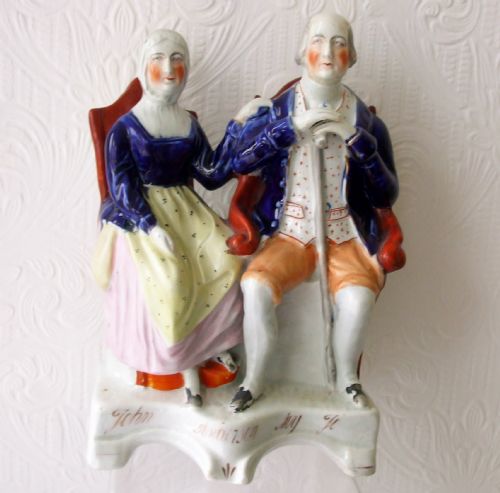


Antique Ceramic Folk Figurines
Antique ceramic folk figurines are charming hand-shaped figures from past centuries that bring rustic character and storytelling charm to any interior collection.
Antique Ceramic Folk Figurines
When you search for antique ceramic folk figurines, you encounter a varied selection of earthenware and porcelain pieces depicting characters from literature, regional life, and pastoral scenes. These items span periods from the Regency era through the nineteenth century and into the early twentieth century.
The most common examples on this page are nineteenth-century Staffordshire pottery figures, often featuring flatbacks designed to sit against a mantelpiece. Alongside these English works, the selection encompasses French porcelain fisher folk, Scottish Portobello figures, and Scandinavian decorative models.
Makers and origins stretch across Europe, including Dutch Rozenburg pieces, Spanish terracotta planters, and Royal Copenhagen porcelain figures. Each object captures local traditions and everyday subjects through sculpted clay and painted detail.
Materials and Techniques
Potters shaped these figures primarily using earthenware, terracotta, and porcelain, applying lead glazes and enamel paint to build surface colour and definition. Early nineteenth-century pieces often relied on simple earthenware bodies finished with bright hand-brushed pigments.
Several figures depict historical highwaymen and literary heroines keeping watch from the mantelpiece.
Assessing Quality and Execution
The distinction between standard commercial output and finer studio work lies in the crispness of the mould and the skill of the hand-painting. Superior examples display expressive facial details, careful enamel work, and well-balanced proportions rather than rushed, heavy-handed decoration.
Makers' marks and distinct regional traits also influence the character of a piece, with documented factories such as Rozenburg or Royal Copenhagen showing refined paste and controlled glazing. The integrity of the ceramic body and the preservation of the original enamel paint remain central to the overall standard.
Royal Copenhagen·Rozenburg
The Antique Ceramic Folk Figurines Glossary
- Flatback
- A Staffordshire pottery figure finished with a flat, unpainted rear designed to be placed against a wall or mantelpiece.
- Prattware
- An early type of English earthenware decorated with muted multi-coloured underglaze metallic oxides, typical of the Regency period.
- Lead glaze
- A glossy coating containing lead oxide applied to earthenware to waterproof the porous clay body and enrich surface colours.
- Bisque porcelain
- Unglazed white porcelain fired once to a porous, matte state, often used for delicate nineteenth-century sculptural groups.
Antique Ceramic Folk Figurines: Frequently Asked Questions
What are Staffordshire flatback figures?
Staffordshire flatback figures are nineteenth-century pottery sculptures made with a plain rear side designed to rest against a shelf or mantelpiece.
They frequently depicted literary characters, historical events, or animals to decorate Victorian homes.
How do I date an antique ceramic figure?
Dating relies on stylistic clues, the type of ceramic body, glaze characteristics, and any factory marks stamped on the base.
Nineteenth-century pieces often display characteristic crazing in the glaze and hand-painted enamel colours typical of their period of origin.
Were these figures meant for display?
Most of these ceramic pieces served as decorative ornaments intended for display in domestic parlours and living spaces.
Some objects, such as cow creamers or figural planters, combined practical utility with sculptural folk art forms.
What is the difference between earthenware and porcelain?
Earthenware is a porous, opaque pottery fired at lower temperatures, whereas porcelain is a dense, vitrified ceramic fired at much higher heats.
Porcelain figures often exhibit finer detail and a smoother surface than the heavier earthenware common in English folk art.