







Antique Ceramic Floor Urn
An antique ceramic floor urn brings immense scale and vibrant hand-painted colour to a room, drawing the eye naturally with its commanding height.
Antique Ceramic Floor Urn
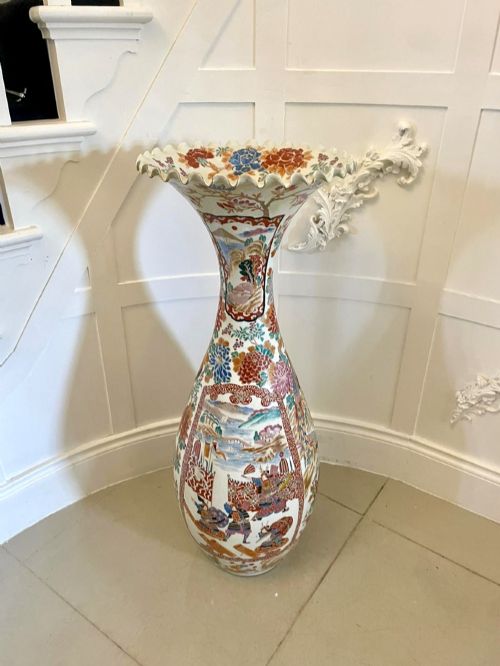
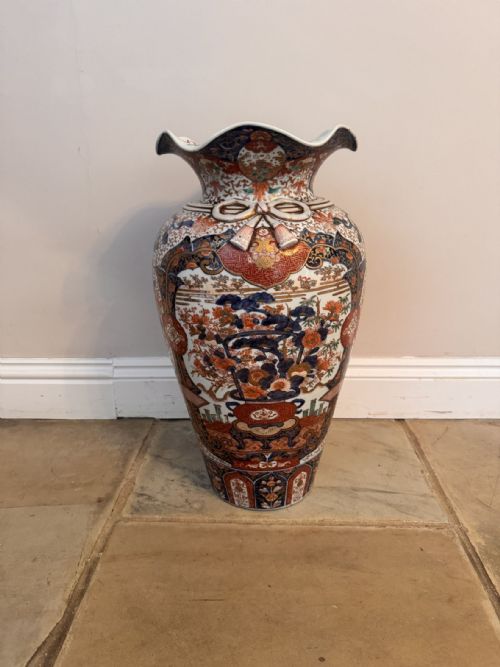
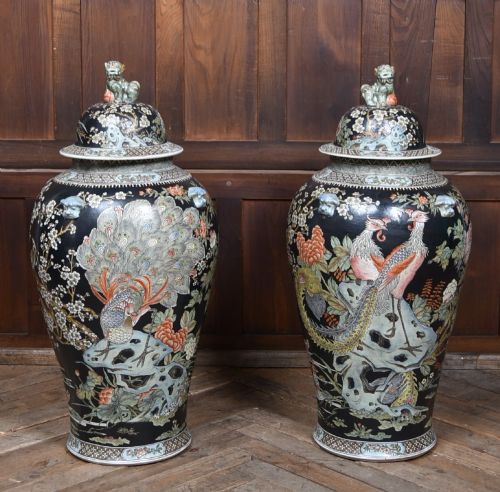
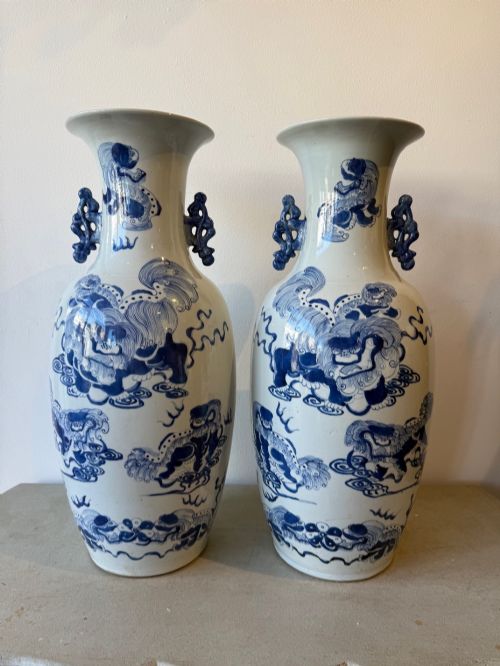
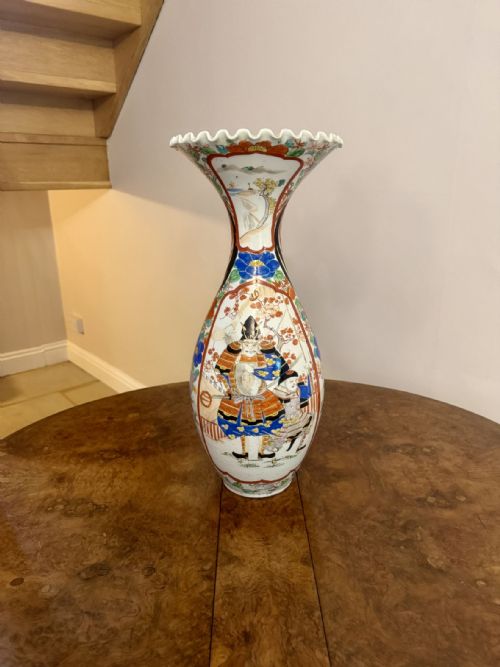
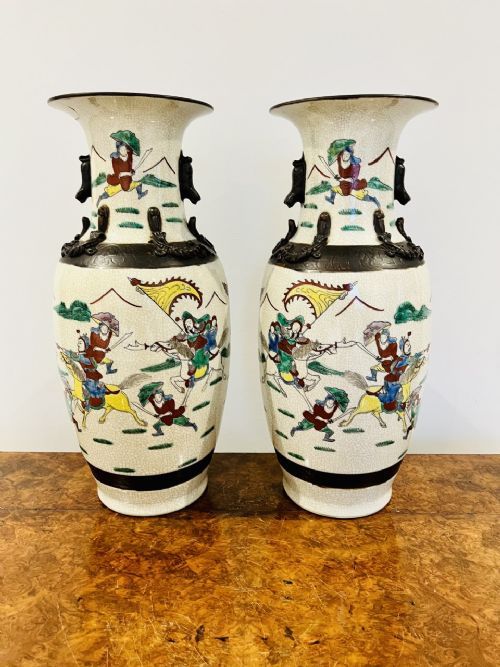
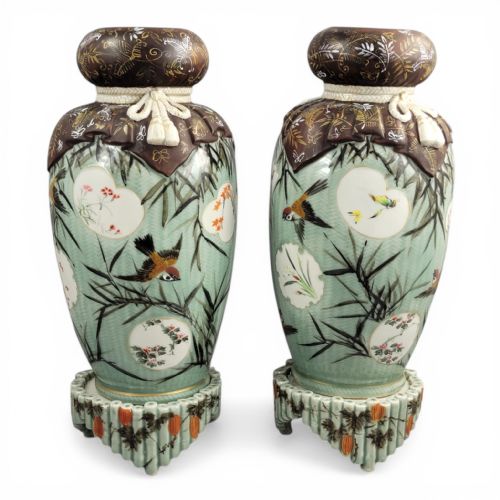
When searching for an antique ceramic floor urn, buyers encounter large vessels designed to stand directly upon the ground rather than on furniture. The pieces seen here span the nineteenth century through the early twentieth century, originating from Japanese export workshops, Chinese kilns, and European potteries. These grand objects take the form of tall baluster vases, lidded jars, amphorae, and monumental floor vases.
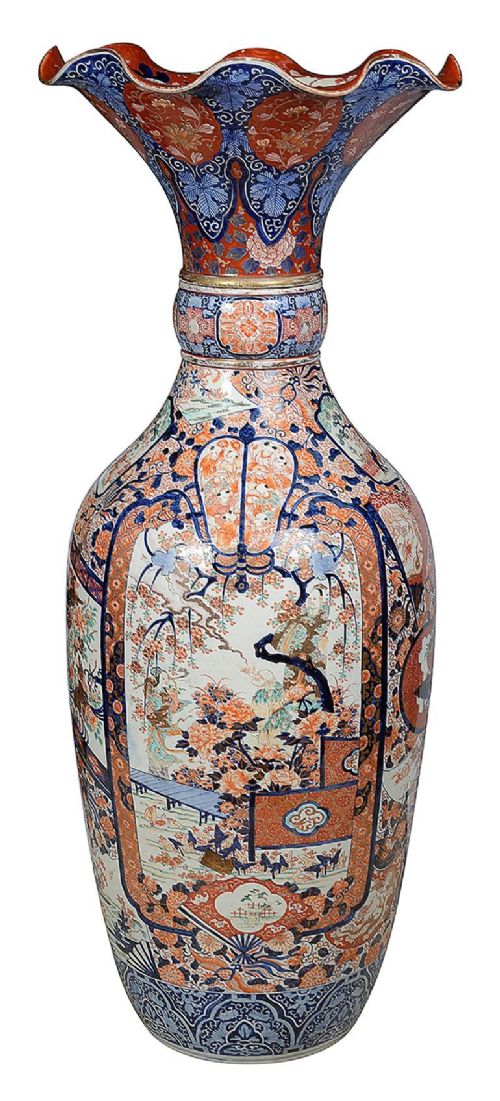
The most common examples on this page are Japanese Imari and Satsuma floor-standing vases, often measuring well over a metre in height. Alongside these stand Chinese blue and white pieces, Cantonese famille rose vessels, and rugged Mediterranean terracotta olive jars. Many of these large vessels were made specifically for export to Western drawing rooms during the Victorian era.
Scale defines this category, with height being the primary characteristic that separates a table vessel from a proper floor urn. Some examples rest upon their original matching porcelain or wooden stands, adding further elevation and presence. Buyers select them to anchor empty corners, frame fireplaces, or fill large architectural spaces.
How they were made
Potters built these substantial bodies using dense earthenware, terracotta, or refined porcelain clays capable of supporting immense weight during firing. Large vessels required expert throwing or moulding in sections before being joined together to achieve heights scaling past four feet. Thick walls provided the structural integrity needed to survive the intense heat of traditional kilns.
Makers applied rich colour through intricate hand-painting, utilising cobalt blue, enamel paints, and applied gold leaf over white or crackle glazes. Some pieces incorporated low-fired earthenware with detailed Satsuma decoration, while others received protective clear glazes that vitrified the surface. Lacquer panels and overpaint were occasionally added to hardened porcelain bodies for textural contrast.
Antique Ceramic Floor Urn Retail Price Guide 2026
Typical asking prices for ceramic floor urn among the pieces listed under this phrase on Sellingantiques today, from the lower quarter to the upper quarter. They describe what is for sale here now, not the wider market.
Standing taller than most adults, these imposing nineteenth-century jars spent their youth watching Victorian drawing rooms from the floor.
What varies in quality
The precision and density of the hand-painted decoration separates standard production pieces from the finest studio works. Superior examples display disciplined brushwork, harmonious palettes of enamel and gilt, and complex pictorial narratives that cover the entire body without crowding. Lesser items rely on repetitive stamping or hurried application.
Proportion and structural ambition also dictate the standing of a piece within the range. Monumental height achieved without severe distortion or slumping demonstrates the technical mastery of specific potteries and named makers. Original matching stands and complete lids further elevate the integrity of a floor-standing vessel.
Kato Sanhei·Kinkozan
The Antique Ceramic Floor Urn Glossary
- Imari
- A style of Japanese export porcelain decorated in underglaze blue, iron red, and gold. This palette creates a rich, patterned surface found on many large nineteenth-century floor vases.
- Satsuma
- A type of Japanese earthenware featuring a crackled ivory glaze painted with detailed polychrome enamel and gilt. These decorative vessels were widely produced during the Meiji period.
- Famille Rose
- A palette of Chinese porcelain enamels dominated by opaque pink or rose colours. Introduced in the Qing dynasty, it appears frequently on large baluster and medallion vases.
- Amphora
- A tall two-handled vessel with an oval body used historically for storage. Mediterranean examples in terracotta often show rugged surfaces and aged patinas.
- Baluster
- A vase shape with a rounded body that tapers toward the base and swells near the lower middle. This classical silhouette provides stability for large ceramic floor urns.
Antique Ceramic Floor Urn: Frequently Asked Questions
Where should I place a floor urn?
These tall vessels command attention and work best in spaces with generous proportions. Position them in empty hallway corners, beside heavy fireplaces, or flanking large doorways where their height can be fully appreciated.
Because of their substantial size and weight, keep them away from heavy foot traffic areas to protect both the ceramic body and any original matching stands from accidental knocks.
How do I distinguish Satsuma from Imari?
Satsuma wares utilise a distinctive cream-coloured earthenware body covered in a fine crackle glaze, painted with dense enamel and gold leaf. They date predominantly to the Meiji period and feel slightly softer in hand.
Imari pieces are true porcelain rather than earthenware, ringing clearly when tapped. They feature a glossy white ground painted primarily in deep cobalt blue, iron red, and gilt.
Did these urns always have lids?
Original lidded forms exist primarily among larger Imari and Satsuma storage jars produced for export. Many tall floor vases were made strictly as open vessels without covers.
Lids were easily separated or lost over decades of use, making surviving matched pairs with their original covers particularly noteworthy additions to a collection.