



Antique Ceramic Dog Group
An antique ceramic dog group brings character and history into a room, capturing playful or noble canine scenes in earthenware, porcelain, and parian.
Antique Ceramic Dog Group
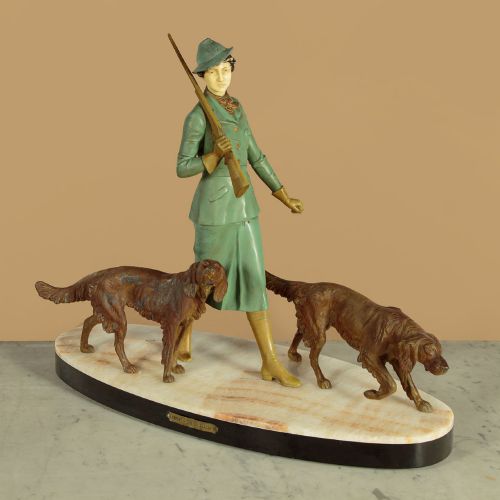
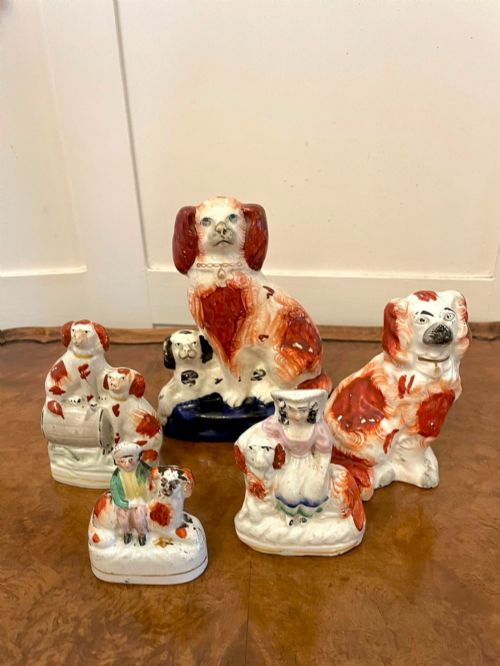
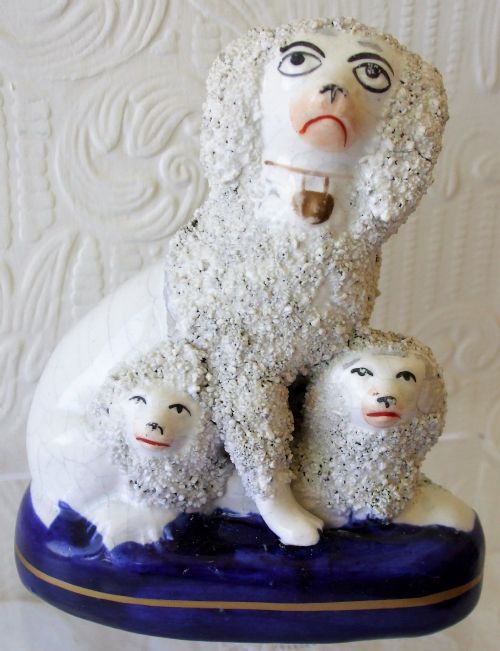
An antique ceramic dog group comprises figural sculptures and decorative objects depicting multiple dogs or figures interacting with dogs. These charming groups reflect the artistic tastes of the eighteenth, nineteenth, and early twentieth centuries. Collectors often meet Staffordshire pottery figures, Meissen porcelain pieces, and Royal Dux groups on this page.
The objects span several distinct eras, notably the Victorian, Edwardian, and Art Nouveau periods, alongside eighteenth-century works. Forms range from clock groups and poodle figures to hunting dogs and complex scenes involving children. Such pieces served as mantel ornaments and decorative displays in period homes.
How they were made
Makers utilised materials such as earthenware, biscuit porcelain, and parian ware to shape these figures. Many pieces received careful applications of glaze and enamel to add colour and detail, while some incorporated gold leaf highlights.
Moulding and sculpting techniques allowed artisans to capture intricate textures in the fur, facial expressions, and surrounding elements of the figure groups. Kiln firing fixed the ceramic bodies and set the surface decoration permanently.
Antique Ceramic Dog Group Retail Price Guide 2026
Typical asking prices for ceramic dog group among the pieces listed under this phrase on Sellingantiques today, from the lower quarter to the upper quarter. They describe what is for sale here now, not the wider market.
Listings feature items spanning the eighteenth, nineteenth, and early twentieth centuries in styles from Neoclassical to Art Nouveau.
What varies in quality
The complexity of the composition also marks the standard of the work, moving from straightforward pairs of poodles to elaborate multi-figure hunting scenes and clock groups. The sophistication of the glaze or enamel application further defines the distinction between standard production and masterwork.
The Antique Ceramic Dog Group Glossary
- Earthenware
- A porous pottery body fired at lower temperatures, commonly used for Staffordshire figures and requiring a glaze to remain waterproof.
- Parian ware
- A fine white porcelain resembling marble, developed in the nineteenth century and utilised for unglazed sculptural figures and hunting groups.
- Enamel
- Vitreous paints applied over or under the glaze to provide vibrant surface colour and detail on ceramic bodies.
- Biscuit porcelain
- Unglazed porcelain fired once to a hard, matte state, valued for its smooth surface that resembles marble.
- Staffordshire pottery
- Earthenware produced in the Staffordshire region of England, famous for popular figural groups and animal models.
Antique Ceramic Dog Group: Frequently Asked Questions
What periods do these dog groups come from?
The listings encompass items ranging from the eighteenth century through the nineteenth century and into the Edwardian and Art Nouveau eras of the early twentieth century.
Victorian pieces sit alongside earlier eighteenth-century porcelain and later works from the nineteen-hundreds and nineteen-tens.
What materials were used to make them?
Makers employed a variety of ceramic mediums, including traditional earthenware, fine porcelain, and smooth parian ware.
Surfaces were frequently finished with coloured glazes, enamel paints, and occasional touches of gold leaf.
How were these figures displayed originally?
These decorative objects and sculptures served primarily as ornamental items for mantelpieces, sideboards, and drawing rooms in period homes.
Some specialised forms, such as the Staffordshire dog clock groups, combined decorative figural sculpture with a functional timepiece.
What subjects do the figure groups show?
The pieces depict a range of subjects, from seated poodles and hunting dogs to boys and girls interacting with animals.
Narrative scenes, such as puppy sellers and complex multi-figure groups, also appear among the various ceramic forms.