



Antique Ceramic Dinner Service
An antique ceramic dinner service brings centuries of dining heritage to the table, offering unmatched decorative presence and utility.
Antique Ceramic Dinner Service
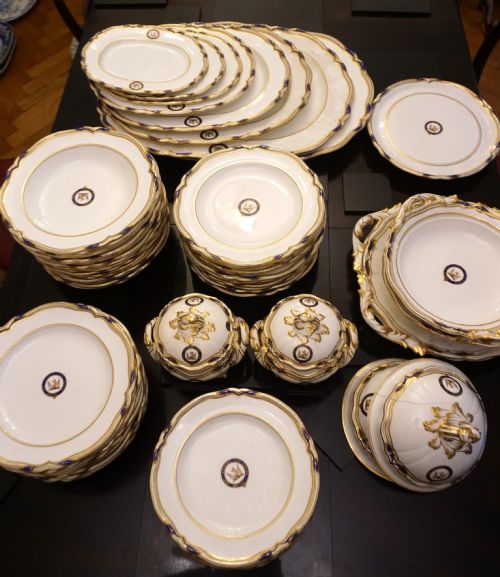
An antique ceramic dinner service comprises matching or complementary plates, tureens, and serving vessels created to equip formal and domestic dining tables across past centuries. Buyers examining this category encounter full multi-piece suites alongside smaller child's services, miniature dinnerware sets, and partial table services.
The selections span significant historical periods including the Regency, Victorian, and Edwardian eras, alongside specific production dates from the early nineteenth century through to the twentieth century. Forms range from extensive sets containing up to one hundred pieces down to paired cream tureens and individual commemorative plates.
Origins reflect prominent British and European manufacturing centres, featuring notable production from English potteries and continental porcelain works. These sets served functional roles in period households while displaying the prevailing aesthetic tastes of their respective decades.
Materials and methods of production
Potters utilised durable earthenware, refined porcelain, and robust ironstone as the fundamental bodies for these table wares. These ceramic foundations were shaped to form plates, holloware, and serving tureens before receiving protective glaze coats.
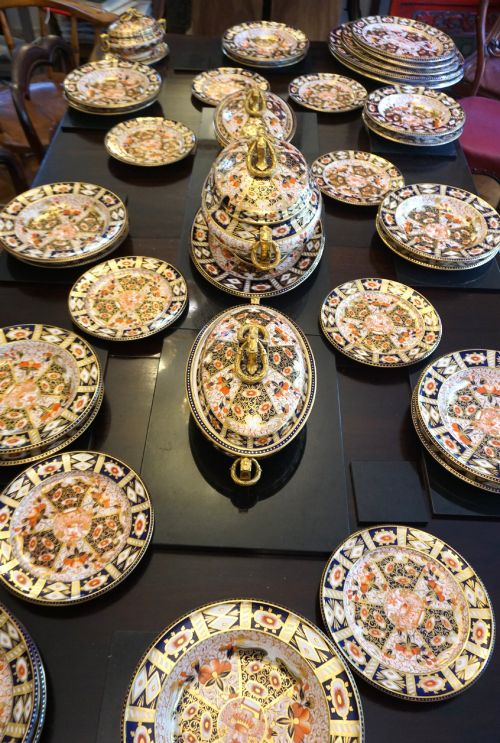
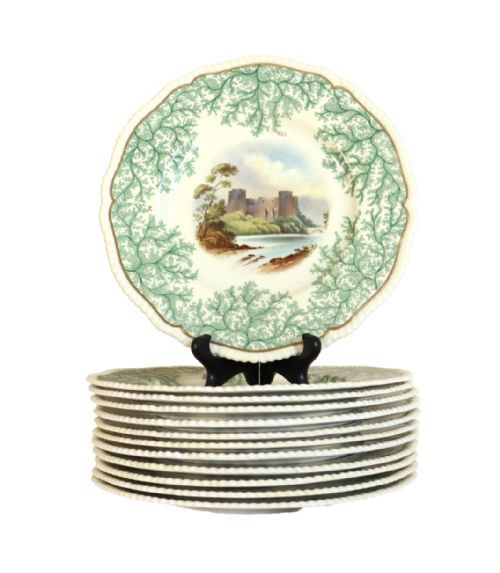
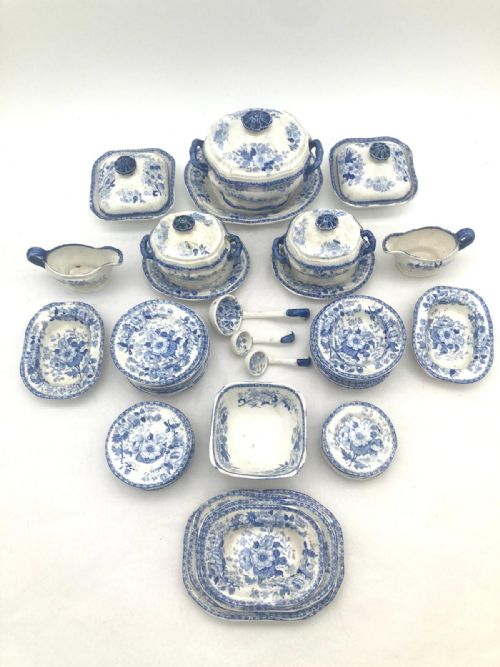
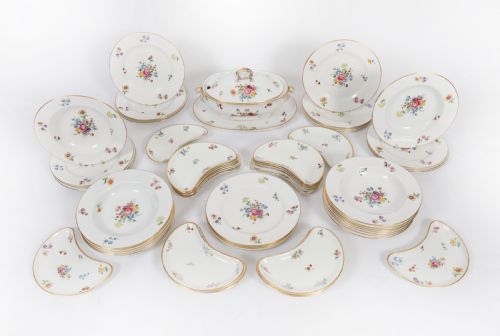
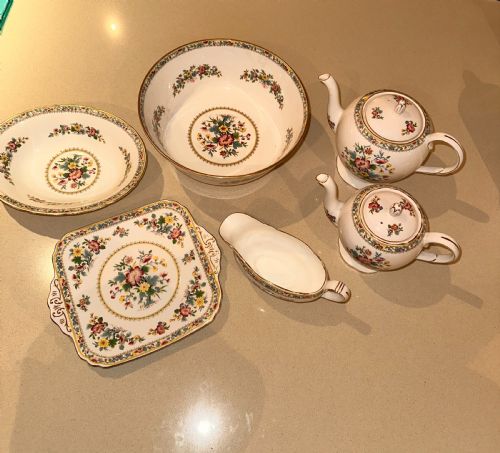
Decoration relied heavily on underglaze blue and white transfer printing, hand-painted polychrome enamels, and applied gold leaf or gilt detailing. Manufacturers such as Spode and Minton employed these techniques to produce intricate floral sheet patterns, landscape scenes, and elaborate border motifs.
Antique Ceramic Dinner Service Retail Price Guide 2026
Typical asking prices for ceramic dinner service among the pieces listed under this phrase on Sellingantiques today, from the lower quarter to the upper quarter. They describe what is for sale here now, not the wider market.
Victorian children dined with miniature services small enough to fit in the palm of a hand.
Distinctions in quality and execution
Superior examples demonstrate meticulous hand-painting and precise application of transfer-printed designs, whereas lesser pieces exhibit less refined brushwork or registration errors in the print. The crispness of moulded details on ironstone and porcelain bodies further separates standard production from high-status output.
Completeness and historical provenance elevate certain sets significantly above standard utilitarian wares, particularly when services retain substantial piece counts or feature documented family provenances. The sophistication of the ceramic body itself, from translucent porcelain to dense ironstone, dictates the overall calibre of the service.
Flight Barr and Barr·Minton·Wedgwood·Copeland and Spode·Booths·Müller Volkstedt·Doulton·Masons Ironstone·Coalport
The Antique Ceramic Dinner Service Glossary
- Ironstone
- A dense, durable type of earthenware patented in the nineteenth century to provide a strong alternative to porcelain. It resists chipping and formed the basis of many robust dinner services.
- Transfer printing
- A decoration technique where an engraved copper plate transfers a design onto tissue paper, which is then applied to the ceramic surface before glazing. This method allowed for complex repeatable scenes like landscape prints.
- Flow blue
- A cobalt blue transfer printing style that intentionally allowed the colour to blur slightly into the surrounding white glaze during firing. This created a soft, hazy aesthetic popular in mid-nineteenth-century wares.
- Cream tureen
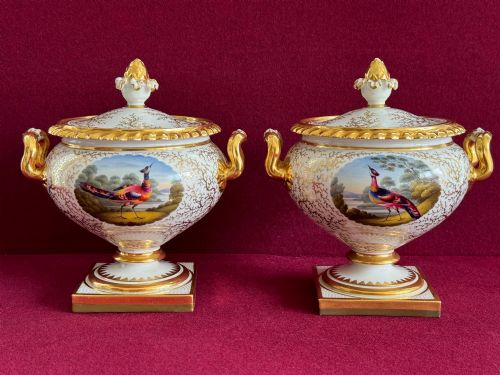
- A covered serving vessel specifically designed for holding cream or sauce at the table. These pieces often survived as pairs alongside larger dining services.
Antique Ceramic Dinner Service: Frequently Asked Questions
Can I use an antique ceramic dinner service for daily meals?
While these pieces were built for dining, modern dishwashers and microwaves can damage historic glazes and fragile gilt decorations. Gentle hand washing preserves the ceramic body and the delicate enamel colours.
Using them occasionally for special dinners connects you directly with their original purpose while safeguarding their surface finish for the future.
How do I care for antique plates and tureens?
Wash each piece individually in warm water using mild soap rather than harsh detergents. Avoid stacking unpadded plates directly on top of each other to prevent scratching the glaze.
Store tureens with their lids slightly ajar or padded to protect the rims from impact damage during handling.
What is the difference between ironstone and porcelain?
Ironstone is a heavy, opaque earthenware developed for strength and everyday durability during the nineteenth century. Porcelain is a finer, more vitreous ceramic material that often exhibits translucency when held to the light.
Both materials were employed for dinner services, but porcelain typically indicates a more formal or decorative table setting.
How can I tell the age of a dinner service?
Makers' marks stamped, impressed, or painted on the underside of the ceramics provide the primary clue to dating a service. Stylistic indicators like transfer-printed borders, colour palettes, and the specific composition of the ceramic body also point to particular decades.
Comparing the shapes of tureens and plates against documented manufacturing periods helps narrow down the exact decade of production.