

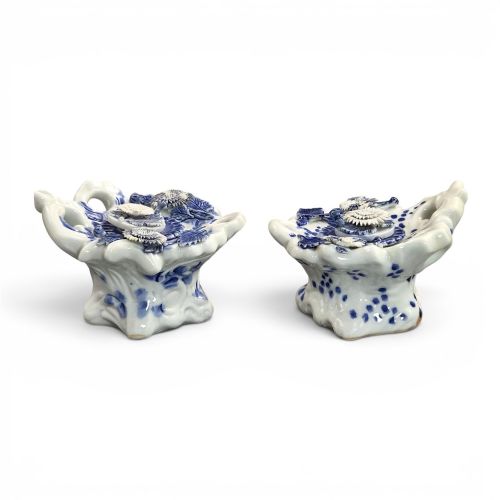


Antique Ceramic Desk Inkwell
An antique ceramic desk inkwell is a functional desktop centrepiece, bringing glazed porcelain, earthenware and fine hand-painting to a traditional writing table.
Antique Ceramic Desk Inkwell
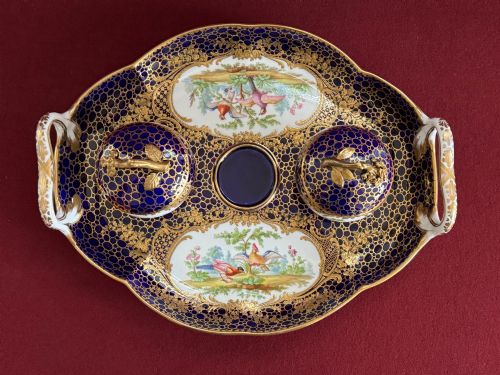
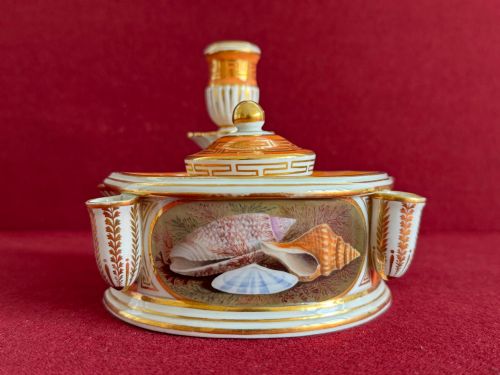
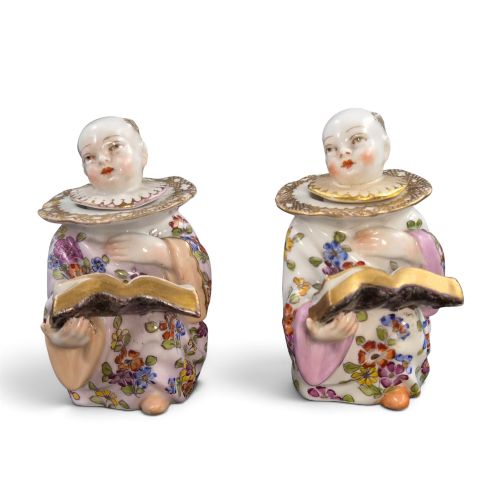
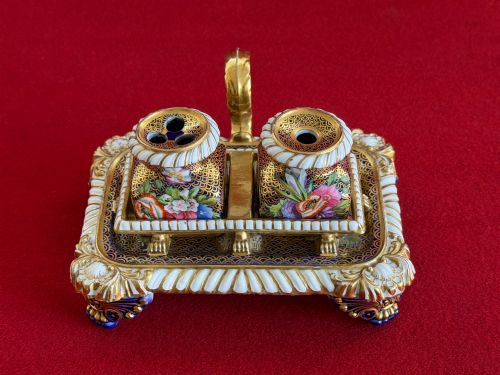
An antique ceramic desk inkwell serves as a practical desktop reservoir for wet ink, taking the form of standalone pots, figural animals and fitted inkstands. These desk accessories range from simple blue and white tin-glazed earthenwares to elaborate gilded porcelain figural groups.
On this page, buyers regularly encounter nineteenth-century productions alongside Regency and Georgian pieces. Makers utilised materials such as porcelain, earthenware and faience, often mounting the ceramic bodies on brass bases or pairing them with matched covers.
The decorative styles span from traditional Dutch Delft and Chinoiserie to Rococo Revival and Japanese Meiji period influences. Collectors find both single wells and larger multi-piece inkstands designed to hold sanders and pen trays.
How they were made
Potters shaped these vessels from ceramic pastes, earthenware bodies and hard-paste porcelain before applying tin-glazes or coloured enamels. Many examples feature delicate hand-painting, blue and white underglaze decoration and touches of gold leaf.
Foundries supplied matching brass bases, mounts and protective collars to support the ceramic inkwell bodies. Artisans constructed fitted covers, including pyramidal Schneeballen formations and figural lids, to keep the ink dust-free.
The listings span the Regency, Georgian and Victorian periods, utilising porcelain, earthenware, and brass.
What varies in quality
Quality rests in the crispness of the ceramic moulding and the precision of the hand-painted details. Finer examples display superior control over the glaze, vibrant enamelling and well-preserved gilt accents.
The integration of materials dictates the overall success of the piece. Superior items unite the ceramic reservoir with secure brass mounts and undamaged lids, retaining their original decorative character.
Edmé Samson·Spode·Flight Barr And Barr·Minton·Meissen
The Antique Ceramic Desk Inkwell Glossary
- Encrier
- The French term for an inkstand or inkwell. These pieces often feature French faience or porcelain bodies.
- Faience
- Tin-glazed earthenware produced across Europe, commonly associated with Dutch Delft and French manufactories. It provides an opaque white surface for painted decoration.
- Inkstand
- A desk accessory holding one or more inkwells alongside compartments for pens, wafers and sand. They sit on writing tables as complete desk sets.
- Schneeballen
- A German ceramic technique involving applied rosettes of tiny applied porcelain petals resembling snowballs. It creates a heavily textured surface on covers and bodies.
- Tin-Glazed Earthenware
- Pottery coated with a tin oxide glaze that fires to a smooth opaque white. This technique allows for detailed blue and polychrome painting.
Antique Ceramic Desk Inkwell: Frequently Asked Questions
How do I clean an antique ceramic inkwell?
Gently wipe the glazed ceramic surface with a soft, damp cloth to remove accumulated dust and ink residue.
Avoid submerging pieces with brass mounts or exposed earthenware biscuit in water to protect the structural integrity.
Are these inkwells safe for daily writing use?
While these pieces were originally built for daily correspondence, historic ceramic bodies and internal glaze hairline cracks can seep modern fountain pen inks.
Collectors generally display them as decorative desk accessories rather than filling them for active writing.
How do I identify a Regency period inkstand?
Regency pieces often display refined neoclassical forms, delicate floral patterns and gilt accents typical of early nineteenth-century English porcelain.
Look for marked factory patterns and fine baseline proportioning that characterise this distinct design era.
What is the difference between an inkwell and an inkstand?
An inkwell is a single standalone vessel designed strictly to hold a supply of ink for a quill or pen.
An inkstand is a larger desk plateau that incorporates the ink pot alongside pen grooves, sanders and wafer boxes.