


Antique Ceramic Desk Accessory
An antique ceramic desk accessory brings functional elegance to a writing space, uniting utility with the refined artistry of past centuries.
Antique Ceramic Desk Accessory
When you search for an antique ceramic desk accessory, you encounter a specialised selection of nineteenth-century inkwells, inkstands, quill holders, brush pots, and lidded pen boxes. These items serve the practical requirements of correspondence while displaying the decorative tastes of periods ranging from the Georgian era through to the Edwardian period and the early twentieth century.
The objects on this page span diverse geographical origins and stylistic traditions, including English pearl ware, Dutch Delft, continental porcelain, and Chinese export ceramics. Among these forms, inkstands fitted with compartments and figural animal quill holders appear frequently, alongside scholarly brush pots.
Makers and factories represented include Spode, Flight Barr & Barr, Minton, and Edmé Samson, reflecting both European manufactories and Asian traditions such as the Kangxi period and the Japanese Meiji period. Pieces range from utilitarian stoneware to ornate porcelain mounted on brass bases.
Materials and production methods
Potters and ceramists shaped these pieces using porcelain, earthenware, stoneware, and faience, often enriching the clay bodies with cobalt glaze, enamel colours, and gold leaf. Some assemblies incorporate brass bases or mounts to support the ceramic body.
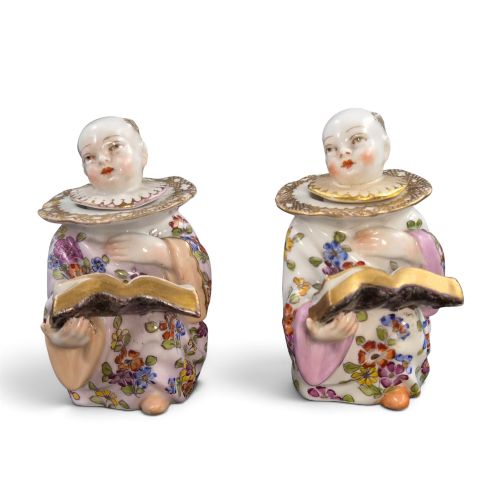
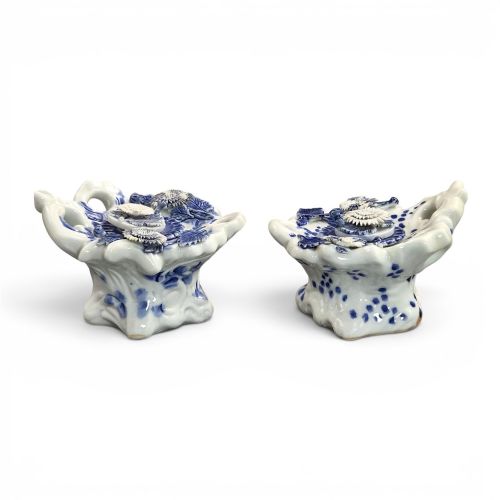
Techniques such as blue and white painting, polychrome enamelling, and moulded relief work define the surface decoration, as seen on Schneeballen covers and Chinoiserie scenes. Kiln firing fixed these glazes and pigments permanently onto the ceramic substrate.
Listings feature eighteenth and nineteenth-century ceramic desk accessories in porcelain, earthenware, and stoneware from English, continental European, and Chinese kilns.
Assessing quality and execution
The integration of secondary materials, such as well-cast brass stands or properly fitted ceramic covers, distinguishes superior pieces from standard workshop output. Original matching components and well-preserved gilt accents further elevate the standing of an individual desk item.
Edmé Samson·Spode·Minton Hollins·Flight Barr & Barr·Minton·Meissen
The Antique Ceramic Desk Accessory Glossary
- Inkstand
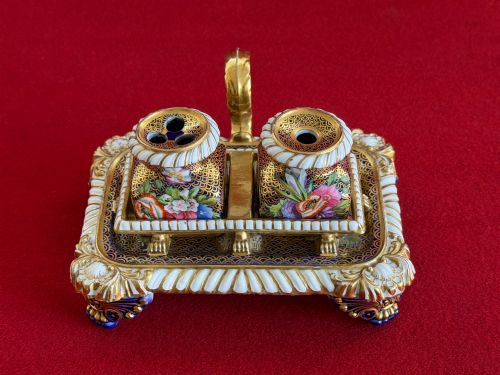
- A complete desk stand fitted with inkwells, pen trays, and sometimes pounce pots or sanders. These multi-piece ceramic trays sat centrally on a writing table.
- Quill Holder
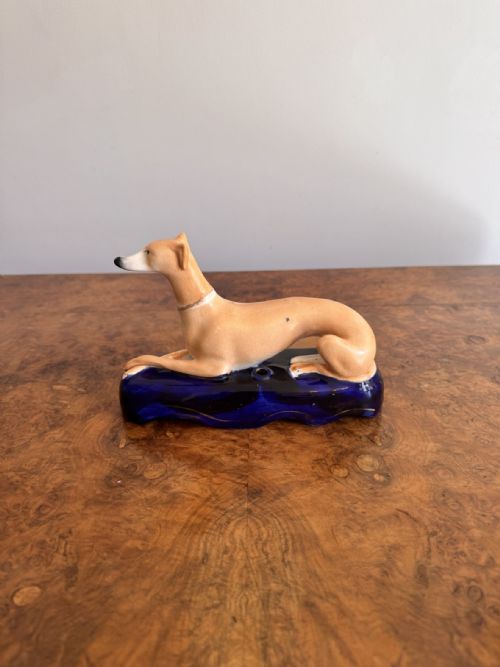
- A ceramic support, frequently modelled as dogs such as greyhounds or whippets, designed to hold writing feathers when not in use.
- Brush Pot
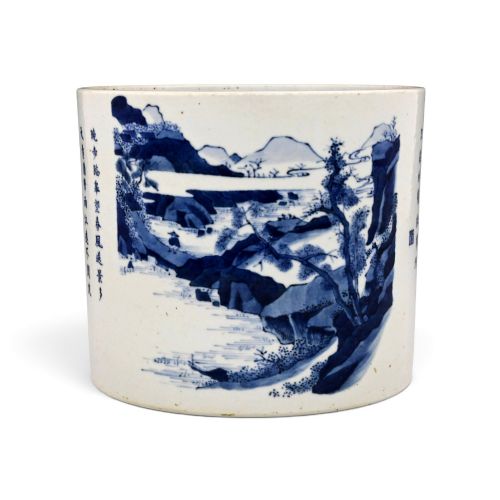
- A cylindrical vessel, also known as a bitong, used in East Asian scholarship to hold writing brushes upright.
- Pounce Pot
- A small perforated container used to sprinkle sand or gum sandarac over wet ink to absorb excess moisture and smooth paper.
- Faience
- Tin-glazed earthenware produced in various European ceramic centres, notably in France and the Netherlands.
- Schneeballen
- A German porcelain decorative technique involving applied rosettes and small blossoms covering the entire surface of a vessel.
Antique Ceramic Desk Accessory: Frequently Asked Questions
How do I date an antique ceramic inkwell?
Dating relies on stylistic markers, ceramic bodies, and factory marks recorded on the base. Regency and Georgian pieces often feature neoclassical motifs or specific porcelain pastes, whereas later Victorian examples frequently adopt more robust earthenware bodies and figural subjects.
Comparing the glaze characteristics and manufacturing techniques with documented patterns helps narrow the period of production. Reference books specific to English, continental, or Asian ceramics provide comparative baselines for dating.
What is the difference between an inkwell and an inkstand?
An inkwell is a single vessel designed specifically to hold writing ink, usually featuring a lid to prevent the fluid from drying out. A desk inkstand comprises a larger tray or stand that integrates one or more inkwells alongside compartments for pens, stamps, or pounce pots.
Inkstands represent more elaborate desk furniture intended for formal correspondence, while standalone inkwells served simpler or portable writing tasks.
Were brush pots used for writing in Europe?
Brush pots originated in China as scholars' vessels for holding calligraphy brushes, known by the term bitong. While traditional European writing relied on quill pens rather than ink brushes, these cylindrical ceramic vessels were imported and later imitated by European potteries as decorative desk accessories.
Collectors in the nineteenth century prized them for their intricate carving and blue and white or Famille Rose painting, placing them on desks to hold pens or decorative items.
How should I clean an antique porcelain inkstand?
Cleaning antique ceramics requires gentle methods, using only a soft, dry cloth or a slightly damp sponge with mild soap if necessary. Avoid harsh chemical cleaners or abrasive scouring pads, which can damage delicate overglaze enamels and gold leaf decorations.
If the piece incorporates brass bases or metal mounts, keep moisture away from joints and hinges to prevent corrosion.