


Antique Ceramic Cat Figures
These antique ceramic cat figures offer charming domestic and exotic feline forms that bring character and history directly into your room.
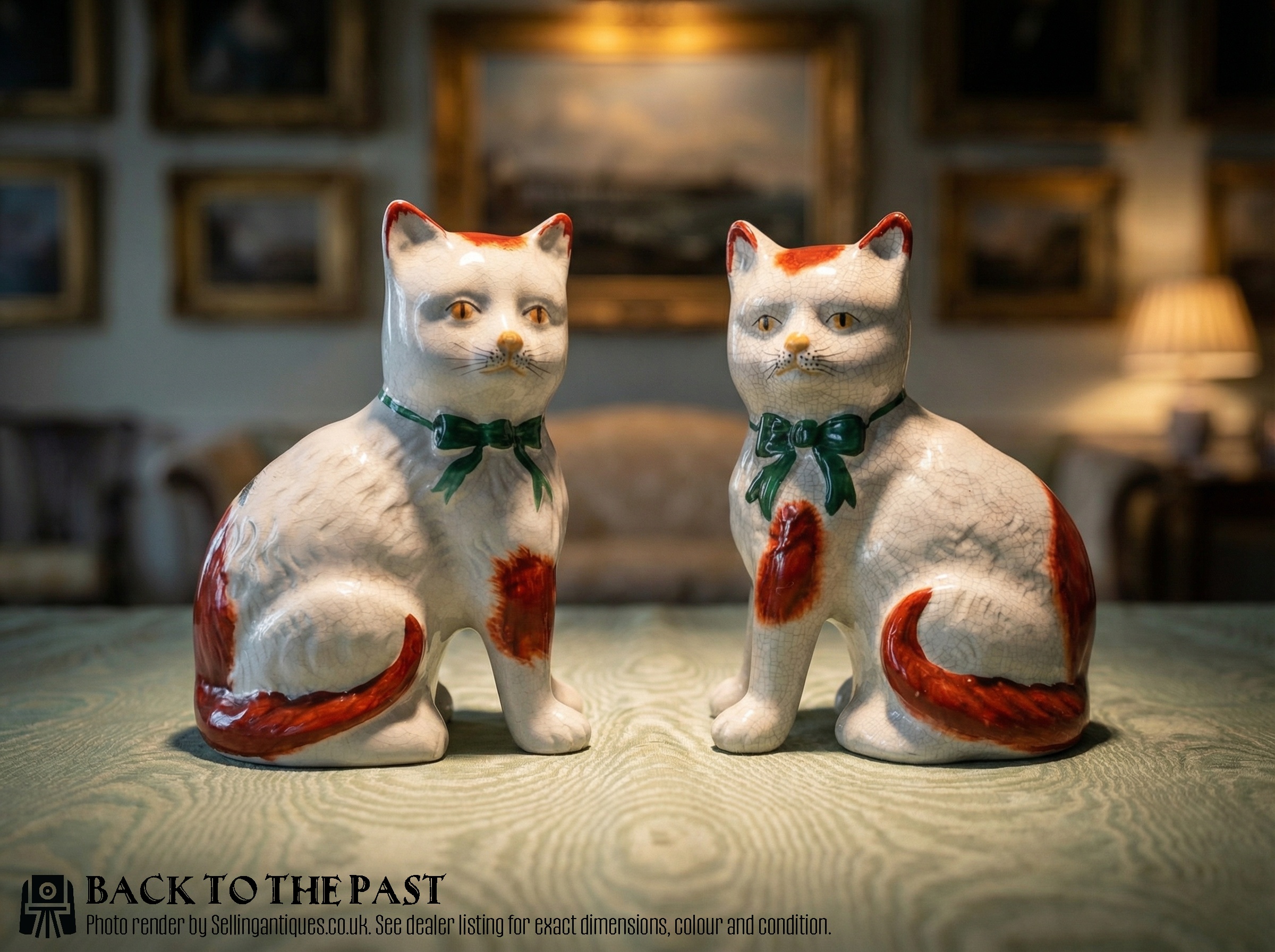
Antique Ceramic Cat Figures
When you search for antique ceramic cat figures, you encounter a delightful mix of domestic pets and exotic big cats modelled across the nineteenth and twentieth centuries. The selection spans traditional Staffordshire pairs, French terracotta roof tiles, and continental naturalist studies.
You are most likely to meet earthenware and porcelain pottery figures shaped as seated cats, pairs of leopards, and decorative wall pockets. These pieces reflect Victorian mantelpiece taste alongside later Art Deco and French folk art traditions.
Materials and construction
Makers shaped these figures from earthenware, pearlware, terracotta, and porcelain, often applying hand-painted or enamel glazes to create the coat patterns. Some French and Art Deco examples incorporate inset glass eyes to add a startling realism to the ceramic body.
Potters utilised traditional moulding and casting techniques before firing the clay in kilns, sometimes adding specialised components such as woven baskets or wall pocket attachments for domestic utility.
Forms range from seated domestic cats and mirrored pairs to decorative wall pockets and dramatic predatory leopard figures.
Assessing quality and character
Quality rests in the modelling of the animal form and the expressive painting of the face and coat markings. Finer pieces demonstrate careful attention to anatomical detail, whether portraying a domestic tabby or a dramatic predatory leopard.
The sophistication of the glaze and the preservation of original hand-applied colours separate standard production pieces from superior examples. Pairs matched by the original potter hold a distinct decorative and collection advantage over single survivors.
Meissen·Copeland·Bavent
The Antique Ceramic Cat Figures Glossary
- Pearlware
- A refined earthenware developed in the late eighteenth century featuring a subtle blue-tinted glaze that pooled attractively in crevices. This material preceded later Victorian white earthenware bodies.
- Staffordshire
- A broad term for pottery produced in the numerous kilns of the Staffordshire region in England. These potteries specialised in animal figures, pairs, and narrative groups for the domestic market.
- Terracotta
- Fired unglazed or slip-glazed clay of a brownish-red colour, commonly utilised for architectural elements and decorative figures. French folk art pieces often employ this durable medium.
- Wall pocket
- A flat-backed ceramic vessel designed to be hung on a wall to hold flowers or small items. Cat-form wall pockets combine sculptural presence with practical interior display.
- Parian
- A fine white unglazed porcelain resembling carved marble, developed in the nineteenth century for sculptural figures. It captures delicate contours and details with exceptional clarity.
Antique Ceramic Cat Figures: Frequently Asked Questions
What periods do these figures cover?
The available pieces span from the early nineteenth century through the Victorian era and into the Art Deco period of the nineteen thirties. Mid-twentieth century naturalist studies also appear within the selection.
Most items date from the Victorian era up to the early twentieth century, reflecting shifting tastes in domestic animal decoration.
Were these cats made as pairs?
Potters frequently produced Staffordshire cats in matched pairs designed to sit symmetrically at either end of a mantelpiece or shelf. Single figures also exist, often originating from larger groups or wall pockets.
Pairs offer a traditional decorative arrangement that mirrors nineteenth-century interior display habits.
How do I care for antique ceramics?
Display these glazed and unglazed figures away from direct sunlight and areas prone to heavy vibrations or accidental knocks. Dust them gently with a soft, dry brush.
Avoid using water or cleaning solutions on unglazed terracotta, pearlware, or painted enamel surfaces to protect the original finish.
How are exotic cats represented?
Nineteenth and twentieth-century makers expanded beyond domestic pets to model leopards and snow leopards in various dramatic poses. Some pieces depict exotic fines interacting with prey or human figures.
These larger sculptural works often reflect contemporary nineteenth-century and naturalist artistic interests.
What is French folk art pottery?
French folk art pottery encompasses regional wares made for everyday use or architectural ornamentation, such as terracotta roof tiles modelled as cats. These pieces display local vernacular styles rather than factory-standard perfection.
They offer a rustic aesthetic distinct from refined English porcelain figures.