


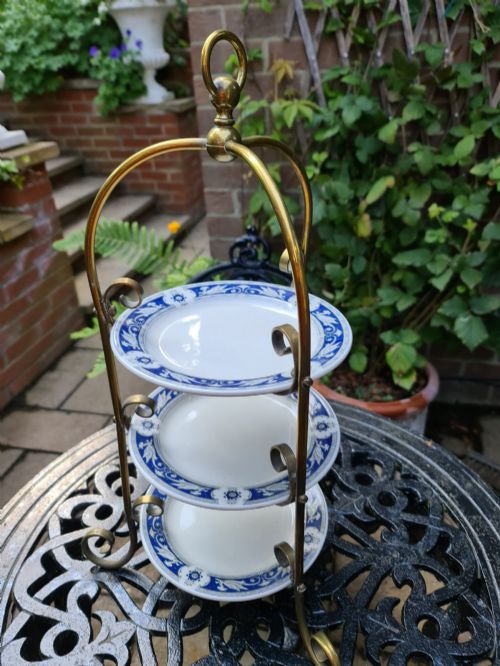


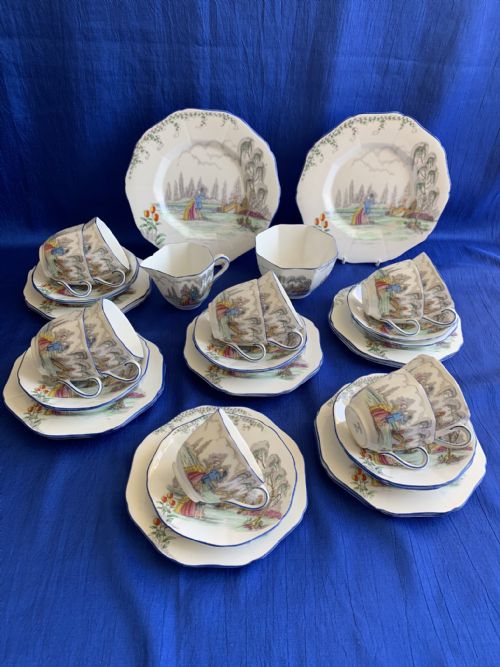


Antique Ceramic Cake Plate
These antique ceramic cake plates offer a charming surface for serving pastries, bringing tangible history and painted florals directly to the tea table.
Antique Ceramic Cake Plate
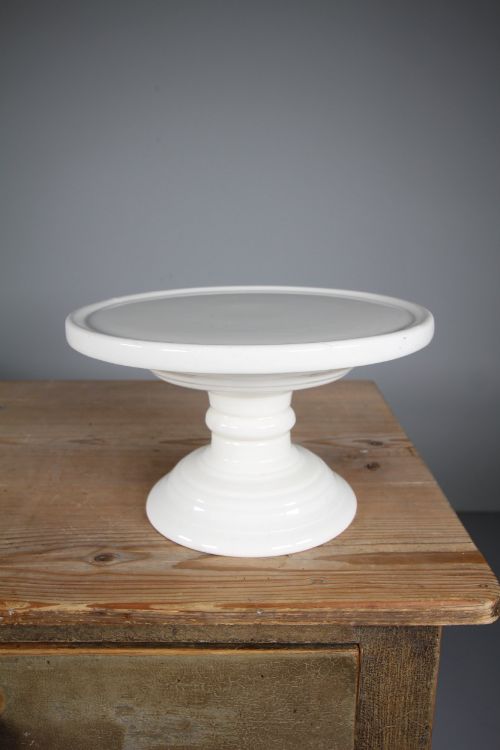
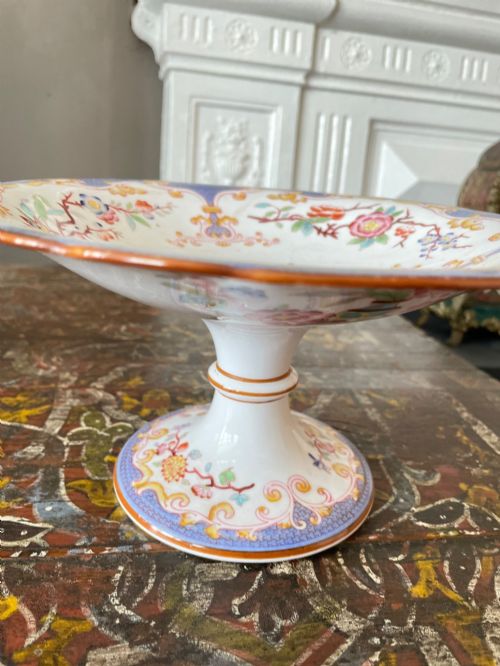
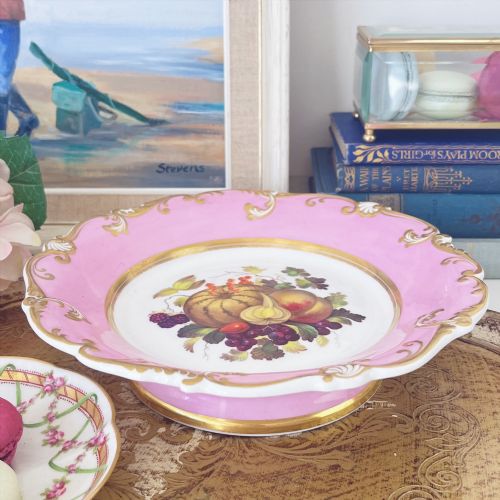
An antique ceramic cake plate encompasses footed comports, tazzas, pedestal stands, and flat sandwich plates designed for serving sweets and baked goods. When searching for an antique ceramic cake plate, buyers encounter pieces spanning from the Regency and Victorian eras through to the Edwardian period and the 1930s.
The selections on this page range from single display stands and footed comports to larger dessert services and tea sets comprising multiple plates. Forms include shell-edged tazgas, transfer-printed pottery, and pedestal cake stands decorated with floral motifs.
Origins vary across English earthenware and bone china alongside continental porcelain, with factories such as Spode, Royal Crown Derby, and Davenport represented among the ceramic wares.
Materials and production methods
Potters utilised earthenware, ironstone, bone china, and porcelain as the primary ceramic bodies for these serving pieces. Each body required specific firing temperatures and glazing techniques to achieve durability and a smooth surface suitable for food presentation.
Decoration involved hand-painted fruits and florals, blue and white transfer printing, and applied gold leaf or gilt accents. Specialised forms like stone china provided additional robustness for daily use during the nineteenth century.
Antique Ceramic Cake Plate Retail Price Guide 2026
Typical asking prices for ceramic cake plate among the pieces listed under this phrase on Sellingantiques today, from the lower quarter to the upper quarter. They describe what is for sale here now, not the wider market.
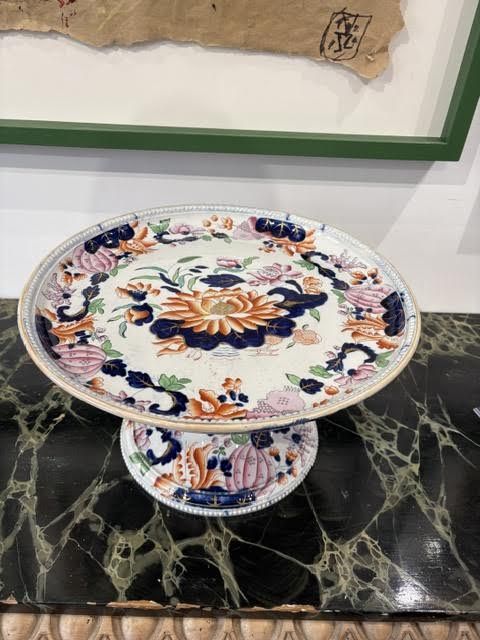
A waterlily pattern centrepiece stand brings botanical charm straight from the Regency dining table.
Assessing quality and execution
Quality in an antique ceramic cake plate reveals itself in the crispness of the transfer print or the brushwork skill in hand-painted details like florals and fruit. Finer pieces demonstrate careful gilding application and well-balanced footed forms that sit level without wobble.
The choice of ceramic body also distinguishes the production standard, with refined bone china and porcelain sitting at a different tier from utilitarian ironstone or earthenware. Maker attribution, such as works from Spode or Royal Crown Derby, often indicates superior paste preparation and glaze finish.
Parnall And Sons·Sarreguemines·H And R Daniel·Royal Crown Derby·John Ridgway·Spode·Doric China·Royal Doulton·Wileman Foley Shelley·Davenport·Gladstone Potteries
The Antique Ceramic Cake Plate Glossary
- Comport
- A raised shallow bowl or dish used for serving fruit or cakes at dessert, often matching other plates in a service.
- Tazza
- A shallow saucer-like dish mounted on a stem and foot, functioning similarly to a comport or pedestal cake stand.
- Transfer printing
- A decoration method where an engraved copper plate transfers a design onto paper and then onto the ceramic surface before glazing.
- Bone china
- A type of porcelain incorporating animal bone ash, producing a strong, white, and slightly translucent ceramic body.
- Gilt
- A thin layer of gold applied to the ceramic surface, frequently highlighting rims, handles, and painted motifs.
Antique Ceramic Cake Plate: Frequently Asked Questions
What is a comport?
A comport is a raised serving dish or pedestal stand designed to hold fruit, cakes, or sweets as part of a formal dessert service.
These pieces lift the food above the table level, adding visual height and structure to a traditional table setting.
How do I date an antique plate?
Dating relies on maker marks, factory transfer stamps, stylistic clues like Regency shell edges or 1930s floral patterns, and the type of ceramic body used.
Examining the glaze and wear patterns on the base also provides helpful indicators of the period of manufacture.
Can I use these plates daily?
While many of these items were built for practical use, antique ceramic pieces often require gentle hand washing to preserve hand-painted details and delicate gilding.
Avoid dishwashers and sudden temperature changes to protect the historic glaze and ceramic body from damage.
What is ironstone?
Ironstone is a heavy, durable type of earthenware patented in the nineteenth century to provide a sturdy alternative to porcelain.
It resists chipping well, making it a practical material for utilitarian display stands and serving pieces.